



UOC Hierarch: The Church Does Not Endorse 'Holy War' Concept
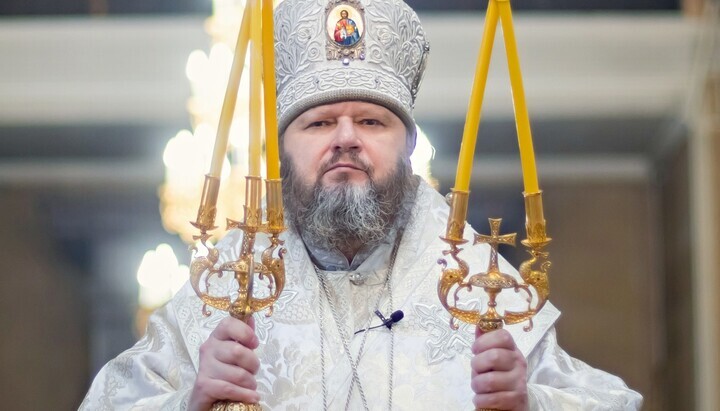
"The assertion that the so-called 'special military operation' is a 'Holy War' contradicts the basic principles of Christian morality," Metr. Yevlohiy said.
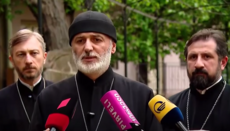
SUMY, UKRAINE — Metr. Yevlohiy (Hutchenko) of Sumy and Akhtyrka issued a detailed statement on Facebook addressing what he called the theological misuse of religious language in relation to the war in Ukraine. In the post, titled "On the Distortion of Orthodox Doctrine in Our Time," the hierarch emphasized that while the Church may pray for soldiers and support those defending their homeland, it cannot declare war sacred or describe battlefield death as salvific.
"In the history of Christianity, war has always been regarded as a tragedy, as a consequence of humanity’s fall into sin, and not as a path to salvation or a means of accomplishing the divine will," His Eminence said. "Even in cases involving the defense of one’s homeland, the Church spoke not of the 'holiness' of war, but of condescension toward human weakness. The phrase 'holy war,' both in its origin and meaning, is far closer to the religious concepts of other traditions than to the evangelical spirit of meekness and love for enemies."
In his post, the Metropolitan directly referenced statements by Patr. Kirill of Moscow and the Moscow Patriarchate more broadly, including claims about the redemptive nature of death in battle and interpretations that the commandment “thou shalt not kill” does not apply in this context. He warned that such framing requires serious theological scrutiny.

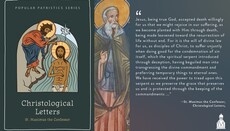
Metr. Yevlohiy further criticized claims that participation in war or death in battle can “wash away sins,” arguing that Orthodox doctrine teaches forgiveness only through repentance, the sacraments, and inner transformation. He said no Holy Father has taught that death itself removes sin, apart from a life of repentance:
Church history knows of attempts by state authorities to impose similar views. In various eras, including the Byzantine Empire, voices arose seeking to justify war as a means of salvation or as something pleasing to God. Yet the Church consistently resisted such ideas. This is especially clear in the canonical heritage of the Holy Fathers. St. Basil the Great, in his canonical epistle, speaks directly about soldiers who shed blood even in a just war: they are to undergo repentance, and the Church imposes penance upon them, temporarily barring them from Communion. This demonstrates that even unavoidable killing in war is regarded as a spiritual wound requiring healing, not as a feat that automatically justifies a person.
In 2022, the Ukrainian Orthodox Church (UOC) gave a forceful statement to Newsweek following the Moscow Patriarchate's issuing of "The Present and Future of the Russian World" document, saying that it "dissociates herself from, categorically rejects, and condemns the ideas set out in this document."
"The assertion that the so-called 'special military operation' is a 'Holy War' contradicts the basic principles of Christian morality, especially in the light of the armed aggression with the use of violence," the UOC said. "From the point of view of the Gospel, military actions cannot be justified as 'holy', nor can such assertions be made by people who call themselves clerics."
Previously, the UOJ reported that 742 religious sites had been damaged in Ukraine since 2022.