Man and Church
America's Forgotten Orthodox Apostle
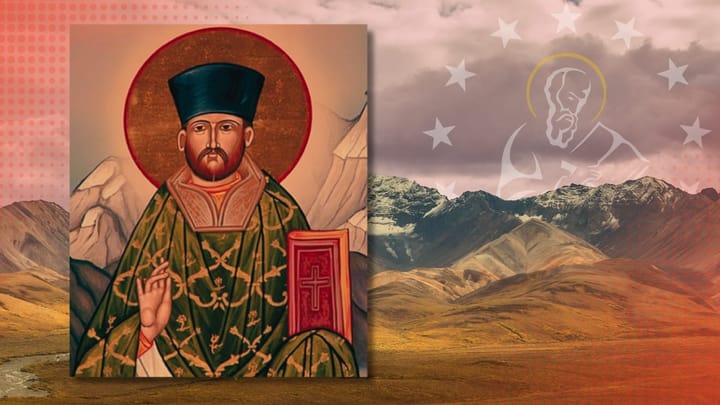
I don’t know if the term “forgotten” can properly be applied to the saints, whom God remembers forever in His kingdom. But what God remembers, man forgets.
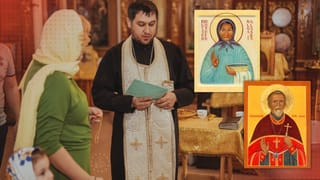
Yesterday, on July 26 (New Style), the Orthodox Church celebrated the repose of St. Jacob Netsvetov, “Enlightener of the Peoples of Alaska.” We may associate this title more with St. Herman or St. Innocent. Yet, if anything, it suits St. Jacob best of all.
Jacob Netsvetov was born in 1802 on Atka Island in the Aleutian chain of Russian America. He was the eldest of four surviving children. His father, Yegor Vasilevich Netsvetov, was a Russian from Tobolsk employed by the Russian-American Company; his mother, Maria Alekseevna, was an Aleut woman of Atka.
His pious parents ensured their children received education. His brothers followed their father into lives on the sea, but when the family relocated to Irkutsk in Siberia, Jacob entered the Theological Seminary. While there, he married Anna Simeonovna, a woman of Russian or mixed Russian-Alaskan ancestry (sources differ). Netsvetov graduated in 1826 and was ordained a deacon that October. His first assignment was to Holy Trinity-St. Peter Church in Irkutsk. Two years later, he was elevated to the priesthood on March 4, 1828, by Abp. Michael of Irkutsk—the same hierarch who had, years before, ordained St. Innocent (Veniaminov).
Netsvetov thus became the first native Alaskan ordained to the Orthodox priesthood.
Driven by longing for his homeland, he set out in May 1828 with his wife and his father—the latter of whom had been tonsured a reader—on the grueling thirteen-month journey back to Alaska. The party arrived in June 1829. Fr. Jacob was assigned to the vast Atka parish, stretching more than two thousand miles across the Aleutian Islands. He celebrated services first in a tent, then in the newly built Church of St. Nicholas. Fluent in Russian and Unangan Aleut, he founded a parish school, taught children to read and write in both languages, and collaborated in developing written forms of Native languages while translating Scripture and liturgical texts. He traveled by kayak through cold seas and by dog sled across islands, bringing the Gospel to scattered communities.
Personal tragedy struck hard. In 1836, his wife died of cancer. The following year, a fire destroyed their home, and his beloved father died. Grief-stricken, Fr. Jacob requested a release from parish work in order to become a monk. No new priest was sent to relieve him. Instead, after consultation with the newly arrived Bp. Innocent, he accepted a new and more difficult assignment.
On December 30, 1844, Fr. Jacob was appointed head of the Kvikhpak Mission along the Yukon River. He established headquarters at the Yupik village of Ikogmiut, which today is known as Russian Mission. He learned new languages, devised alphabets, built churches, and ministered to Yupik and Athabascan peoples across hundreds of miles of river and tundra. He baptized more than 1,300 people, often reconciling formerly hostile tribes in the process. Fr. Jacob faced opposition from shamans, struggled against extreme weather, endured long periods of isolation, and persevered despite his failing health.
In 1863, he was falsely accused by a former assistant of conspiring in the murder of a Native man. The charge was patently absurd. Nevertheless, he was forced to appear in Sitka to answer for them. He was quickly cleared; his health, however, was now completely broken. He remained in Sitka, serving a Tlingit chapel, and reposed on July 26, 1864, at about age sixty. He was buried near the chapel.
Long overlooked outside Alaskan Orthodoxy, Fr. Jacob was glorified by the Holy Synod of the Orthodox Church in America in March 1994—decades after St. Herman and St. Innocent. The second half of his life was simply an act of martyrdom drawn out over the span of decades. He may well have said, with St. Paul:
In weariness and painfulness, in watchings often, in hunger and thirst, in fastings often, in cold and nakedness.
Beside those things that are without, that which cometh upon me daily, the care of all the churches.
Who is weak, and I am not weak? who is offended, and I burn not?
If I must needs glory, I will glory of the things which concern mine infirmities.
The God and Father of our Lord Jesus Christ, which is blessed for evermore, knoweth that I lie not. (2 Corinthians 11:27-31)
The name of St. Jacob Netsvetov deserves to be remembered among the greatest missionaries of Church history—for the zeal of his preaching, the strenuousness of his labors, and the holiness of his life.
Holy Father Jacob Netsvetov, pray to God for us!