News
Sebastian Press Publishes New Volume of Metr. Zizioulas’ Theology
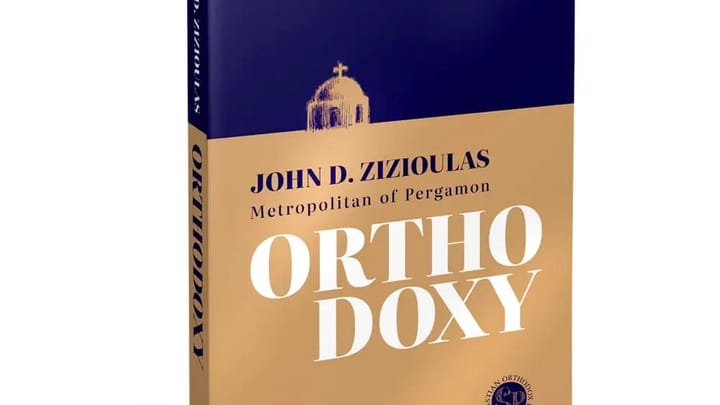
A new volume brings together the influential theological writings of Metr. John Zizioulas in an accessible introduction to Orthodox Christian thought.
LOS ANGELES — St. Sebastian Orthodox Press has published "Orthodoxy," a new 402-page volume bringing together foundational writings by Metr. John D. Zizioulas of Pergamon, one of the most influential Orthodox theologians of the 20th and 21st centuries. Edited by Bp. Maxim Vasiljević and Stavros Yangazoglou, the book is No. 101 in the publisher’s Contemporary Christian Thought Series.
Zizioulas (1931–2023) served as Metr. of Pergamon in the Ecumenical Patriarchate of Constantinople. He studied theology in Athens and at Harvard, where he worked with the prominent Orthodox theologian Georges Florovsky. He later received his doctorate from the University of Athens.
His academic career included teaching systematic theology at the universities of Edinburgh and Glasgow. He also served as a visiting professor at universities and theological institutions in Geneva, at King’s College London, and at the Gregorian University in Rome.
Zizioulas was a member of the Academy of Athens and played a leading role in international theological dialogue, particularly through the World Council of Churches. His writings, including "Being as Communion," "Communion and Otherness," and "Remembering the Future," have exerted a lasting influence on contemporary theology, particularly in ecclesiology and the theology of the person.
The newly published "Orthodoxy" presents his theological reflections in three sections: "The Orthodox Worldview," "Orthodoxy in History," and "Orthodoxy and the Modern World." The volume examines the Trinity, the Church, the sacraments, the Church Fathers, East-West relations, secularization, globalization, technology, and contemporary ecumenical dialogue.
"Orthodoxy" is available in paperback for $50.
Previously, the UOJ reported that SVS Press sought support to publish St. John of Damascus’ “Fount of Knowledge.”
Read also