

The ‘Founding Father’ of American Orthodoxy
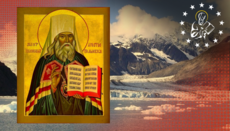
St. Innocent of Alaska, the first Orthodox hierarch in North America, established the Church of Alaska—the "Mother Church" of the New World—through his tireless labors as linguist, pastor, and evangelist.
While St. Herman of Alaska is rightly honored as the first Orthodox missionary to set foot on North American soil, the Orthodox Church in America wasn’t truly established until it received its first hierarch. That distinction belongs to St. Innocent (Veniaminov): the tireless priest, bishop, linguist, and administrator whose apostolic labors planted the Church firmly in the New World. Where St. Herman and his companions sowed the initial seeds amid hardship and persecution, St. Innocent cultivated a living, structured Orthodox presence—complete with bishops, dioceses, schools, translations, and native clergy—that endures to this day. He is rightly called the Enlightener of Alaska and Equal-to-the-Apostles of North America.
St. Innocent was born Ivan Evseyevich Popov on August 26, 1797, in the remote Siberian village of Anginskoye near Irkutsk. His father was a sexton, an honorable position but not a profitable one. Orphaned at the age of six, he entered the Irkutsk Theological Seminary when he was ten years old. Ivan was gifted student and, in 1817, he married the daughter of a priest. He was ordained deacon that same year, and became a priest in 1821, serving at Irkutsk’s Annunciation Church while teaching in the parish school.
In 1823, when the Russian-American Company appealed for a priest to serve the distant Aleutian Islands, most clergy hesitated. Fr. Ivan Veniaminov volunteered at once. In May 1824, after a grueling fourteen-month journey across Siberia and the Pacific, he arrived at Unalaska with his young wife Catherine, their infant son Innocent, his mother, and his brother Stefan. They moved into a half-dugout earthen hut. There, in the wind-swept Aleutians, his extraordinary missionary life began.
For fifteen years, Fr. Ivan immersed himself in the people’s language and life. He mastered the Aleuts’ language, devised its first alphabet, and compiled a grammar; he then translated the Gospel of Matthew, the Catechism, and liturgical texts into their native tongue. In 1833, he wrote his masterpiece, ***Indication of the Way to the Kingdom of Heaven***, in Aleut for the native converts. He built a church and school with his own hands, taught reading, writing, and the Faith, and established an orphanage and hospital. His gentle yet firm presence transformed communities: alcoholism and polygamy declined, and hundreds were baptized. In 1834 he moved the mission center to Sitka (Novo-Arkhangelsk), where he began evangelizing the Tlingit (Kolosh) people and visited the Russian outpost at Fort Ross in California.
In 1838–39, Fr. Ivan traveled to Russia to report on the mission and seek support. Tragically, his wife Catherine died during his absence. Deeply grieved yet obedient, he accepted the monastic tonsure on November 29, 1840, taking the name Innocent, in honor of St. Innocent of Irkutsk. The next day, he was elevated to archimandrite and, on December 15, consecrated Bishop of Kamchatka, the Kurile and Aleutian Islands—the first Orthodox hierarch on American soil.
Returning to Sitka in 1841, Bp. Innocent expanded the diocese dramatically. He traveled vast distances by kayak and ship, learned additional native languages (including Tlingit and Yakut). He ordained native priests and deacons, and founded schools and churches. Elevated to archbishop in 1850, he continued this work for nearly three decades. Then, in 1868, after Alaska’s sale to the United States, he was elected Metropolitan of Moscow and Kolomna, where he founded the Russian Orthodox Missionary Society to support global evangelism. He reposed in the Lord on March 31, 1879, in Moscow, and was glorified as a saint by the Russian Orthodox Church in 1977.
Saint Innocent’s life was one of ceaseless labor, scholarly brilliance, and pastoral love. He was a carpenter, clockmaker, navigator, ethnographer, and above all a father to the Alaskan peoples. The Church of Alaska has become the “Mother Church” of the New World.
“The first duty of a Christian,” St. Innocent wrote, “is to deny oneself. To deny oneself means: to give up one’s bad habits; to root out of the heart all that ties us to the world… not to desire to do anything out of self-love, but to do everything out of love for God.”
He reminded believers of our true homeland: “Truly not a single earthly pleasure can satisfy our heart. We are strangers on earth, pilgrims and travelers; our home and fatherland are there in heaven… God alone can fill the heart and soul of man and quench the thirst of his desires.”
To his missionaries he gave practical wisdom: “On arriving at some settlement of Natives, you shall on no account say that you were sent by any government… but appear in the guise of a poor wanderer, a sincere well-wisher… who was come for the single purpose of showing them the means to attain prosperity.” That humble, Christ-centered approach won hearts across cultures and centuries.
St. Innocent of Alaska did not merely plant Orthodoxy in America—he rooted it deeply in the soil of this land and the hearts of its peoples. As the first hierarch, he gave the Church structure, language, and saints of its own. His life remains a blazing call to every Orthodox Christian: to go where the Lord sends, to love without counting cost, and to proclaim the Gospel in the people’s native tongue.
This is why St. Innocent of Alaska may rightly be called the “founding father of American Orthodoxy.
Michael W. Davis is General Editor of the UOJ-USA. Follow him on Twitter and Substack.