



Lest Ye Be Judged
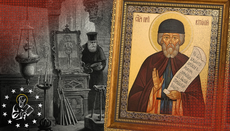
Christ told us: "Judge not, lest ye be judged" (Matt. 7:1). St. Vitalus of Gaza illustrates the meaning of this counsel more than any man who ever lived—except, of course, for Christ Himself.
“Don’t criticize or judge other people,” Fr. Seraphim Rose said; “regard everyone else as an angel, justify their mistakes and weaknesses, and condemn only yourself as the worst sinner. This is step one in any kind of spiritual life.”
To many of us, this advice is beyond naive. It’s positively dangerous. How can we, as Christians, turn a blind eye to evil? Refraining from judgment is one thing. But to justify a sinner—to make excuses for his sins? Doesn’t that make us the enemy of truth?
To answer that question, we should look to the life of St. Vitalus of Gaza (+625), whose memory we celebrate today.
Vitalus was a monk of the Monastery of St. Seridus near Gaza. In his sixtieth year, around the time when St. John the Merciful was Patriarch of Alexandria, this elderly hermit left the quiet of the desert and traveled to the bustling, vice-ridden port city of Alexandria.
By day, he hired himself out as a common day-laborer, performing exhausting physical work for a meager wage of about twelve copper coins. He ate almost nothing—just a single bean after sunset—to sustain himself. With the rest of his earnings, he went each evening to a different prostitute in the city. As he approached her door, he would sometimes announce his destination loudly enough for passersby to hear, inviting the inevitable scandal.
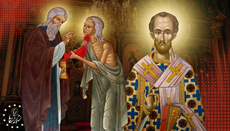
Yet when he entered the room, he would hand the woman the money and say words to this effect: “I have paid for this night so that you may spend it without sin.” He urged her to rest, to sleep peacefully for once without selling her body. While she slept—or if she was willing, while they talked—he would stand or sit in the corner, keeping vigil. He prayed the Psalms throughout the night, interceding for her soul, reminding her gently of her human dignity as a creature made in the image of God, and speaking of Christ’s mercy for the fallen.
Many women, moved by his purity, his kindness, and the strange holiness that radiated from this old monk, opened their hearts. He extracted from them a promise not to reveal the true nature of his visits. In time, dozens—perhaps hundreds—left the brothels. Some entered monasteries, others married and became faithful wives and mothers, raising Christian families.
To the Christians of Alexandria, however, the spectacle was intolerable. Here was a monk, supposedly consecrated to God, frequenting the worst quarters of the city night after night. Rumors flew. Accusations of hypocrisy and immorality spread like wildfire. Good churchgoers crossed the street to avoid him. Some spat in his path. Even fellow believers investigated the charges against him, though they found no evidence of wrongdoing.
Vitalus bore it all in silence. When questioned directly, he would sometimes reply with disarming simplicity: “Have I not a body like everyone else? Are monks not like other men? Mind your own business!” He refused to defend himself publicly or expose the women’s secrets, choosing instead to appear as the worst of sinners for the sake of their salvation.
By allowing himself to be despised, he protected the fragile beginnings of repentance in these women. His “justification” of them was not a denial of sin, but a refusal to reduce them to their worst moments. He saw in each prostitute an immortal soul for whom Christ died—no different, in God’s eyes, from the respectable matron in the pew or the monk in his cell. Sin was real, but so was the possibility of radical transformation through grace.
One fateful night, the misunderstanding reached its tragic climax. A man—accounts vary as to whether he was a pimp enraged by losing business, a client, or even a self-righteous Christian—attacked Vitalus, striking him on the head and stabbing him. The wounded saint dragged himself back to his humble dwelling.
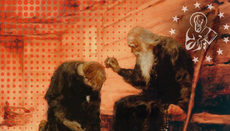
He was found dead the next day, clutching a scrap of paper on which he had written a verse from St. Paul’s first letter to the Corinthians: “Therefore judge nothing before the appointed time; wait until the Lord comes. He will bring to light what is hidden in darkness and will expose the motives of the heart. At that time each will receive their praise from God.”
Only at his funeral did the truth emerge. A great crowd of reformed women—former prostitutes now living chaste and honorable lives—came forward. One by one, they testified that they owed their souls, their freedom, and their eternal hope to this despised monk.
How does the life of St. Vitalus illuminate Fr. Seraphim’s teaching? In two ways.
Firstly, St. Vitalus did not judge the women to whom he ministered. Rather, he justified them. He saw them not as perpetrators but as victims of evil—which, indeed, they were. This allowed him to minister to them without judgment, without reservation.
Second, St. Vitalus intentionally gave the impression that he was giving evil, in order to disguise his own holiness. This was done in radical obedience to Christ’s commandment that we do good works in secret (cf. Mat. 6:1-21); “Otherwise you have no reward from your Father in heaven.”
So, when we seem to encounter evil in others, we should regard them as St. Vitalus regarded the prostitutes—or, indeed, like the people of Alexandria ought to have regarded Vitalus himself. We have no idea what secret battles they are fighting within themselves. We have no idea what circumstances they have faced, which led to their present situation. We have no idea what virtues they possess, but are kept hidden from our view. Indeed, the “evil” we perceive may be an act to conceal their holiness!
Sure, it may seem implausible. Yet remember that St. Vitalus was so good at playing the role of the wicked monk that he was killed for it. Is this is a risk that we want to take? Or should we follow Fr. Seraphim’s advice, and assume that we have “entertained angels unawares” (Heb. 13:2)?