History and Culture
Why Do We Have Forefeasts and Afterfeasts?
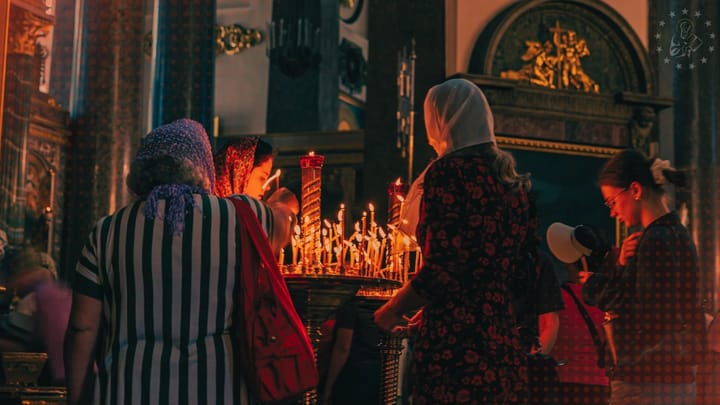
A look at how Orthodox Christians celebrate before, during, and after a feast.
There is a funny saying in Orthodoxy that “we pray before we pray.” In fact, in the Slavonic, the first prayer of the day and the first Psalm at Vespers (the start of the liturgical day) is called “prednachinatel’nyy,” or “before the beginning.” And on the other end, many have noted with amusement that the litany which begins with the words “Let us complete our prayer unto the Lord” comes a good 30-45 minutes before the end of the service.
It is the same with Orthodox feasts. Of the Twelve Great Feasts of the Orthodox Church, eleven have either a forefeast or an afterfeast, and most have both. This is a direct continuation of the Jewish tradition, where feasts like Passover, the Tabernacles, and the Azymes lasted for seven days, reflecting the days of creation. The eighth day likewise had a special role to play, in some cases marking a solemnity after the feast, or being a particular day of sacrifice. Most notably, it was on the eighth day after a male child’s birth that the circumcision was performed, marking the entry of the child into the Abrahamic Covenant.
Read also