News
Dutch Law Permits Human Embryos to Be Created and Destroyed for Research
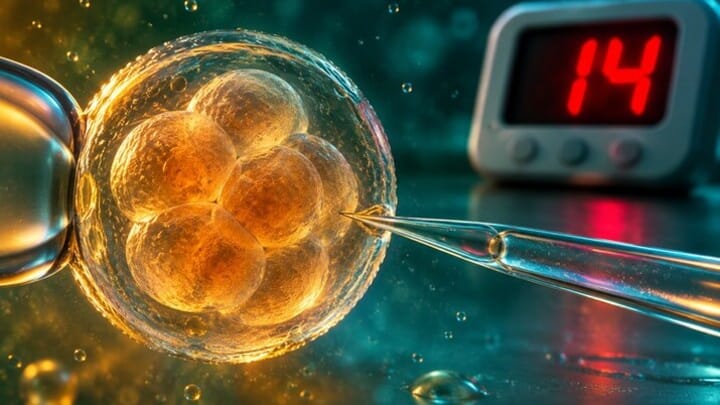
The legislation permits the deliberate creation and destruction of human embryos for scientific experiments, subject to a 14-day limit.
THE HAGUE, NETHERLANDS — The Dutch Senate has approved legislation permitting human embryos to be created specifically for scientific research, lifting a previous prohibition on producing embryos for that purpose.
The measure passed on November 10, 2026, by a vote of 38 to 35. It had previously been approved by the lower house of parliament in December 2025. The legislation allows researchers to create human embryos for experiments involving early human development, rather than limiting research to embryos remaining from fertility treatments.
Until now, Dutch researchers could only use embryos left over from procedures such as in vitro fertilization, and only with the consent of the people involved. Under the new law, embryos may be created expressly for research and subsequently destroyed.
The legislation limits the period of research to 14 days. Embryos created for this purpose cannot be implanted in a woman's uterus. The law also does not authorize reproductive cloning or genetic modifications that could be inherited by future generations. Research proposals must be reviewed by the Central Committee on Research Involving Human Subjects (CCMO).
Christian parties were among the principal opponents of the legislation. Party for Freedom (PVV) Senator Ilse Bezaan called it "morally reprehensible," arguing that it permits human embryos to be created solely for research and then destroyed. The Reformed Political Party (SGP) and ChristenUnie also opposed the measure.
Previously, the UOJ reported that Russian Orthodox churches held a nationwide moleben against abortion.
Read also