News
Metr. Saba: The Cross Transforms Suffering Into a Path to Life
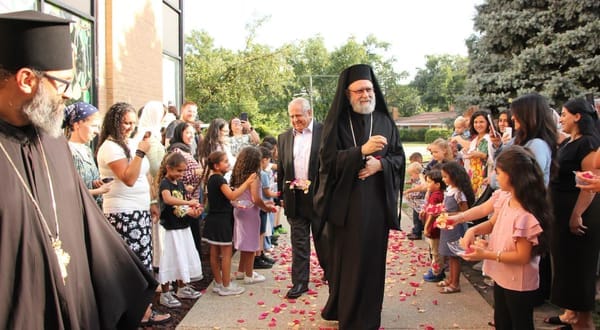
The Antiochian hierarch teaches that the Cross transforms the losses and sufferings of earthly life into opportunities to discover God’s grace and hope in the Resurrection.
ENGLEWOOD, NJ — Metr. Saba (Isper) of the Antiochian Orthodox Christian Archdiocese of North America has reflected on the role of the Cross in human life, arguing that suffering can become a path toward spiritual growth and the discovery of eternal life.
In the first part of his reflection, Metr. Saba cites Blessed Augustine’s teaching that one is saved through the Cross, another is saved by the Cross, and a third is condemned by it. Christ belongs to the first category, while every other person must respond to the Cross through either faith and acceptance or avoidance.
Metr. Saba writes that every person carries a cross because human life is temporary and inevitably includes pain, loss, and sorrow. Fleeing suffering does not eliminate it, he argues, but merely exchanges one cross for another. Confronting it with courage and faith allows a person to seek its meaning and understand how it can shape his life.
The Metropolitan also describes the world and its blessings as gifts from God, warning that modern consumerism can cause people to become attached to gifts while forgetting their Giver. Health, family, work, income, friendship, nature, and recreation are among the gifts that should inspire gratitude rather than possessiveness.
Yet every gift carries a cross because earthly blessings can be lost. Metr. Saba recounts the story of a woman who endured prolonged hospitalization, divorce, and childlessness before discovering through suffering a mission in nursing education and spiritual instruction.
In my youth, I was deeply moved by a virtuous woman who fell asleep in the Lord many years ago. She spent a year and a half in the hospital and underwent several successive operations. Her husband divorced her while she was hospitalized, and she had no children. She suffered greatly and her heavy cross moved her to question the meaning of all that had happened to her. With the help of her spiritual father and faithful friends, she discovered that she was being called to a noble mission. She dedicated her life to nursing education at a time when no nursing schools existed, and also to teaching a pure spiritual theology, which was rare in those days.
The Christian bears this cross of the world—and the cross of his own existence—not only with acceptance but also with a certain joy, because he knows that beyond this cross there is a life that does not perish. Through this faith, the Christian sees the world as crucified and dead to him. He also sees himself, together with all his inclinations, as crucified and dead to this present world. The believer works to improve this present world, even as it moves toward decay and death. He cultivates within it the seeds of the coming resurrection by striving toward his own personal resurrection and toward the resurrection of this world, which is the gift.
Throughout this journey of life, a person may discover, through tragedy and suffering, the meaning behind losing certain things that had seemed essential to him. Many times, however, he may also discover grace within their loss. He then gives thanks to God, because he would never have noticed the things that are truly more essential had he continued to enjoy those things that were taken from him.
Previously, the UOJ reported that Metr. Saba ordained two students at Antiochian Village.
Read also