Man and Church
When Politics Turns Churches Into Campaign Symbols
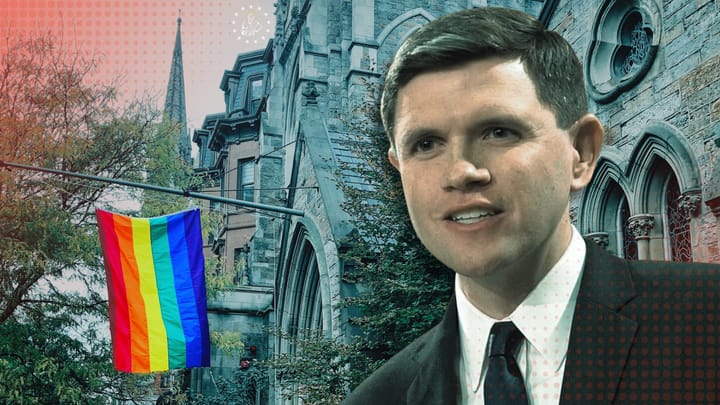
As political campaigns invoke Christianity to mobilize voters, Orthodox Christians face a difficult question: Where does faithful public witness end and political exploitation of the Church begin?
As Americans, we’re used to the sight. Politicians standing at a pulpit in a church and… making a campaign speech. It has even become a familiar trope in shows and movies like Bulworth, Veep, The West Wing, House of Cards, and The Campaign, among others. Politicians visit churches, give speeches, shake hands – and privately admit the cynicism of it all. Indeed, many Americans will look at these events and cringe. It seems performative and hypocritical of the candidates. And for Orthodox Christians, the idea is especially unthinkable. So how did this practice come about?
Much of the use of churches for campaigning stems from the lack of “sacred space” as a historical concept in America. This is not the case with all Protestant churches; rather, it takes its beginning from Puritan New England in the 17th century. Towns were built around a central structure known as the “meetinghouse.” These buildings were often publicly funded through local taxes. The same room used for Sunday worship was also where residents gathered for town meetings to vote on totally secular civil issues like laws, budget allocations, land divisions, and road construction. Perhaps most famously, the meetinghouses hosted critical historical gatherings. In 1773, Boston’s Old South Meeting House staged mass assemblies leading up to the Boston Tea Party.