

Rare Good Shepherd Fresco of Jesus Discovered in Ancient Nicaea Tomb

Archaeologists in Iznik have uncovered what may be the only known Anatolian depiction of Jesus as the Good Shepherd, a rare third-century fresco offering new insight into early Christian art.
IZNIK, TURKEY — Archaeologists have documented a rare early Christian depiction of Jesus as the “Good Shepherd” in a frescoed chamber tomb at the Hisardere Necropolis in ancient Nicaea, today’s Iznik in Bursa province. Researchers say the image may be the only known example of this type identified so far in Anatolia, making it a significant discovery for both Turkish and international archaeology.
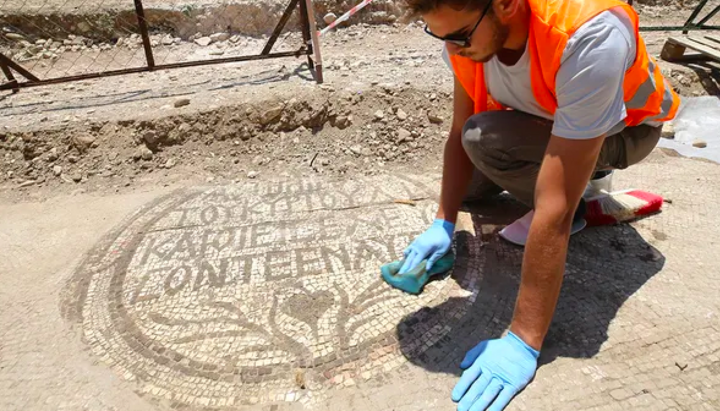
The find was uncovered during the 2025 excavation season conducted with permission from the Ministry of Culture and Tourism, under the direction of Iznik Museum Director Tolga Koparal and with scientific coordination by Professor Aygun Ekin Meric of Dokuz Eylul University. The painted tomb, or hypogeum, dates to the third century and features frescoes on three walls and the ceiling, including rare human figures.
The Good Shepherd scene portrays Jesus in Roman style as a youthful, beardless shepherd carrying a goat, flanked symmetrically by animals. Scholars say the discovery offers important new insight into early Christian visual culture in Anatolia.
Previously, the UOJ reported on a 1,300-year-old prosphora discovered in Turkey.