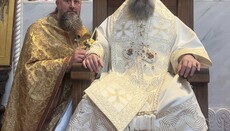




EXCLUSIVE: Antiochian Archdiocese of Chile Responds to Accusations of Corruption in Case of Defrocked Priest
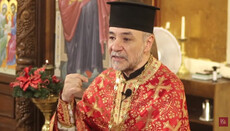
The family of former clergyman Francisco Salvador Broussaingaray maintains that the investigation into his alleged activities was uncanonical and unjust as evidence shines new light on the allegations against him.
SANTIAGO — Following reports that a well-known priest of the Antiochian Archdiocese of Chile had been defrocked as of May 22, 2026, UOJ-America reached out to both the family of Francisco Salvador Broussaingaray and the Disciplinary Council of the Archdiocese for comment following accusations that the process was tainted and unfair.
UOJ-America has also received evidence presented by the Disciplinary Council to Metr. Sergio of Chile which resulted in the laicization of Salvador. The file was provided by an anonymous source – not by any representative of the Archdiocese, which maintained that it could not share the final report as it contained highly sensitive and confidential information. The file details charges of sexual misconduct, the breaking of the seal of confession, and appropriation and misuse of parish funds.
Comments from the family, the Disciplinary Council, and a look at the evidence are presented below in a comprehensive fashion. UOJ-America has also reached out to a member of Salvador’s legal representation seeking comment, and at the time of this article’s publication there has been no response. However, one of Salvador's lawyers has publicly said the following:
"In my capacity as a member of the legal team of Reverend Father Francisco Salvador, I can only state that, in all my years as a lawyer, I have witnessed a process so irregular, so profoundly corrupt, and so clearly driven by base motives. We will pursue every available means to restore Father Francisco as our spiritual father and parish priest. What has been done constitutes a grotesque and anti-canonical justice."
Statement from Salvador Family
The children of former priest Francisco Salvador have circulated a statement defending him and sharply criticizing the disciplinary proceedings that resulted in his laicization, describing the process as "anti-canonical," "unjust," "not impartial," and "corrupt."
Written by Francisco Salvador Yarad and Leonor Salvador Yarad, the statement highlights Salvador's more than 26 years of ministry at Holy Virgin Mary Orthodox Church in Santiago, portraying him as a transformative figure in Chilean Orthodoxy. They credit him with building "the largest community in the archdiocese," pioneering Orthodox evangelization in the Spanish-speaking world, founding South America's first Orthodox theology institute, and providing extensive charitable outreach, including feeding hundreds of people each week.
"The most important thing," the statement says, "[is that] our Father dedicated his life to creating a path so that Chileans and people of all nationalities could learn about Orthodoxy, live it, approach it, and remain in it."
The authors argue that the disciplinary process violated Orthodox canonical norms. They claim there was "no collegiate episcopal tribunal," "no synod," and that Salvador "was never heard directly by the bishop before being suspended." They further contend that sanctions were imposed before the investigation was completed, stating, "In other words: first there was punishment, then there was an investigation."
The statement also challenges the evidence against Salvador, asserting that the accusations relied heavily on "indirect testimonies, rumors, and third-party comments." According to Salvador’s children, there was no "conclusive material evidence," no "concurring eyewitnesses," no civil complaints, and insufficient objective corroboration to justify the penalty imposed.
Defenders of Salvador emphasize that no civil complaint was filed against him during his decades of ministry and note that more than 90 letters of support were submitted on his behalf. They argue that testimony from longtime parishioners and supporters was largely disregarded while accusations against him were accepted without sufficient scrutiny.
The statement further alleges conflicts of interest among individuals involved in the investigation and claims that defense requests were rejected while opportunities were repeatedly provided to strengthen accusations against him. The authors also criticize the handling of digital evidence, saying cybersecurity experts demonstrated the possibility of manipulating electronic messages but that investigators refused to examine key devices.
"The constant feeling throughout the entire process was profoundly uneven," the statement says. "Every element favorable to Father Francis was discarded; every accusation was assumed to be true."
In its strongest language, the statement accuses church authorities of creating "a narrative of guilt" before the investigation concluded and allowing rumors and allegations to destroy the reputation of Salvador and his family. "The presumption of innocence was ignored," his children write, adding that "decades of pastoral service were dismissed."
The statement concludes with a call for a new review of the case by what it describes as a canonically valid and impartial body. "We are not asking that any serious accusation be ignored," the authors write. "We are asking for what every person, inside or outside the Church, deserves: a fair trial, with impartial judges, with real evidence and with respect for the presumption of innocence."
They argue that "twenty-six years of service cannot be destroyed by rumors" and urge supporters to continue standing behind Salvador as he seeks further review of the disciplinary decision.
On April 3, 2026, after Salvador’s suspension but before his laicization, the parish council of Holy Virgin Mary Orthodox Church put out a statement of support for their priest by what was described as a unanimous vote.
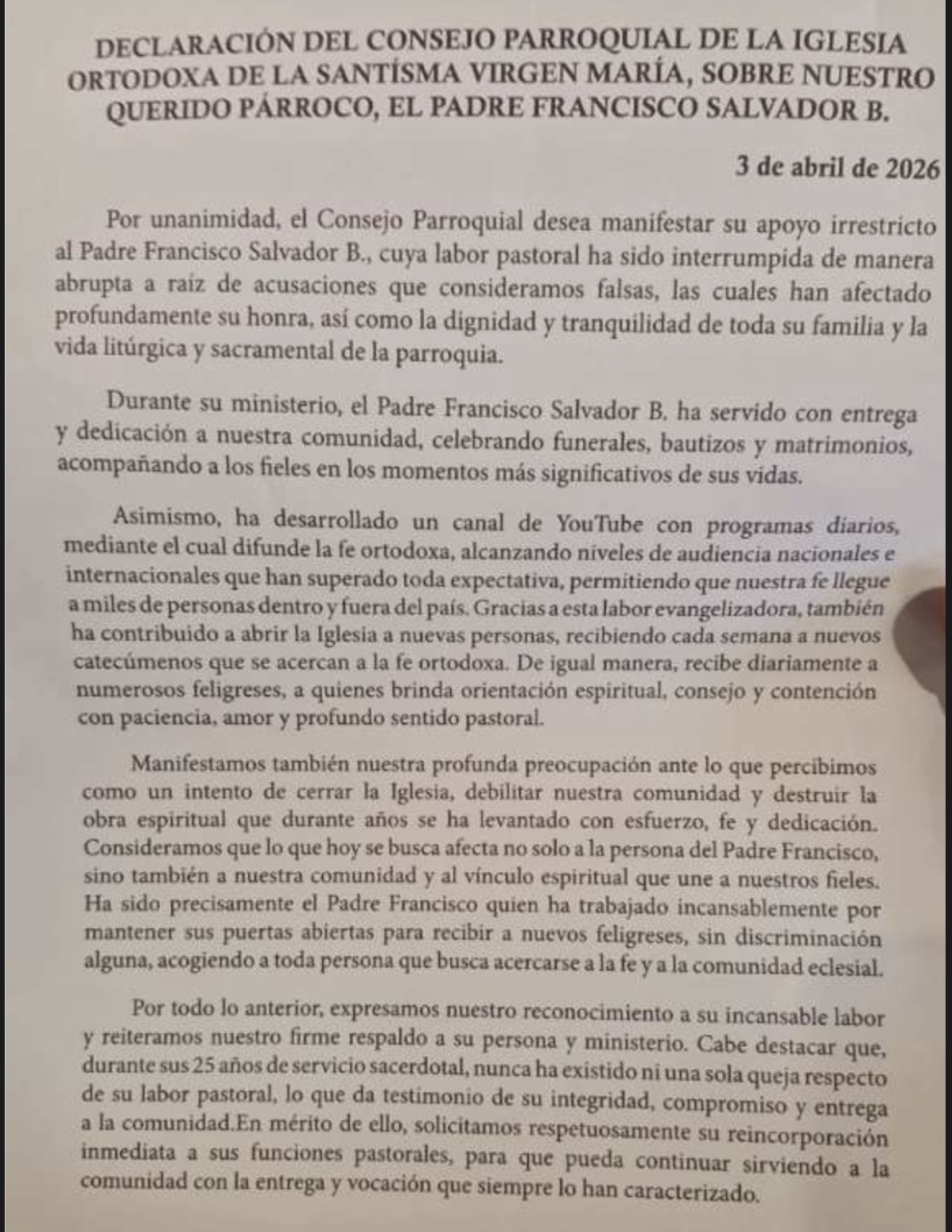
The statement of the Holy Virgin Mary Orthodox Church parish council.
Stating the belief that accusations lodged against Salvador are false, the parish council also cited the number of funerals, baptisms, and weddings he has performed, as well as his YouTube channel and teaching of national and international audiences, describing him as someone with a “deep pastoral sense.”
“We also express our deep concern at what we perceive as an attempt to close the Church, weaken our community, and destroy the spiritual work that has been built up over the years with effort, faith, and dedication,” the parish council continues. “We believe that what is being sought today affects not only Father Francisco personally, but also our community and the spiritual bond that unites our faithful.”
The statement closed with a request for the immediate reinstatement of Salvador to his pastoral duties.
Following the official laicization in May, Jaime Suez Catan, the president of the parish council, put out a statement condemning the decision.
The statement alleged that Fr. Cristian Sylva Cooper, who served on the Disciplinary Council, is married to a first cousin of Salvador, and that another individual on the council was not even Orthodox, but rather a member of a Protestant denomination.
“Without going into details regarding how the Disciplinary Council operated, whose legitimacy we duly rejected, we consider it extremely serious that this was ordered and decided by a 95-year-old person who, shortly before the sentence, was seriously ill at the German Clinic in Santiago and is currently confined to the German nursing home,” the parish council president continues. “We have serious doubts about whether Monsignor Sergio was fully aware of the information presented in a 40-page report and whether he drafted the sentence against Father Francisco Salvador.”
The parish council president said that they cannot accept the decision issued against Salvador and urged Metr. Sergio to annul his actions, lest the parish council appeal to Patr. John X of Antioch. The parish Facebook page has also posted an appeal in defense of Salvador.
Statement from Disciplinary Council
A letter sent from Fr. Cristian Sylva Cooper – secretary of the Antiochian Archdiocese of Chile and a member of the Disciplinary Council – to UOJ-America strongly disputes the claims made by Salvador and his family regarding the canonical proceedings that led to his laicization. Church officials maintain that the disciplinary process was conducted according to Antiochian canonical regulations and was prompted by serious allegations of sexual misconduct involving parishioners.
According to the letter, Salvador was placed under precautionary suspension at the beginning of the investigation because of "the serious nature of the complaints lodged against him, which involved allegations of sexual offenses against members of the parish entrusted to his care."
The Archdiocese argues that many of Salvador's criticisms of the process were raised only after the final decision was issued. "Not one of these objections was raised at any point during the course of the proceedings," the letter states, noting that Salvador never sought the recusal of disciplinary council members nor challenged the authority of Metr. Sergio during the more than two-month investigation.
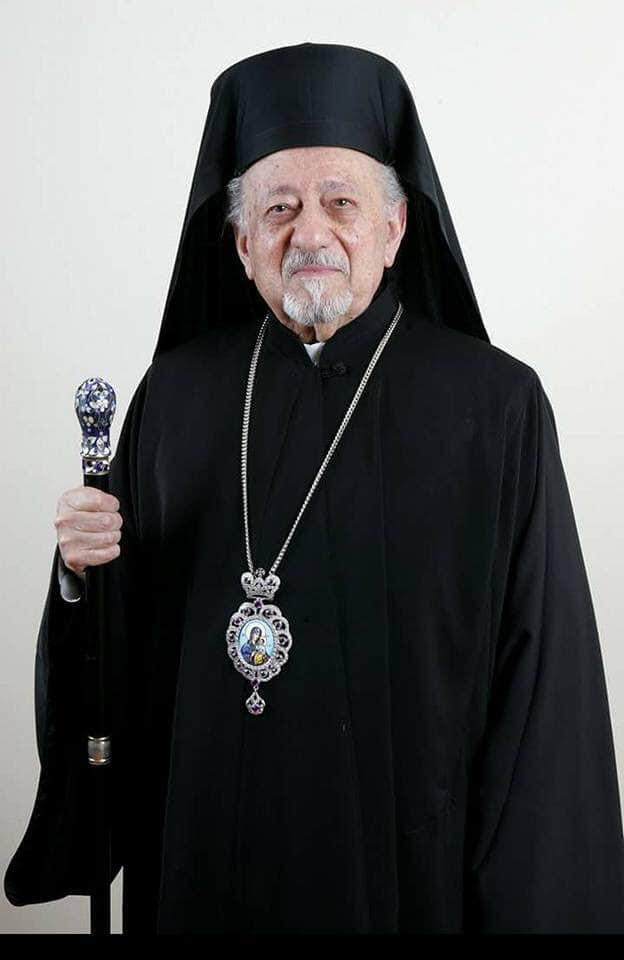
His Eminence Metr. Sergio Abad. Photo: chileortodoxo.cl
“Furthermore, the manner in which Mr. Salvador has characterized His Eminence's advanced age is deeply unbecoming of an Orthodox priest, who is bound by sacred tradition to regard his Archbishop as a spiritual father deserving of filial respect and canonical obedience,” the statement says. “... Mr. Salvador has noted that His Eminence Metropolitan Sergios is currently convalescing at a care facility following an illness in April. This circumstance is entirely without bearing upon His Eminence's mental acuity and canonical capacity, both of which remain intact. The Disciplinary Council personally delivered to His Eminence the final report, together with printed copies of the complete procedural record, affording him the opportunity to review all materials thoroughly. His Eminence subsequently rendered his decision following prayer and consultation with persons of his choosing. He additionally received a digital copy of the complete court docket.”
Church officials also reject Salvador’s allegations of procedural misconduct and witness tampering. Addressing claims that witnesses were paid to testify against him, the letter says that the complete WhatsApp conversation cited by Salvador as evidence was entered into the record and "demonstrably refutes this claim."
The Archdiocese further contends that Salvador misrepresented the evidence presented against him. While he reportedly claimed that only four witnesses testified, the disciplinary council states it conducted formal interviews with 20 witnesses. According to the letter, five women reported receiving sexually explicit messages from Salvador, four women alleged sexual harassment or abuse, and multiple social media conversations were submitted into evidence, including a notarized six-month WhatsApp exchange. The council also alleges that one conversation included "a photograph of Mr. Salvador of an intimate nature."
One of the most serious accusations in the letter concerns evidence allegedly presented by Salvador in his own defense. The council claims that messages Salvador said would exonerate him were altered before submission. After comparing excerpts provided by Salvador with original messages reviewed on a complainant's phone, investigators allegedly concluded that he had "materially altered their content," while the original messages and audio recordings allegedly supported the accusations against him.
The letter also criticizes Salvador's conduct during the proceedings, accusing him of issuing legal threats against complainants and witnesses, changing parish locks without authorization, dismissing parish employees connected to the case, and conducting "a sustained social media campaign designed to cultivate public support and to discredit those who declined to align with his position."
In addition, the Archdiocese alleges that Salvador breached the confidentiality of the proceedings when he filed a petition before the Santiago Court of Appeal. According to the letter, he attached "hundreds of pages of confidential materials from the court docket," including witness testimonies and the final report submitted to Metr. Sergios. Church officials say those documents were later removed from public access through the intervention of the disciplinary council.
The letter concludes by stating that the allegations and findings summarized therein do not represent the entirety of the charges sustained during the investigation, noting that "additional matters were proven but cannot be addressed in full within the scope of this correspondence." The Archdiocese also said it could not release the complete final report because it contains "highly sensitive and confidential" information.
In a separate statement from the Archdiocese issued to the general public in response to the “legitimate doubts that have arisen” following Salvador’s laicization, Cooper said the following:
- This decision is the result of a process in accordance with the holy canons of the Holy Orthodox Church and the current procedural regulations of the Patriarchate of Antioch and All the East. The process was initiated by Archbishop’s Decree of March 12 from His Eminence Archbishop Sergio Abad, who mandated the Primary Ecclesiastical Disciplinary Council to investigate the complaints received and prepare a final report. Mr. Salvador never questioned this procedure; rather, he met with His Eminence Archbishop Sergio Abad to discuss his suspension at the beginning of the process.
- There is a written and audiovisual record of the entire process in a file that contains several thousand pages, including hearings of 20 witnesses. The accused had access to the entire file from the time the charges were filed, was given a translation of the procedural regulations, was able to submit his defense in writing, testify before the disciplinary tribunal, and present evidence, also having legal counsel during the trial. All of this guaranteed due process.
- The conduct that led to Mr. Salvador’s sanction is extremely serious and includes situations of criminal relevance, which warrants its referral to the Public Prosecutor’s Office, as was acknowledged during the trial by the accused’s own defense.
- In order to protect the privacy of the accused, his family, and the people involved in these events, the final report of the Primary Ecclesiastical Disciplinary Council and the laicization resolution have not been published. However, this background information is available to members of the community who request it to learn about the process and not out of mere curiosity.
- Following his laicization, instead of beginning a period of reflection and repentance, Mr. Salvador has turned to social media to question the legitimacy and motivations of the process.
- For the Church, what matters is not ecclesiastical or social position, but the repentance that leads to salvation. Drastic decisions like those in this case are made with the ultimate goal of the person’s salvation in mind.
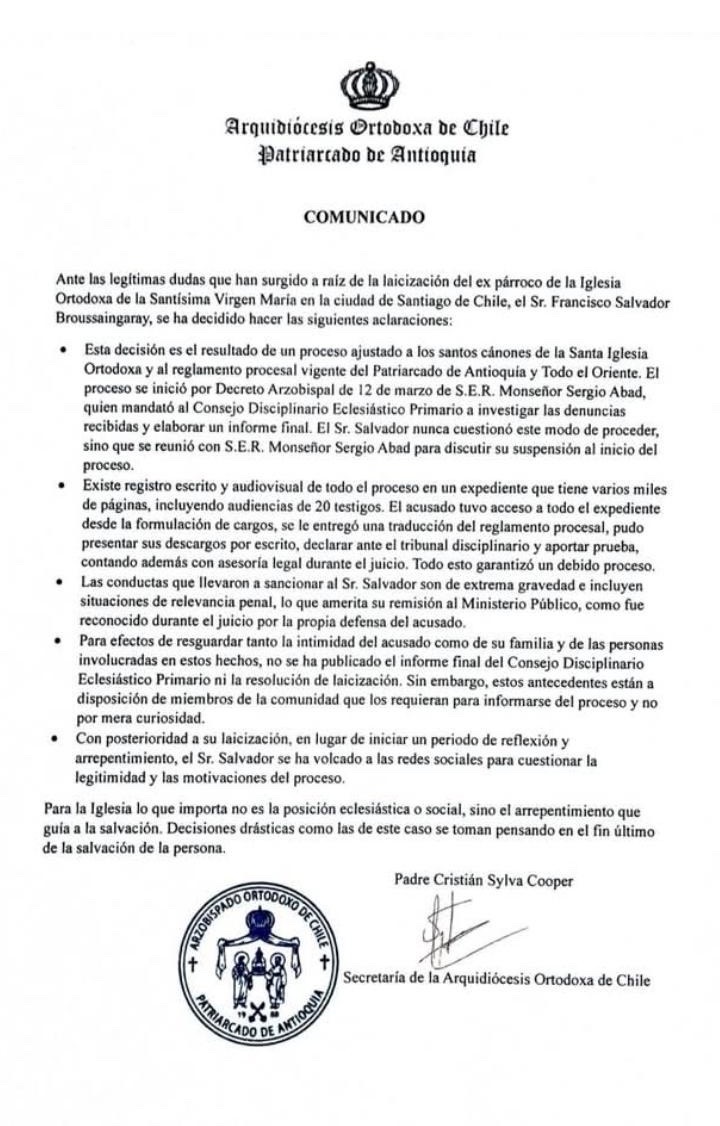
The official communique signed by Fr. Cristian Sylva Cooper.
The Evidence
Since both of these statements were received, UOJ-America has received a file of evidence used by the disciplinary council to reach a verdict in Salvador’s case. After carefully reviewing the materials contained in the file, some of the more pertinent information will be shared below. For the sake of propriety, certain photos will be described rather than included, inappropriate conversations will be mildly censored while conveying the exchange accurately, and identities other than Salvador’s will be kept anonymous.
The report shares information regarding three main women Salvador is alleged to have had inappropriate communications and/or relations with, as well as other, more spontaneous encounters with separate women.
The file begins by sharing the decree issued on March 22, 2026, announcing the provisional suspension of Salvador while the investigation was underway. The decree was signed by Metr. Sergio.
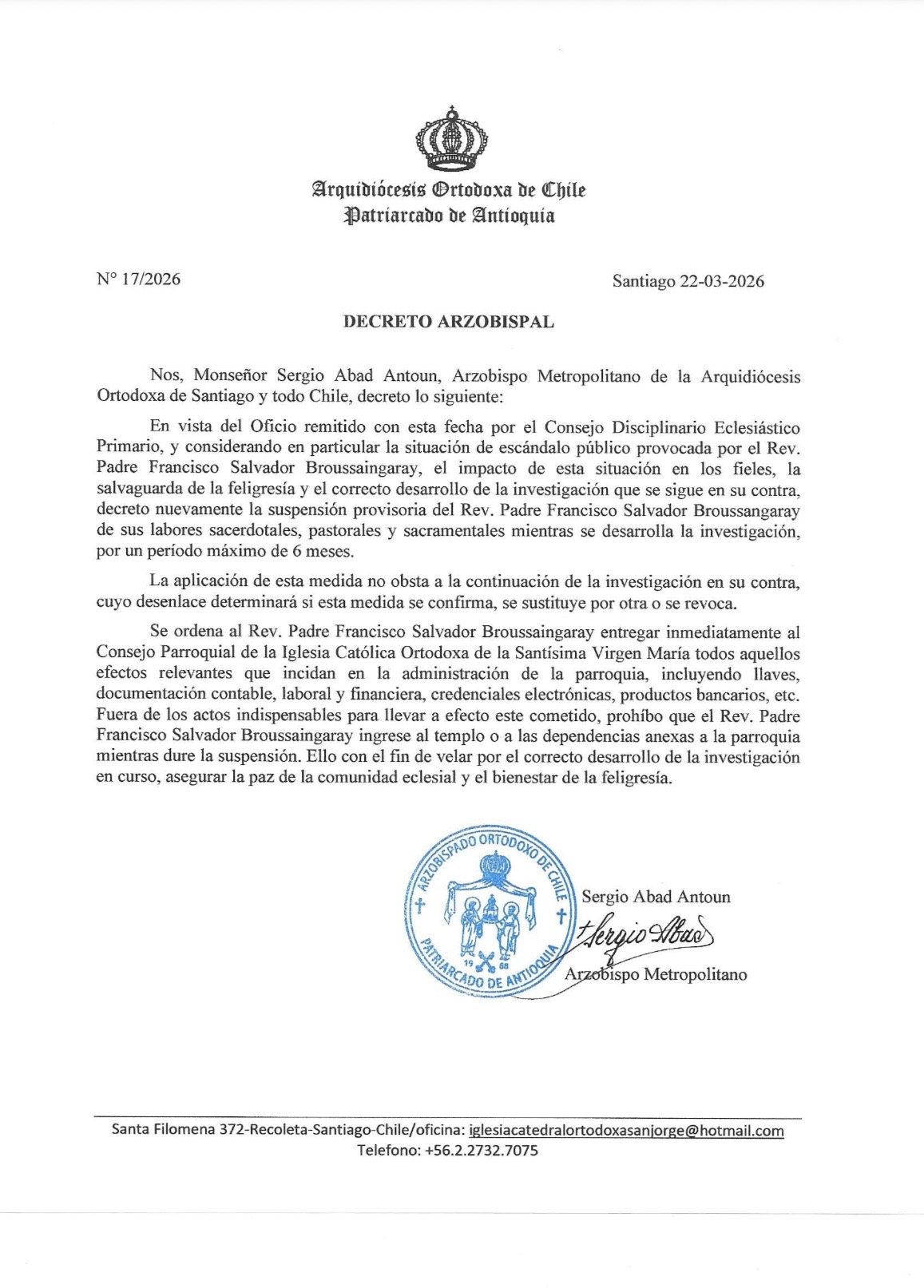
Francisco Salvador was suspended by episcopal decree on March 22, 2026.
Evidence attached includes various messages exchanged by Salvador with multiple women using social media apps like Instagram and WhatsApp.
One such conversation includes the following string of messages sent by Salvador in succession before receiving a response:
Salvador: You unblocked me! Thank you. I won’t bother you.
Salvador: Good night, my glorious masterpiece.
Salvador: *heart eye emoji*
Salvador: I need and desire you too much. I need my slave, my w***e.
According to the file, several witnesses also recounted an incident which took place in 2018, when Salvador was reported on social media by a woman who had possession of a shirtless photo of Salvador in the bathtub. This is the same woman who the above conversation was with.
“One witness indicates that she was a prostitute, while another suggests a romantic relationship,” the document states. “However, based on messages shown by one of the witnesses… it is clear that in this case, there were unsolicited sexual advances, which prompted the report on social media.”
The document then shows correspondence between two women, including the woman who received the shirtless photo. The woman reaching out to the recipient of the photo is alleged to have initially been defending Salvador before realizing the gravity of the situation. She makes comments such as “nothing like this” happening since she has known him, adding, “I’ve known him for 16 years, if not more. So that’s why everything is strange.”
When asked why she continued to correspond with him despite feeling uncomfortable, the recipient of the photo stated, “Because I needed proof so everyone could see how fake he is.” After being asked why she never went to his workplace to confront him about these things, the recipient responded, “You’re crazy. He told me he’d throw me on the big table to do disgusting things.” When told that his secretary would be there, as well as other people, the recipient shared that Salvador had once allegedly waited for her outside the gym in his car.
“It’s strange that all this is coming out now,” the other woman responded. “He has a family… He loves his family and his wife.” The recipient argued, “And he doesn’t care about that. He wouldn’t do these things.” She also said that Salvador had told her he was talking to his wife next to him as he was communicating with her.
The other woman then requested, “Do you have the evidence or photos so I can send them to his wife? It’s all strange, it doesn’t add up.” While waiting for the recipient to procure the evidence, the woman followed up with a thinking emoji and said, “I’m waiting for you.”
After looking for it, the recipient then replied with a screenshot of the following conversation with Salvador:
Salvador: I want to have coffee and see you laugh.
Woman: Hey, I’m going to the Miguel Claro police station now.
Salvador: Very close by.
Woman: In a little while.
Salvador: Come by, I’ll pay for your parking and you’ll take home a little gem. And I won’t ask for anything else. Well, maybe I’ll grab that butt of yours. Or give you a kiss.
Woman: ?
Salvador: Booooo
She also included the aforementioned photo of Salvador shirtless in his bathtub and replied sarcastically to the other woman:
“Oh, so now the PDI is lying, and he’s telling the truth. Please. That’s not him in his bathroom. That’s not him either. And I’m not sending you the other photos because they’re extremely embarrassing. Isn’t that him? So it’s not him, and the PDI is lying?”
PDI refers to the Investigative Police of Chile (Policia de Investigaciones de Chile).
A separate conversation shows Salvador speaking to a woman while saying he wants oral sex from a different woman “more than penetration.” He goes on to tell the woman he is speaking with that, because the other woman in question has small breasts, “that’s why I want you.”
In a conversation with a woman who was telling him to be careful lest a woman says or shows things he has done, Salvador said “I’ll try.” When faced with what he would do if complaints were brought forward to a church authority, the following exchange took place. Texts that were sent in a row by a single individual have been compiled into single paragraphs.
Salvador: I would deny everything.
Woman: Why, do they lose?
Salvador: Yes. I have zero fear. Zero. I know what I’m doing. And what I can do. And if the girl makes a scene, okay. I have no issue.
Woman: Yes, I know you’re not afraid.
Salvador: That’s how it goes.
Woman: But what about everyone else? You know they’ll be alarmed. And [name redacted] – what is she going to do?
Salvador: Well, those who see it, if they choose to believe her, they lose. Look, when a person loses fear, life is simple.
Woman: More risky.
Salvador: Whether they leave, or throw me out, or whatever happens, I’m happy. I like taking risks. I’m a gambler. That’s what living is.
Woman: But what about the fear of God? [In response to throwing him out] I don’t think so, because it’s not convenient for them.
Salvador: I fear, but I know what I’m doing.
The following exchange took place with one of Salvador’s spiritual daughters.
Salvador: How are you?
Woman: Hello Father. Good, and you?
Salvador: Very well. You look very well.
Woman: Thank you *smiling emoji*
Salvador: I want to see you. A lot.
The disciplinary council’s report states that, sometime later, Salvador allegedly grabbed the woman’s arm and proposed having a threesome with her sister. The report states that, according to witness testimony, he regularly referred to both of these women as his daughters. A conversation between the sisters in which the incident is recounted is shown below:
Woman #1: Did Father Francisco ever get too familiar with you? Like touching you or anything like that? Also, do you have any conversations where he’s flirting with you? The thing is, this man is already on a roll.
Woman #2: Ugh, it’s just that I don’t have my other SIM card anymore, sister. And yeah, he told me about the threesome.
Woman #1: Ugh, right. But anything else? Or did he do anything to you?
Woman #2: I had never thought about having a threesome with him and I was like, no, how disgusting, and I started to stand up, he grabbed my arm and [name redacted] came in and let go of me. Did he do anything to you?
Woman #1: Yeah, but he always said creepy things to you. So many things have happened. That he’s making me sick. And they want to kick him out. Part of my illness is his fault.
Woman #2: Yes, always, and also, with this thing about him having power over people in need, because one didn’t have anywhere to work, he took advantage of it, or the mistreatment, saying dirty things. [In response to being at fault for the illness] I’m sure he is. He’s the one to blame.
Woman #1: Okay, sister, I wanted to show that he sent you dirty things.
The document proceeds by saying that, although it was not a behavior originally intended to be investigated, several witnesses allegedly testified that Salvador had repeatedly broken the seal of confession. “Several witnesses reported having personally heard these confessional secrets, while in other cases they heard secondhand accounts of situations suffered by other parishioners who learned that their secrets had been revealed,” the file states.
Examples include one fellow clergyman stating that he knew parts of people’s confessions because Salvador would tell him, then say, “you’re cool.”
Another witness stated the following:
“He would summon people, especially women, to confession in his office. He told me that at that time there was a Russian woman who was having problems in her marriage because of infidelity. This is the one I remember most: she would tell the priest that she was going to get a divorce, she would tell him her things, then the priest would say to me, ‘Look, there goes that b***h who wants a divorce, because she did this and this.’ He would also tell [name redacted] the things they told him, ‘[Name redacted], that b***h did this.’ He would tell [name redacted], for her it was nothing new.”
Finally, the document alleges misuse of parish funds by Salvador, saying that he freely disposed of parish funds, with some money going into his personal account rather than institutional accounts.
“In this sense, there was a commingling of assets between the accused’s personal accounts and parish accounts, to the point that the accused freely withdrew money from the parish, used Sunday offerings for various personal purposes (such as exchanging the money for dollars for trips or paying common expenses of the apartment where he allegedly took the aforementioned women),” the document states. “This commingling of assets is evident in the fact that the accused sometimes paid parish debts with his own account.”
The disciplinary council also states that due to the administrative and financial disarray of the parish, as well as lack of oversight by the parish council, these irregularities were able to go undetected. The council claimed that witnesses also testified that the parish council did not manage or oversee the administration of the parish, so all economic decisions and administration fell to Salvador, who would ask other people to implement what he decided.
Additional Information
While UOJ-America has elected to keep the identities of those involved anonymous, it must be noted that the documents have become available to many due to their temporary inclusion in the public docket after submission by Salvador and his legal team. The disciplinary council then worked to have the information blocked to the general public, but many had already downloaded the file before this occurred.
The Archdiocese of Chile put out the following statement on June 1, 2026, regarding this incident:
We, His Eminence Metropolitan Archbishop Sergio Abad Antoun, Metropolitan Archbishop of the Orthodox Archdiocese of Santiago and All Chile, in response to the public statement issued by the Parish Council of the Orthodox Church of the Most Holy Virgin Mary, decree the following:
The former Father Francisco Salvador has already submitted his appeal on May 28, which will be sent for review to the authorities of our Patriarchate. The decision to uphold or revoke this sanction now rests in their hands. As long as it is not overturned, the decision of laicization shall remain in full effect.
We regret the attention this decision has received. The publication of a laicization decree corresponds to an ancient practice of our Church, so that the faithful may know when a priest has lost his titles, attributions, and faculties. It is a painful but necessary measure.
What is not acceptable is that the lawyers of the former Father Francisco have publicly submitted parts of the canonical file to the Judicial Power of Chile. We understand that this has allowed confidential information from the process to become known throughout the world and has caused great unrest. We call on the faithful to maintain respect for all persons whose identities have been revealed and who are suffering.
We understand the pain that this entire situation has caused to the spiritual children of the former Father Francisco. However, we are concerned by the statement of the Parish Council, which asserts that it will not accept the imposed sanction and that it dismissed two employees who denounced former Father Francisco Salvador. We consider this situation of disobedience to be unsustainable and unacceptable.
In the coming days, an envoy from our Patriarchate will visit our country to help restore order in the face of these extremely serious circumstances.
SERGIO ABAD ANTOUN
ARCHBISHOP METROPOLITAN
ORTHODOX ARCHDIOCESE OF SANTIAGO AND ALL CHILE
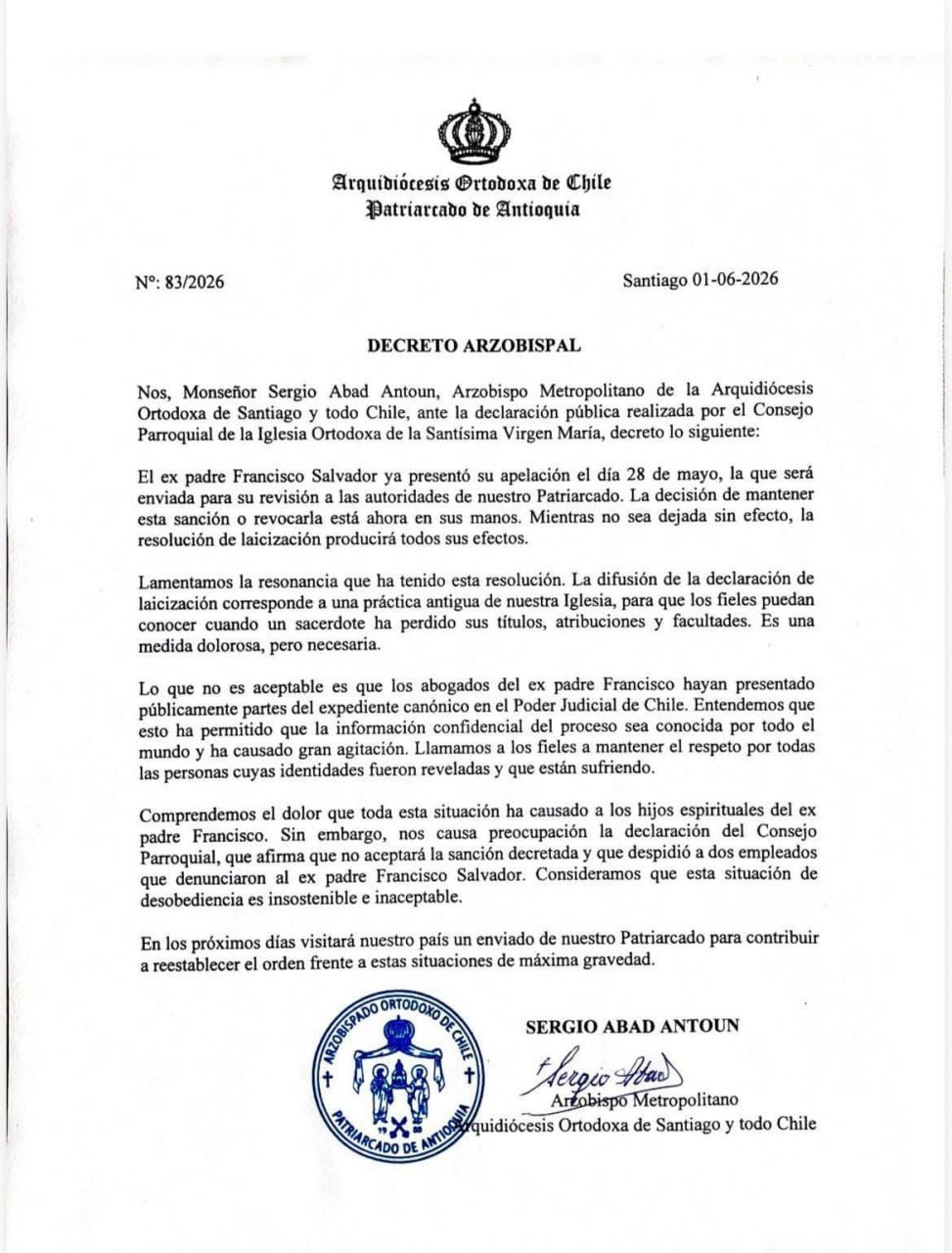
The statement of Metr. Sergio from June 1, 2026.
Locals have accused Salvador and his lawyers of leaking evidence without names redacted in order to reveal the identities of his alleged victims so that his associates could harass them and drive them out of his former parish.
UOJ-America will continue to report on this case as new developments occur.