News
Metr. Saba Reflects on Faith and Secularism
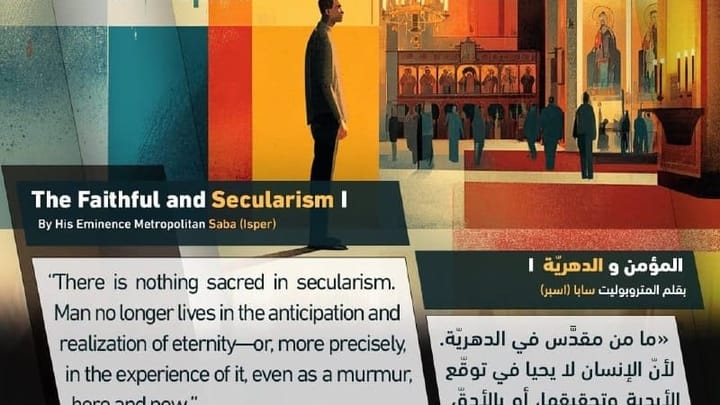
The Antiochian hierarch's latest essay examines how secular culture can reshape religious belief and practice.
ENGLEWOOD, NJ — Metr. Saba has published the first installment of a reflection examining the relationship between Christian faith and secularism, arguing that modern society increasingly separates religious belief from everyday life and places human ability at the center of existence.
In the essay, the Antiochian hierarch describes secularism as a worldview that seeks to manage life without reference to God, relying instead on human reason, technology, and material progress. While acknowledging the benefits of technological advancement, he warns that growing confidence in human capabilities can lead people to depend less on God and more on themselves. According to Metr. Saba, this shift has gradually transformed faith into a private matter rather than a guiding principle for daily life.
The hierarch contends that secularism often preserves religious forms while emptying them of their spiritual meaning. He argues that many aspects of Christian life, including prayer, marriage, fasting, and attitudes toward death, have increasingly been shaped by cultural expectations rather than by the teachings of the Gospel. As a result, he says, believers may find it difficult to distinguish between authentic Christian practice and values absorbed from the surrounding culture.
Metr. Saba also maintains that the influence of secular thinking has penetrated Orthodox churches as well. He concludes that clergy and laity alike must remain attentive to whether their actions are being formed primarily by the Gospel or by the assumptions of contemporary society.
Previously, the UOJ reported that Metr. Saba called for a living patristic tradition.
Read also