History and Culture
The Work of Unity Begins With Honest Questions
Scholarly conferences could offer Orthodox Christians a forum to examine disputed history and canonical authority beyond familiar polemics.
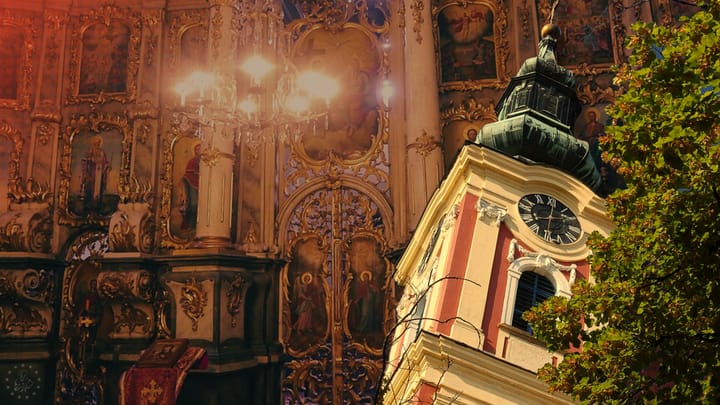
In mid-November, the Russian Church will mark a quiet anniversary. Twenty-five years ago, from November 13 to 16, a group of historians and clergymen gathered in the town of Szentendre, Hungary, at the residence of the Serbian Orthodox Diocese of Buda. It brought together clergy of the Moscow Patriarchate and the Russian Orthodox Church Outside of Russia (ROCOR), to study the Church’s history from 1917 to 1933. Clergy included Archimandrite Tikhon (Shevkunov), and Archpriests Valentine Asmus, Victor Potapov, Nicholas Artemoff and Alexander Lebedeff. Also included were scholars from Moscow, St. Petersburg, Kazan and Novosibirsk. While modest in scale, it would be a significant step towards Church unity in the last century. Its lessons could provide for the solution to heal the rift between Moscow and Constantinople.
The Main Issue
The division between the Moscow Patriarchate and ROCOR was an effect of the Russian Revolution and the Civil War. It was a question of how the Church conducted itself under persecution. Should the Russian Church seek a legal footing with a regime bent on its destruction, or refuse any accommodation. Met. Sergius’s declaration of 1927, which pledged the Church’s loyalty to the Soviet state, became the cornerstone of that disagreement, whose legacy the Moscow Patriarchate inherited.