Defense of The Faith
The War on Seraphim Rose
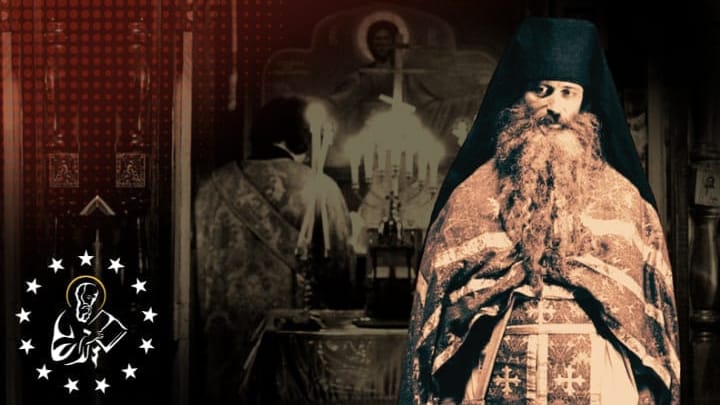
We’re told simply to assume that, by canonizing Fr. Seraphim, the bishops would also be canonizing “Orthobroxy”—as though the Body of Christ were made up of factions rather than people.
“If ever a human being lived on this earth who sought God with his whole heart, whatever sins or errors he may have had—and as the Orthodox requiem service says, there is no man who lives who does not sin—it was Fr. Seraphim Rose.”
Thus wrote Protopresbyter Thomas Hopko in his sermon for the 20th anniversary of the saint’s repose. He delivered this homily over Fr. Seraphim’s grave at St. Herman of Alaska Monastery in Platina, California.
Lately, certain individuals have been contrasting “mainstream” Orthodoxy, as embodied by folks like Fr. Tom Hopko, with the “rigorism” of Seraphim Rose. This is an illusion, however.
It’s true that St. Seraphim had harsh words for Hopko’s mentor, Fr. Alexander Schmemann. Rose called Schemann an exponent of “Eastern-Rite Protestantism.” Schmemann, for his part, may have been thinking of Rose when he condemned “Romantic Orthodoxy.”
And yet Thomas Hopko—in his deep pastoral wisdom, and with the benefit of hindsight—recognized that Alexander Schmemann and Seraphim Rose each made an invaluable contribution to the American Church. Who, in 2026, can still deny this?
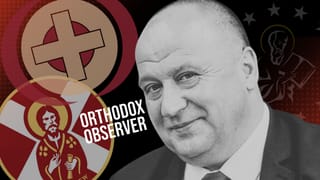
One of those who comes to mind is Sergei Chapnin, communications director for the Orthodox Christian Studies Center at Fordham University.
Chapnin is working on a four-part blog post attacking Fr. Seraphim, which he titled, “When Orthodoxy Becomes Ideology: On the Canonization of Seraphim Rose." At the time of publication, only the first three installments have appeared. So far, however, he has not quoted a single book, article, or talk by Fr. Seraphim Rose. He has not referenced any information from his biography. In fact, Mr. Chapnin demonstrates no knowledge of Rose’s life and works at all.
The entire series is an exercise in guilt by association. Essentially, he argues that Bad People like Fr. Seraphim; therefore, he should not be canonized. In his own words:
In the American context, a canonized Fr. Seraphim will almost inevitably be used as a legitimation of a very specific package: anti‑ecumenism, culture‑war rhetoric, conspiracy‑tinged apocalypticism. Whatever his personal sanctity may be, he also wrote a great deal that is highly problematic and ideologically loaded, and that is exactly what will be foregrounded.
Again, Mr. Chapnin doesn’t quote any of Fr. Seraphim’s “problematic” writings… presumably, because he hasn’t read any.
In truth, Fr. Seraphim’s worldview matured as he grew older. Of course, he never became an ecumenist—certainly not by Fordham standards. But as a spiritual father he made it his mission to cure “crazy converts” and “spiritual baboons” of “correctness disease.” As he reminded them: “The first and most important thing is not ‘rightness’ at all, but Christian love and harmony.” He also came to repent of the “pro-zealot” articles he wrote as a younger man.
Chapnin doesn’t know this because (once again) he hasn’t bothered to do his homework. Of course, the same is true of those “spiritual baboons” who would use Rose as the poster-boy for their reactionary anti-modernism. Both have reduced Fr. Seraphim to a caricature; that caricature also happens to be wrong.
This is the deep irony of Chapnin’s article. It is transparently, shamelessly ideological. Fr. Seraphim is dehumanized. He is flattened into this caricature. He is reduced to a mere party symbol: Republicans have the elephant, Democrats have the donkey, and “Orthobros” have Seraphim Rose. We’re told simply to assume that, by canonizing Fr. Seraphim, the bishops would also be canonizing “Orthobroxy”—as though the Body of Christ were made up of factions rather than people.
The tragedy at the heart of it all is that the “Orthobros” have a great deal of maturing to do in their own faith… and they could ask for no better guide than Fr. Seraphim!
By the way, I don’t say any of this for the benefit of Mr. Chapnin & Co. If they haven’t made an effort to understand Fr. Seraphim by now, I doubt they ever will.
Rather, I say this for the benefit of Fr. Seraphim’s admirers, and those who may only be discovering him for the first time. And all I would say is this: Be not afraid! Don’t let the “intellectuals” shame you into ignoring or even disparaging Fr. Seraphim. Give him a chance to speak for himself. Read one of his books, or some of his letters.
Then, make up your own mind. That is your right as an American. It’s your duty as a rational human being.
You may like to begin with the following passage from Rose’s essay The Search for Orthodoxy. “But possibly the deepest and most attractive thing about Orthodoxy today," he writes, “is its message of love”:
The most discouraging thing about today’s world is that it has become so cold and heartless. In the Gospel of St. Matthew our Lord tells us that a leading characteristic of the last times will be that “the love of many will grow cold” (Matt. 24:12); and the Apostle of love, St. John the Theologian, records our Lord as saying that the chief distinguishing mark of His disciples is the love they have one for another. The most influential Orthodox teachers of recent times have been those most filled with love, who attract people to the riches of the Orthodox Faith by their own example of overflowing, self-sacrificing love: St. John of Kronstadt, St. Nektarios of Pentapolis, our own Archbishop John Maximovitch…
Being filled with the Gospel teaching and trying to live by it, we should have love and compassion for the miserable humanity of our days. Probably never have people been more unhappy than the people of our days, even with all the outward conveniences and gadgets our society provides us with. People are suffering and dying for the lack of God, and we can help give God to them. The love of many has truly grown cold in our days—but let us not be cold. As long as Christ sends us His grace and warms our hearts, we do not need to be cold.
Do these sound to you like the thoughts of an ideologue consumed with “conspiracy‑tinged apocalypticism”? Or does Fr. Seraphim strike you as a man both clear-eyed and tender-hearted—one with piercing insights into the unique challenges Modernity poses to Christians, but also a lively confidence that the darkness of sin and despair will never overcome the fire of Divine Love?
If it’s the latter, then you have begun to understand why numberless Orthodox Christians around the world have come to revere Fr. Seraphim Rose. You will also begin to understand why they will not and cannot stop defending him against this kind of lazy slander.
St. Seraphim of Platina, pray to God for us.