Defense of The Faith
From Stalin's Gulags to Zelenskyy's Raiders
Communist authorities, Autocephalist hooligans, and now the state-sponsored “Orthodox Church of Ukraine”: the faithful of Korsun’-Shevchenkivs’kyi region have stared them all down, braving persecution to keep the Orthodox Faith alive.
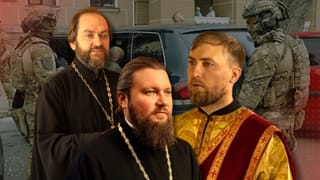
Archpriest Ioann Nalapko is 70 years old. He is the dean of Korsun’-Shevchenkivs’kyi—roughly two hours southeast of Kyiv—in the Diocese of Cherkasy of the Ukrainian Orthodox Church (UOC). Born in 1955 in a forgotten village in Zhytomyr Oblast, his father was an “enemy of the people”—condemned to 15 years hard labor on the infamous Belomorkanal project for the high crime of owning land and several horses. It was in the far north of the Soviet Union that Fr. Ioann’s older brothers were born. Of 700 people sent from their region in Ukraine, only 60 returned.
Feeling a calling to serve God from a young age, the young Ioann—perhaps influenced by the brutality suffered by his father—saw very early on the falseness and cruelty of the world, and wanted only to seek truth. And where else could the truth be found but in God? Unlike his peers, he never joined the Pioneers or the Komsomol (Young Communist League), even though membership in these organizations would have been crucial to a comfortable life in the USSR.
Instead, he enrolled in the Odessa Seminary, one of the few theological institutions still open in the communist country. He married and, in 1979, was ordained a deacon by Met. Sergius (Petrov; +1990) of Odessa and Kherson, and a priest in 1980 by Met. Philaret (Denisenko) of Kyiv and Halych. Philaret would later declare himself “Patriarch of Kyiv & All Ukraine” in 1995, a title which he still claims to this day.
In 1981, Fr. Ioann was assigned to the regional capital of Korsun’-Shevchenkivs’kyi in the Cherkasy Oblast. The region had been hard hit by Soviet rule—countless people had died during the Holodomor, and of the more than one hundred churches that had once dotted the landscape before the Revolution, only one still stood: Holy Transfiguration Church in Kornilivka.
Fr. Ioann got to work: over the succeeding decades, 20 new churches would be opened in the region, and dozens of young men brought up in the Faith, sent to seminary, and ordained. He was tireless, and worked alongside community leaders to grow Christ’s Vineyard. In Drabivka, he approached a local businessman and proposed turning one of his disused buildings over for church use. The businessman obliged, and then did the same in several more villages.
Roughly 70 clergy have come from the Korsun’ region since that time, including Met. Irynei (Semko; +2017) of Nizhyn and Pryluky. Today, 23 priests and three deacons lead the faithful of the Korsun region in prayer, while an abbess and nearly 20 nuns pray daily for the whole world in St. Nicholas Convent in Stebliv.
Fr. Ioann and his late matushka, Anna, had three sons and one daughter—all three are priests, two of whom still serve in the deanery, the other in Cherkasy; his daughter is a priestwife, serving in their ancestral homeland near Zhytomyr.
The rebirth of Church life in Korsun’ did not come easily. Many dyed-in-the-wool atheists attempted to impede the restoration not only of regular divine services, but even basic morality and piety. Priests of the deanery would speak with elementary school students on issues relating to faith and virtue. Of course, this was unpopular with the antitheists. In 1993, hooligans came at night and smashed the windows of Fr. Ioann’s home with stones.
Then, in 2014, after the Maidan Revolution. Autocephalist extremists representing Philaret’s schismatic “Kyivan Patriarchate” (UOC-KP) attacked a prominent parishioner, Vladimir, burning his car and attempting (unsuccessfully) to burn down his home with Molotov cocktails.
But the dean was fearless. Fr. Ioann stood firm for canonical Orthodoxy, opposing attempts by the UOC-KP to make inroads in the region. One autocephalist priest came to Korsun’-Shevchenkivs’kyi and began preaching, hoping to poach the faithful. He met with little success and finally spoke with Fr. Ioann. As a result of their talks, the priest repented of his schism and joined the canonical Church, which he serves to this day. This prodigal even wrote an op-ed in the local newspaper begging the people’s forgiveness for his prior actions, and has devoted himself to bringing schismatics into the true Ukrainian Orthodox Church.
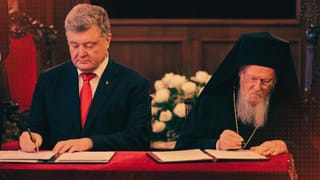
But things changed in 2018, when the Ukrainian government officially recognized the schismatics, who united under the label “Orthodox Church of Ukraine” (OCU). Now, bands of thugs were organized across the country to forcibly seize UOC parishes and evict the “Muscovites” (the reader may note that no Muscovites have appeared anywhere in this story).
On April 24, 2023, Holy Trinity Church in Sakhnivka was broken into and seized. On February 11, 2024, Holy Transfiguration in Kornilivka—the one church to survive the Soviet regime—was taken over. St. Nicholas Church in Neterebka was seized on September 24 of the same year. Holy Ascension Church in Stebliv is currently closed, with a case pending in court; since 2018, these cases are often pro forma, with the property being turned over to the OCU.
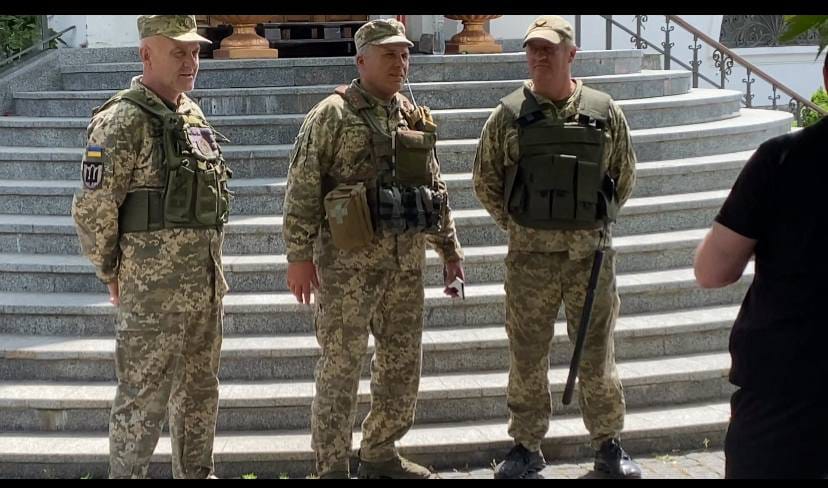
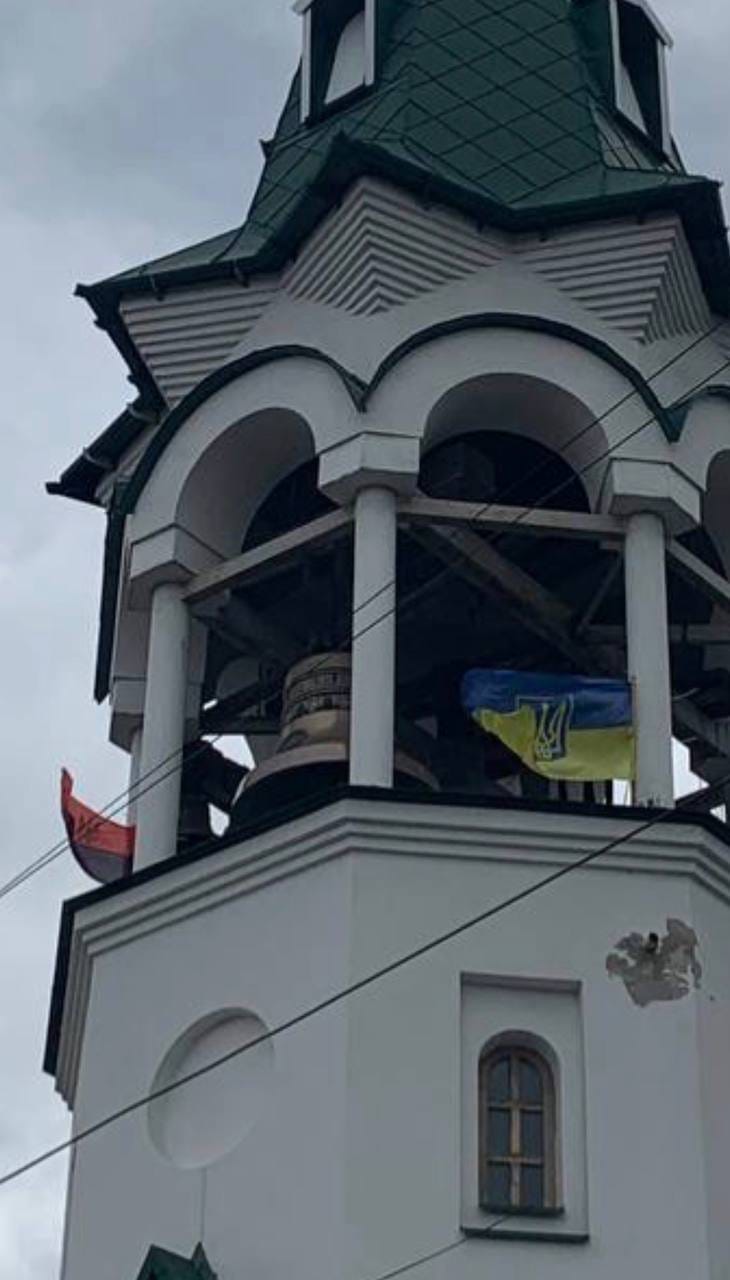
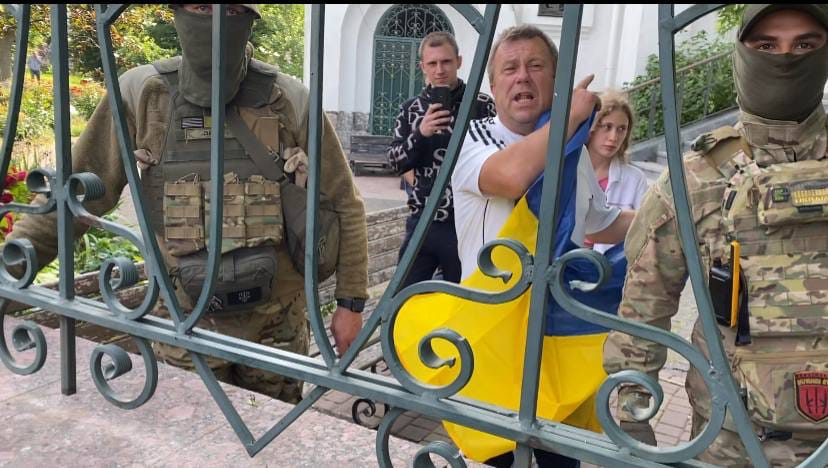
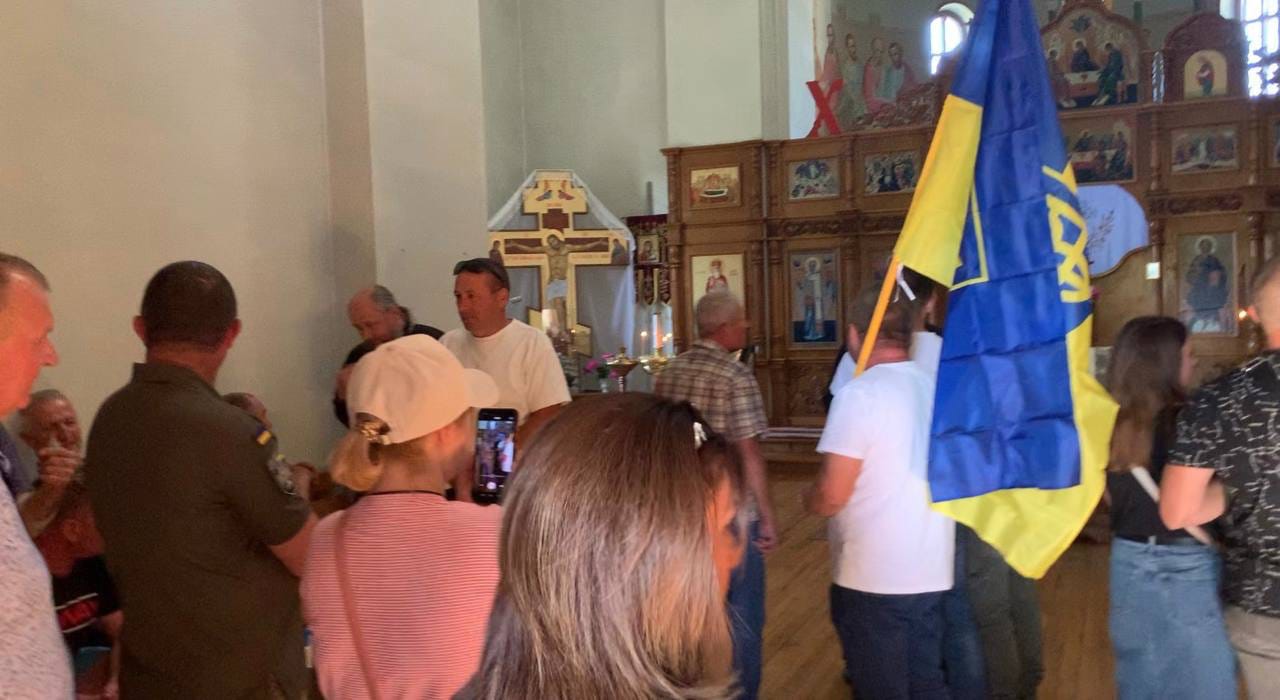
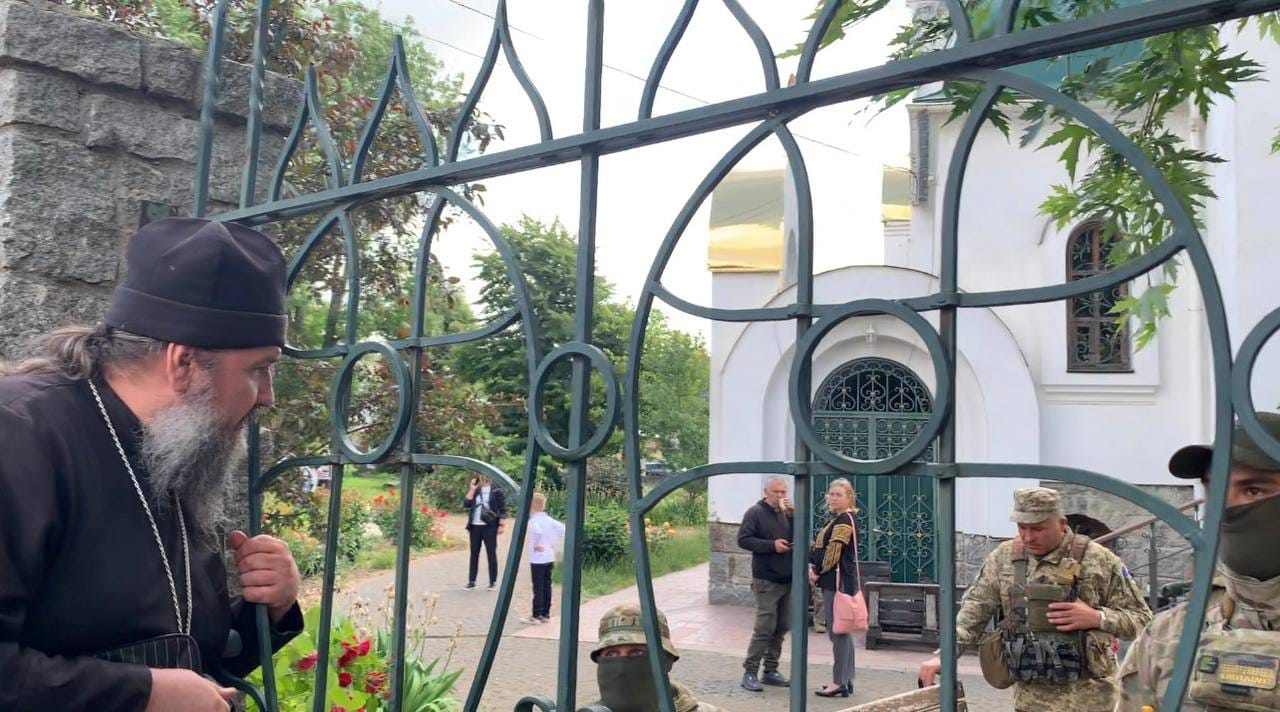
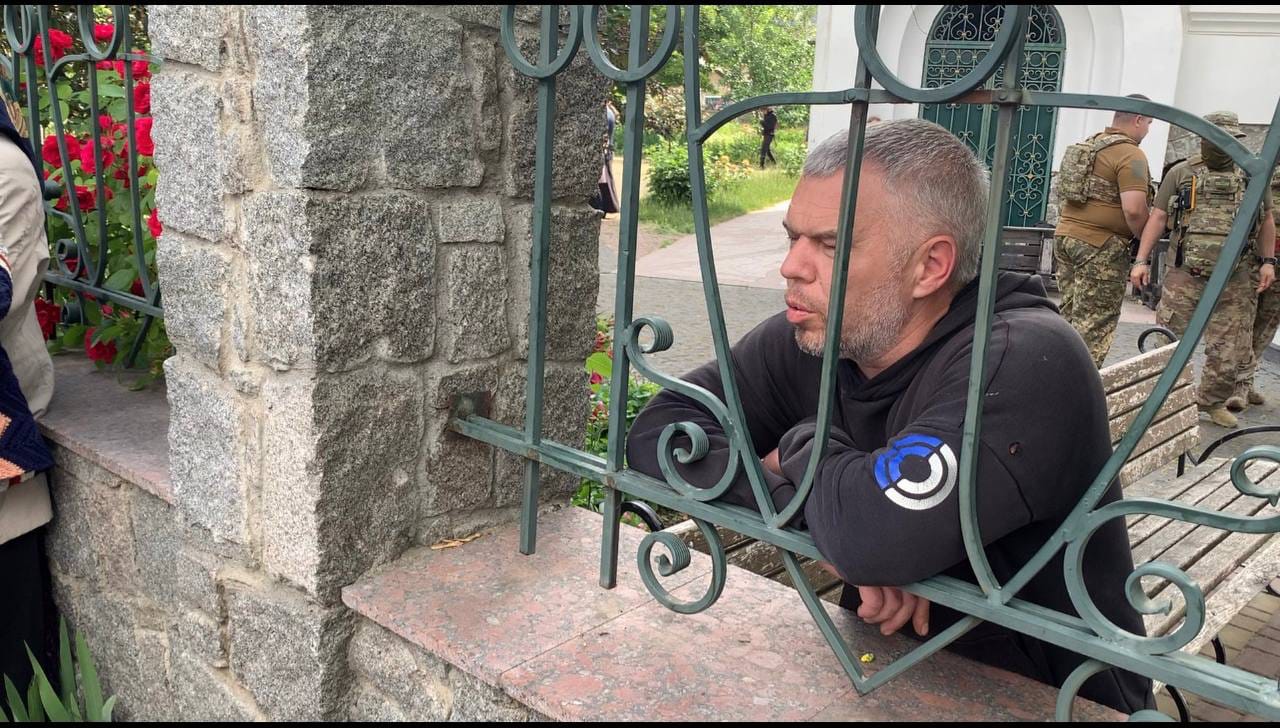
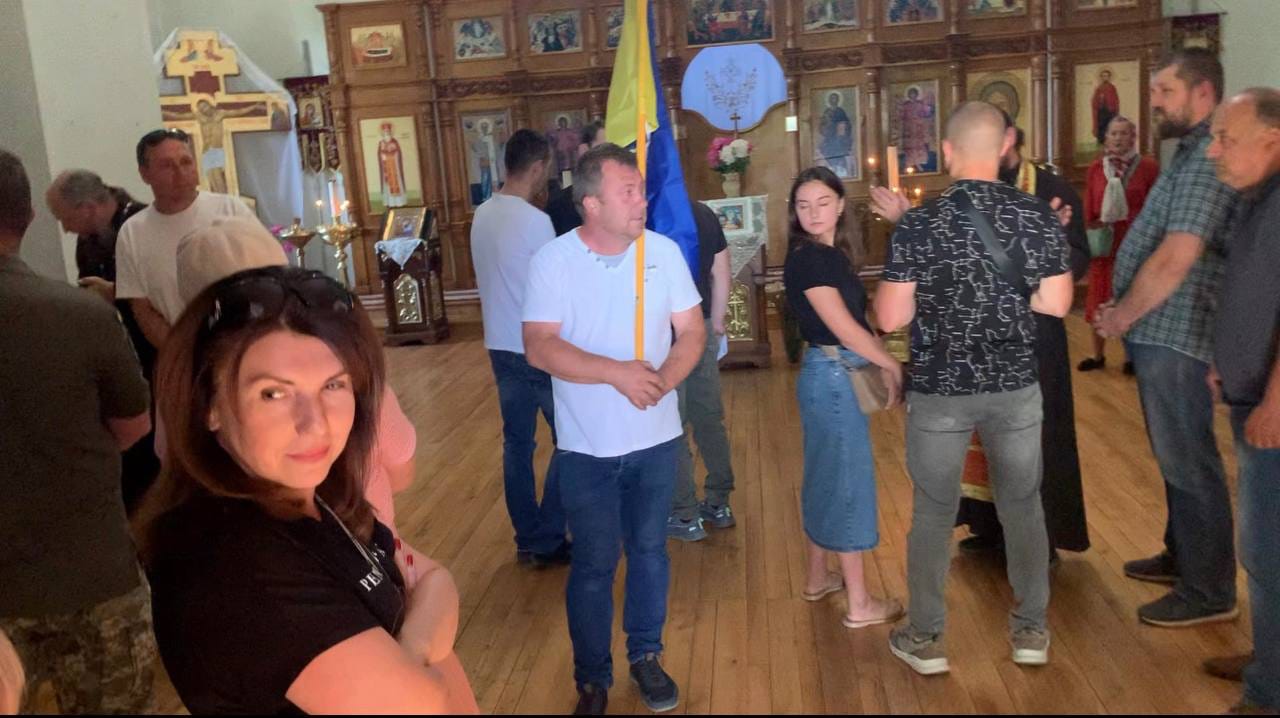
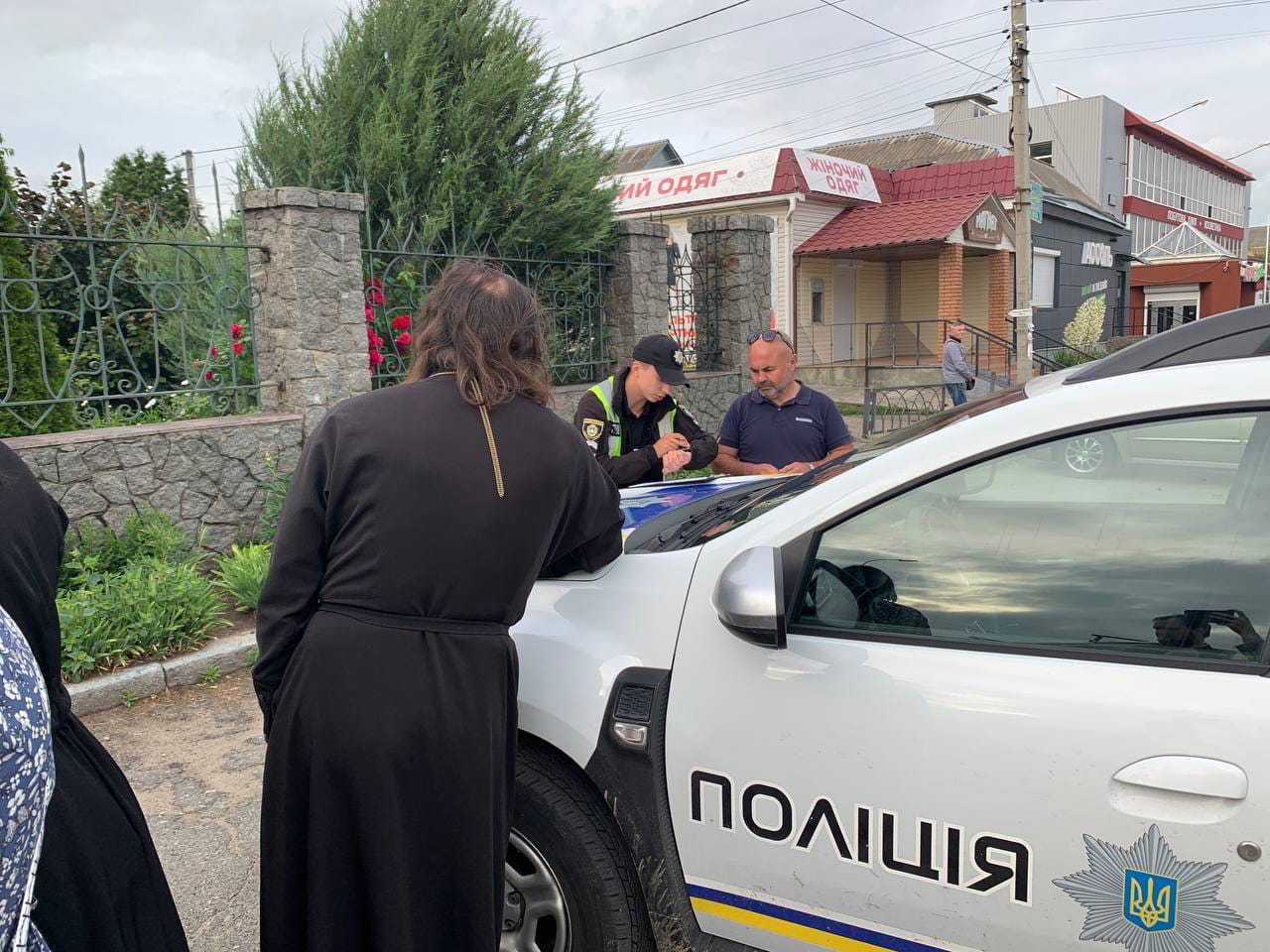
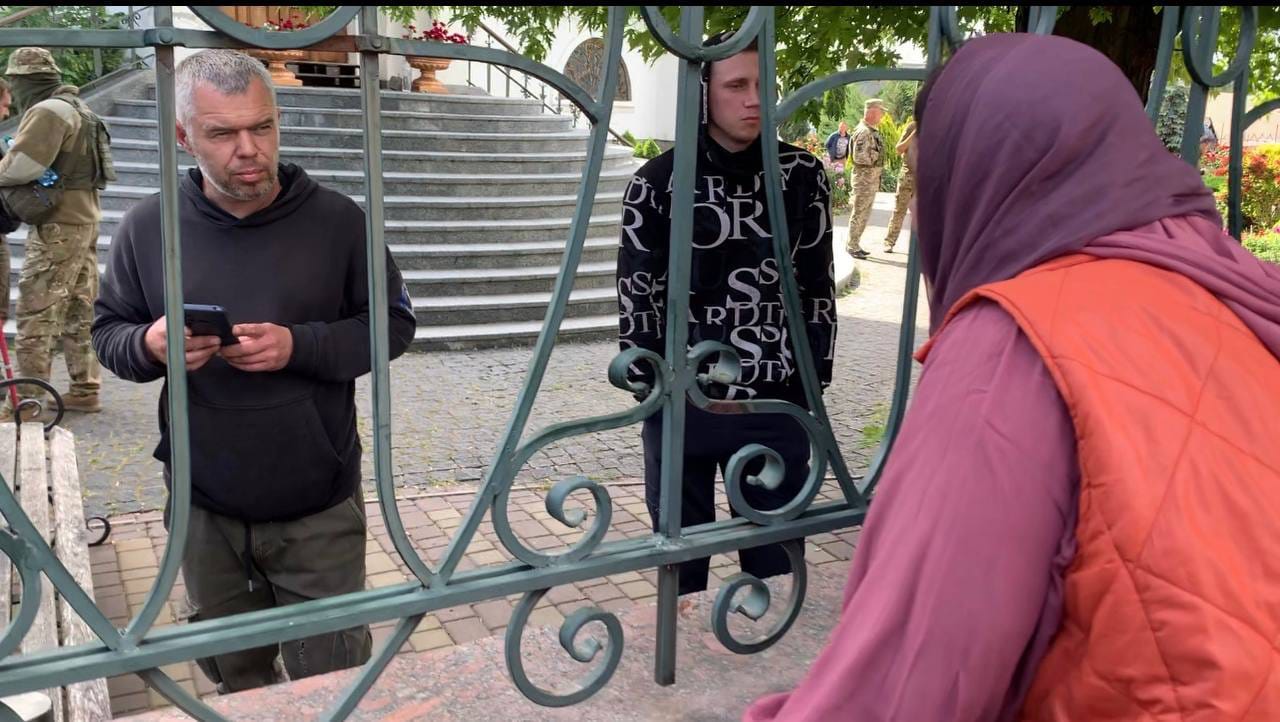
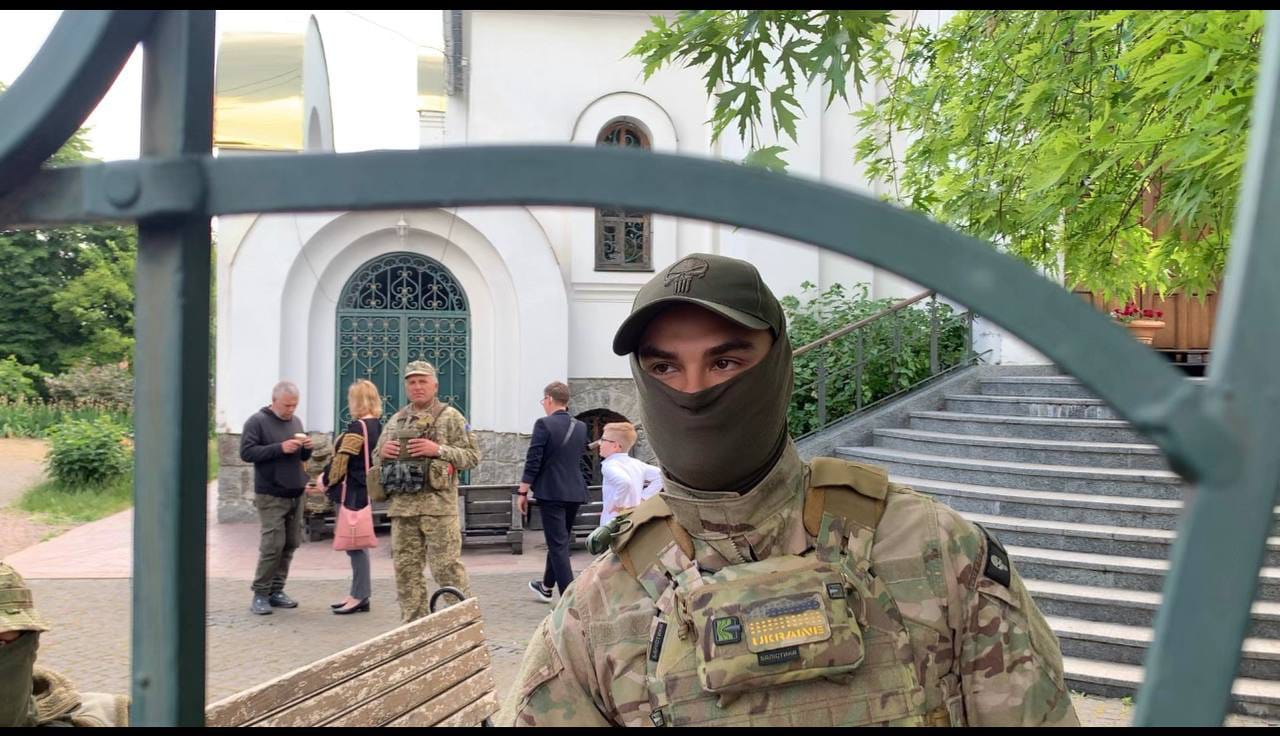
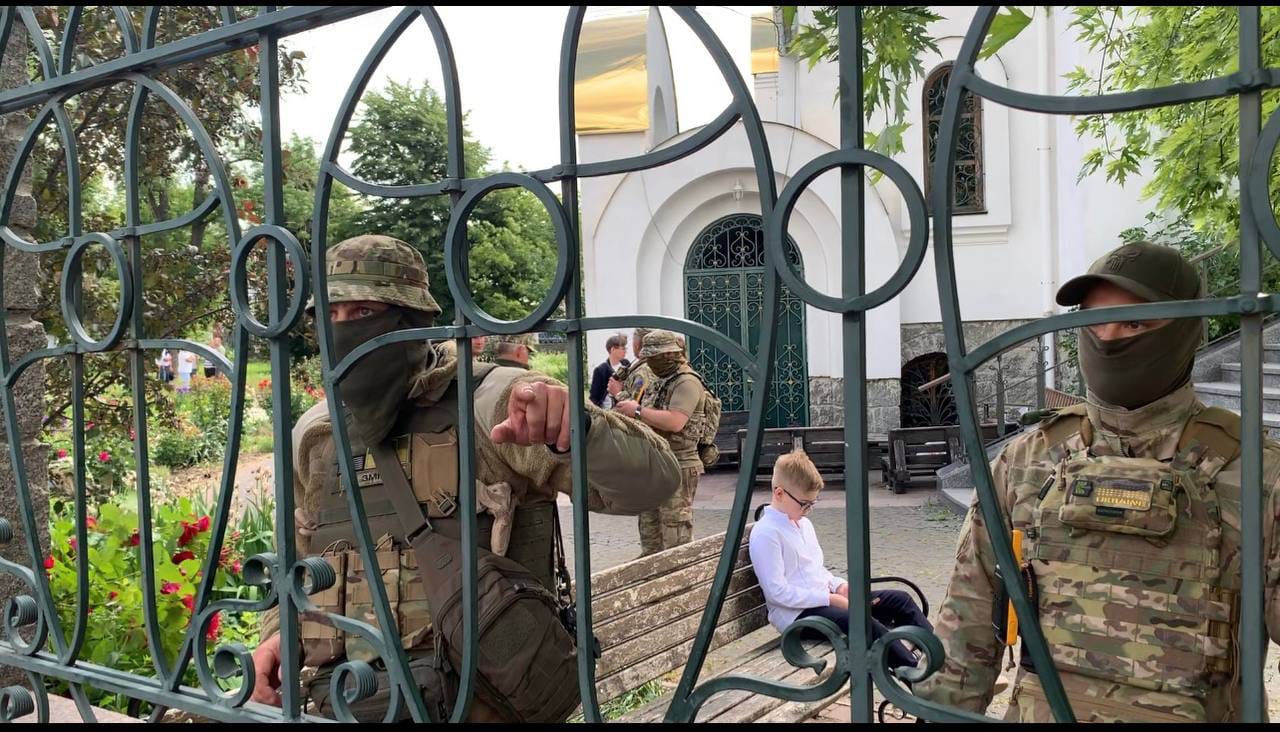
Most distressing, on the night of May 29-30, 2024, raiders seized Christ the Savior Cathedral in the center of Korsun. In violation of the wartime curfew, they broke through the fence, smashed the locks, and occupied the church. The faithful soon gathered to protest and attempt to at least recover some of the parish property. They were prevented by local and military police, the Security Services of Ukraine (SBU), and the “red berets”: the special forces.
Parish children later found the charred remains of books—anything from the parish bookstore and library that had been printed in Church Slavonic—and icons, namely of “Russian” saints like the Royal Martyrs. While this was a crude desecration, books and icons can ultimately be replaced. What cannot be replaced are the hundreds of commemoration books, including many people who have passed away and can no longer be prayed for by name at the Divine Services.
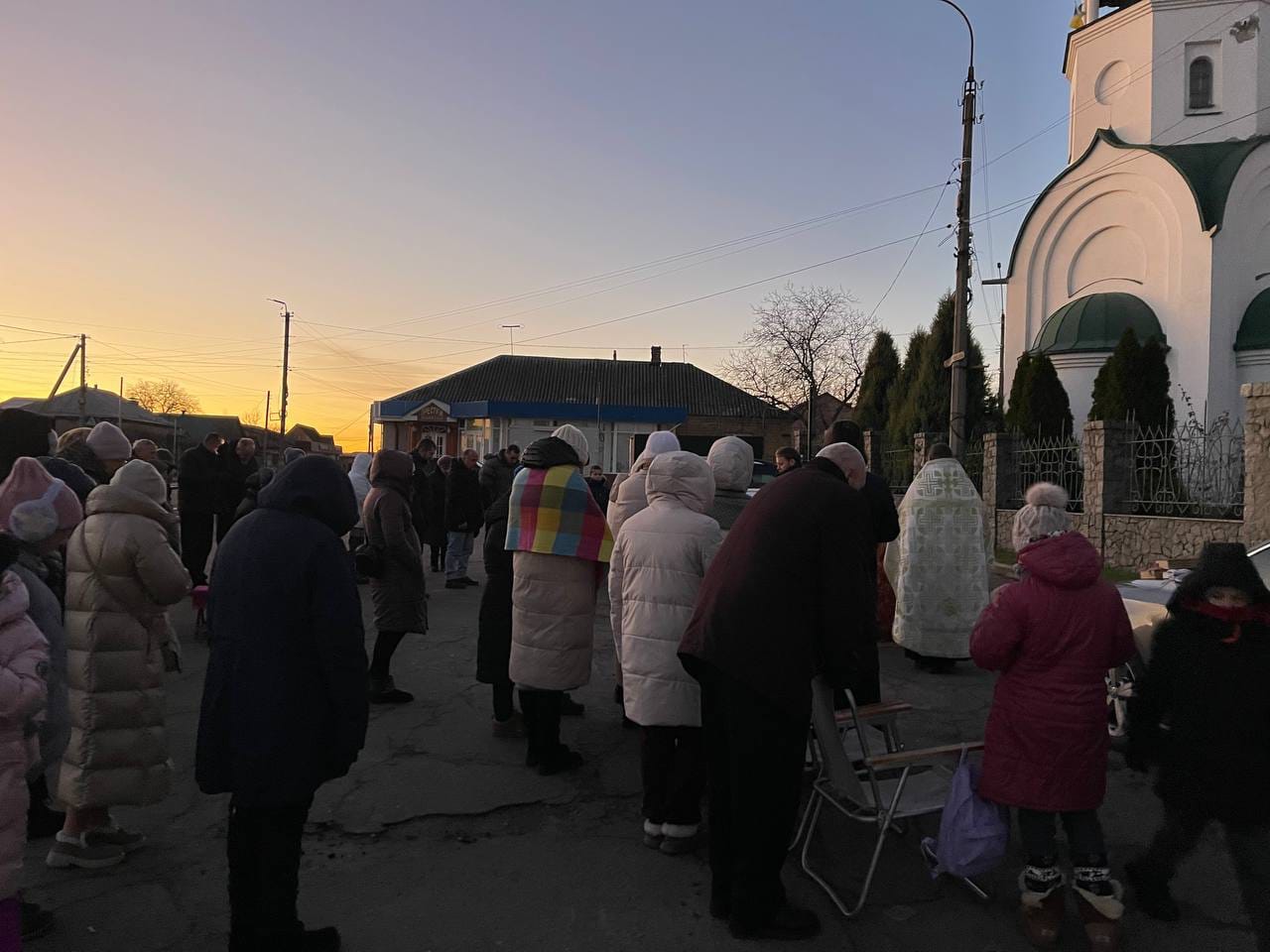
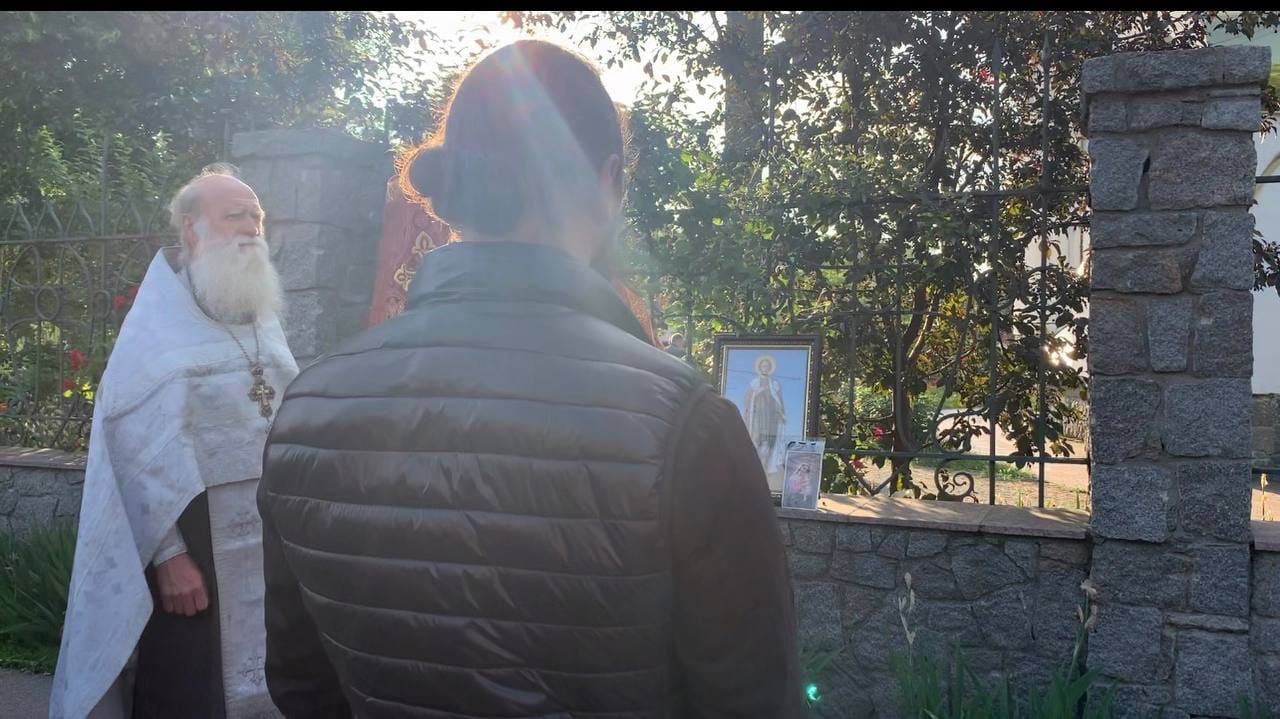
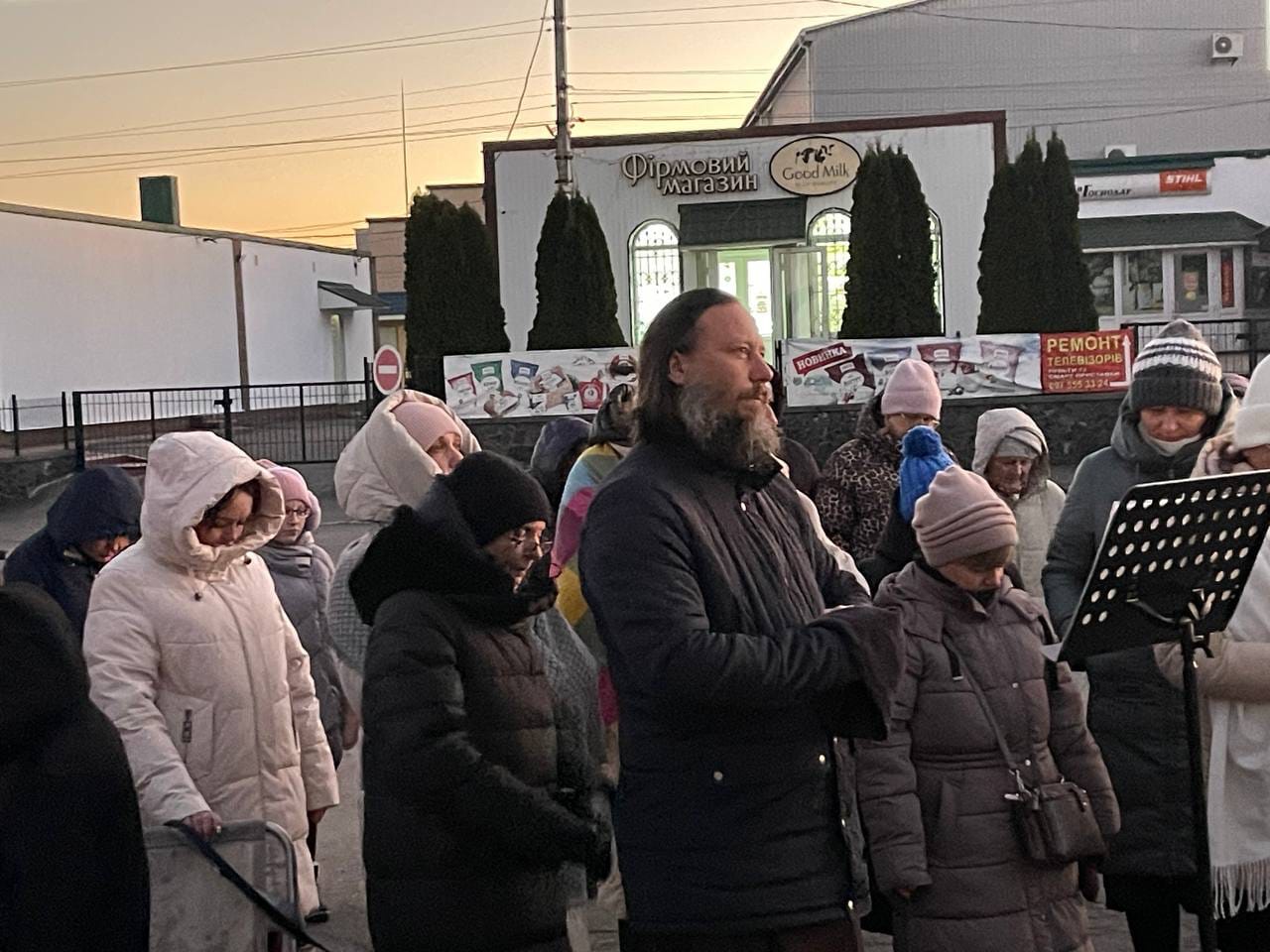
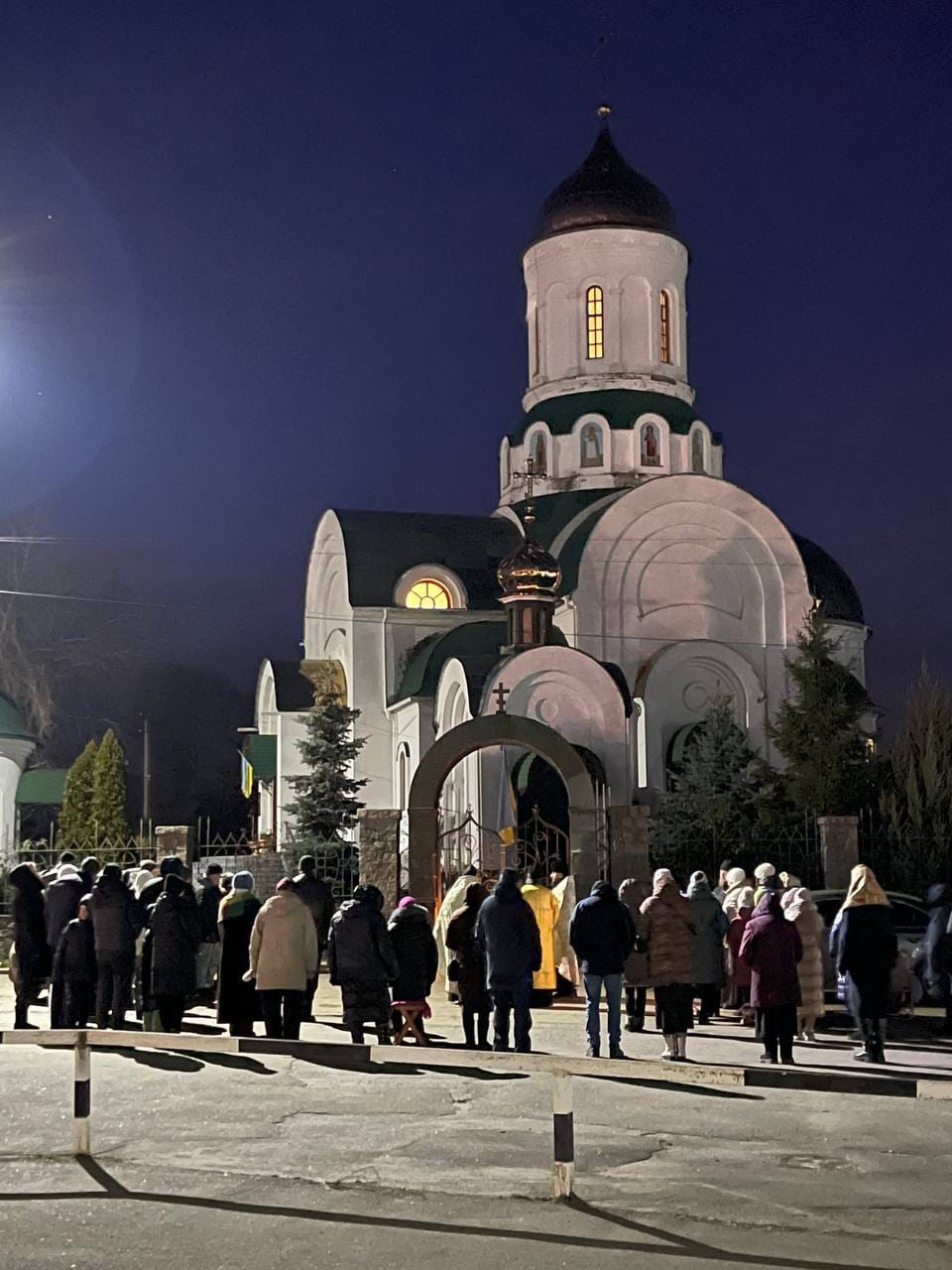
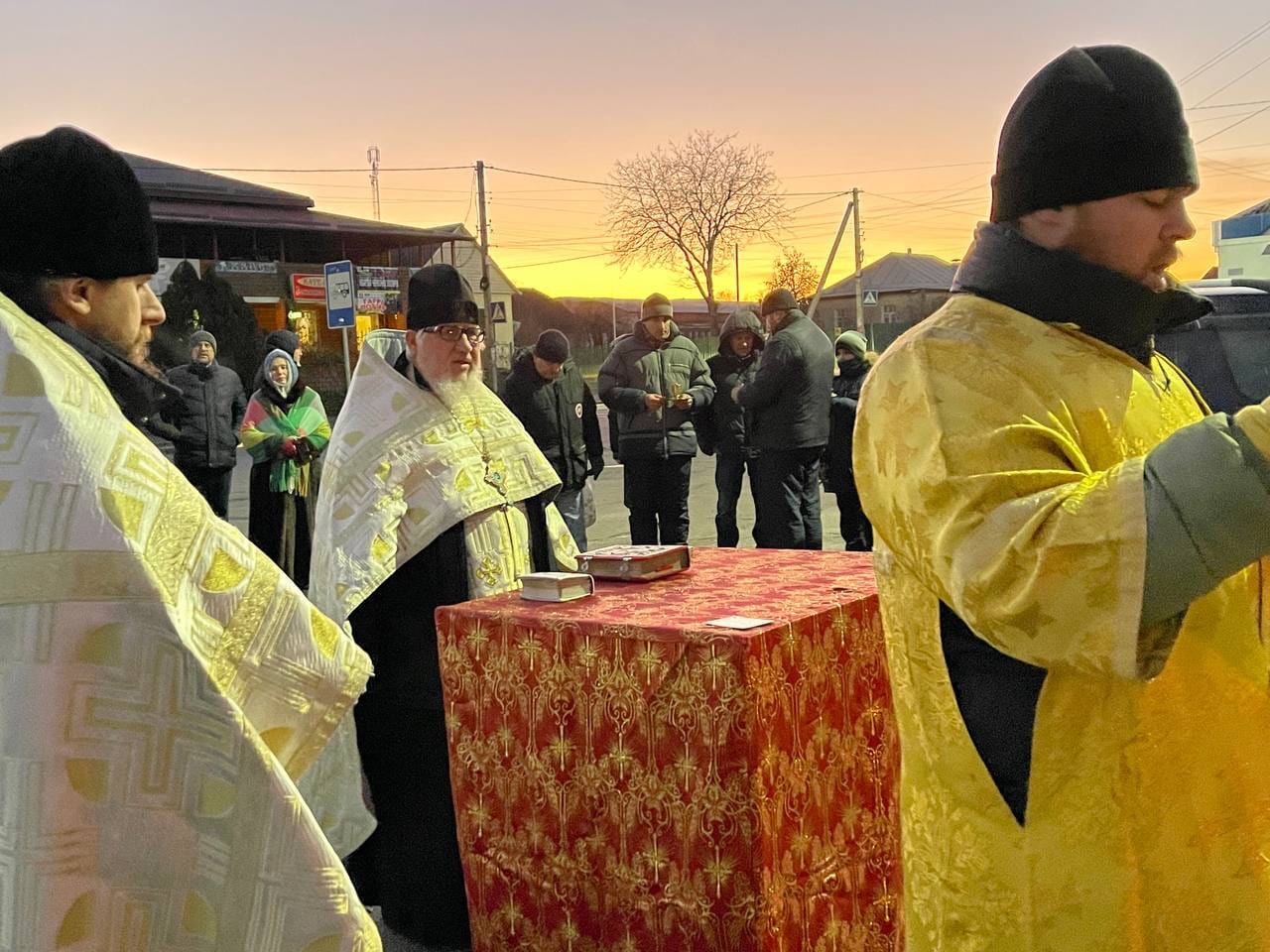
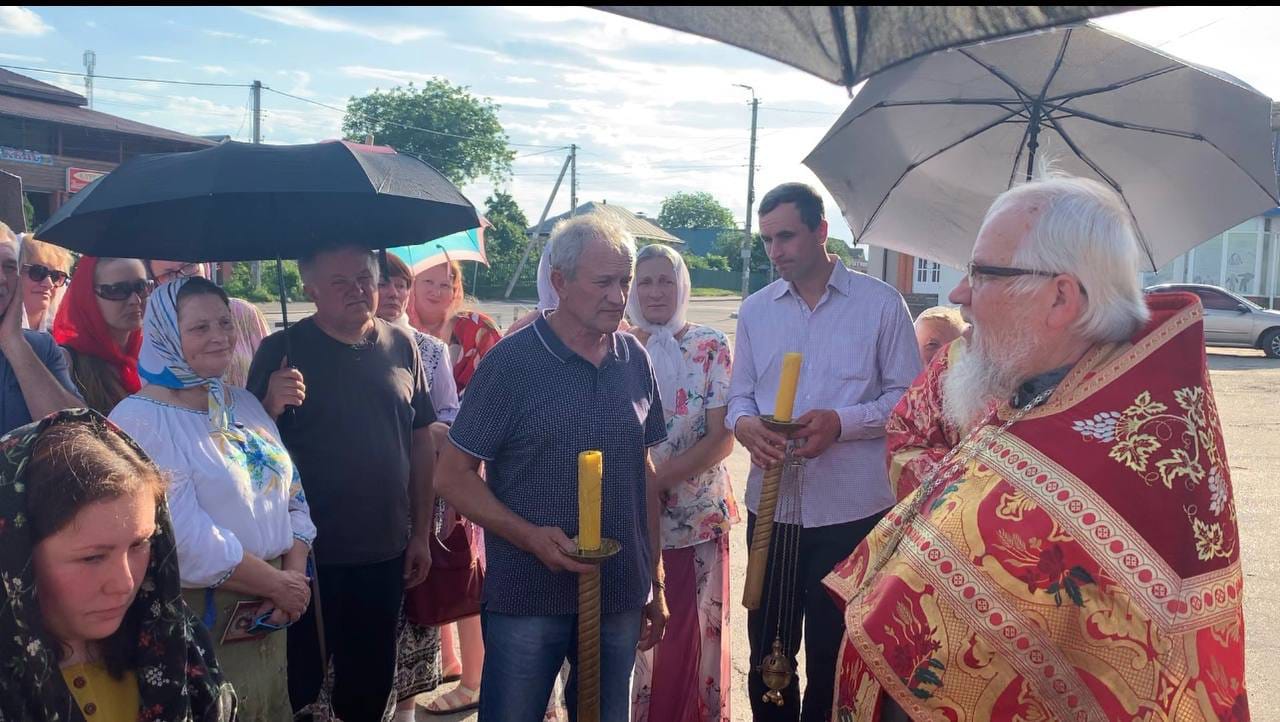
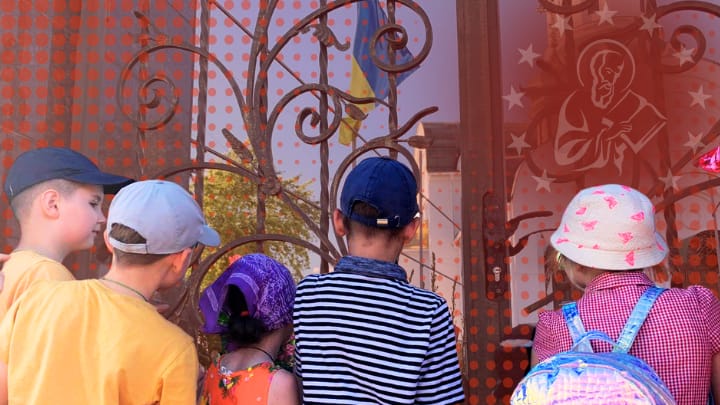
Since May of 2024, nearly 100 parishioners have gathered every Tuesday and Saturday—rain, snow, or shine—to pray outside the gates of their stolen spiritual home, built with their own hands and their own meager donations, kopiyka by kopiyka. A moleben and akathist on Tuesday and the All-Night Vigil on Saturday bear witness that these simple and God-loving people have not abandoned the canonical Ukrainian Orthodox Church and their faith in our Lord Jesus Christ.
They are often subjected to harassment, with locals cursing at and assaulting them. They blare loud music while the faithful pray. They throw stones. Parishioners, including children, have been injured. Once, a member of the local enforcement group drove his car into the crowd—which, again, included many women and children.
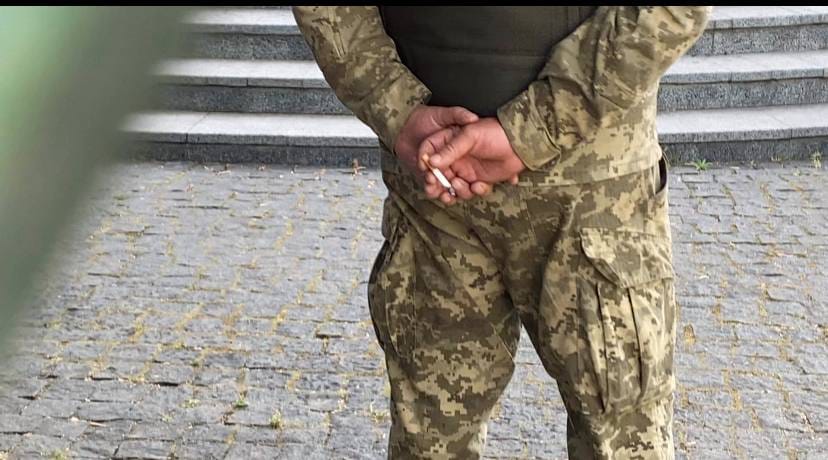
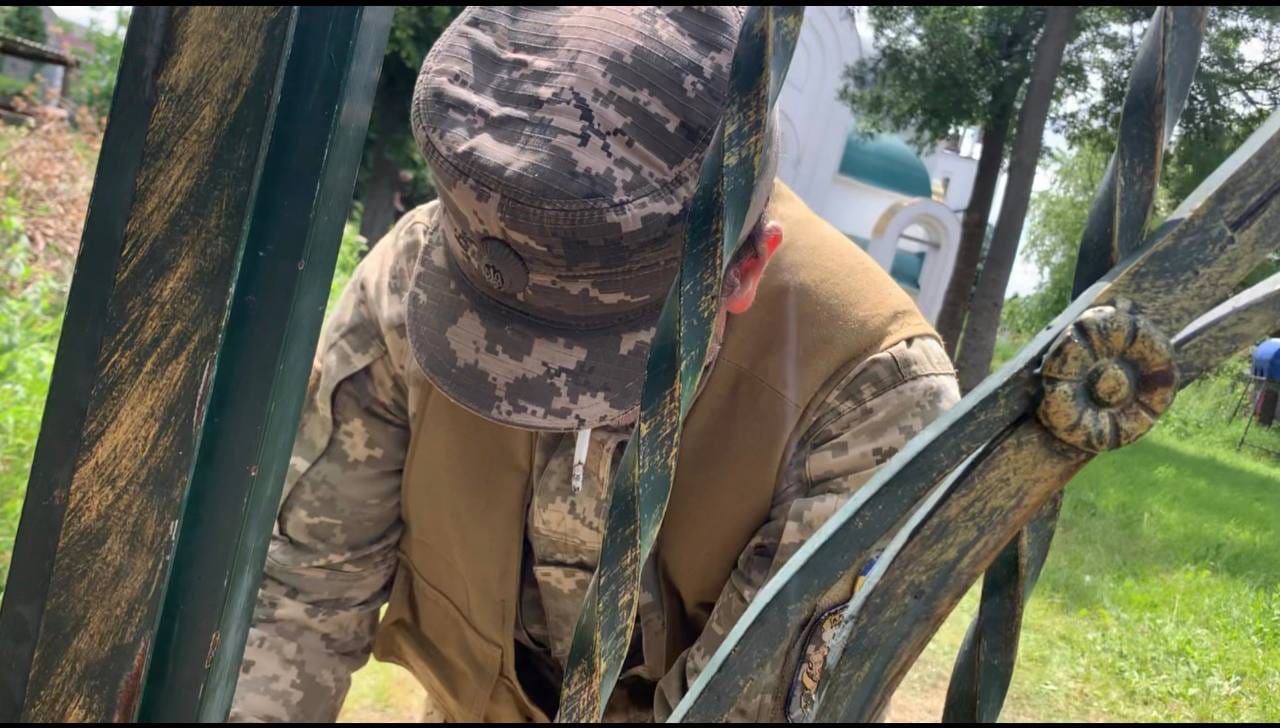
Inside, an OCU “priest” serves for a handful of attendees. They do not even have enough money to pay the electric bill, though the government has ordered that the power remain on. The men who guard the property have been promised exemption from conscription to hold the church property at all costs. They smoke, litter, and curse at the parishioners who gather outside the fence. Another priest serves on an alternating basis in the three stolen churches in the villages, often with only one or two people in attendance. The displaced clergy and parishioners worship in private homes, as they once did under Bolshevik rule.
This situation has played out hundreds of times across Ukraine, always with state backing.
The government often can’t find laymen willing to worship with schismatic priests in stolen churches. So, they repurpose them. Government and lay organizations will hold music concerts, award ceremonies, and, in one case, even a cooking show. Some have been converted into clubs. This exact same scenario occurred during Soviet times.
As one local priest explained of those who carry out these state-sanctioned crimes, “These are not churchgoing individuals, and they show their disdain and ignorance for the sacred spaces. They were unbelievers before seizing these churches, and they remain so afterward. Far from Christ, they strive to carry their unenlightened views into Church life, to change it to suit their tastes.”
Even their bishop has not been spared the persecution: Met. Theodosius of Cherkasy was placed under house arrest by a court in 2024 and has recently been hospitalized and is in serious condition after what doctors suspect was poisoning.
It should go without saying that these are not “Muscovites” embedded in the geographic center of Ukraine. These are lifelong Ukrainians, patriots, and faithful Orthodox Christians. The local clergy have buried several parishioners who were called off to war: Fr. Ioann tearfully recalls Ihor, a local soldier who died of his injuries upon returning home, and Ivan, who died at the front. They fought for the country that is evicting their families from their churches. May their memories be eternal.
For some time after the seizure of the Korsun’ cathedral, Fr. Ioann was confined to his bed due to stress and grief. Today he spends most of his time making house calls and doing hospital visits, quietly nourishing his parishioners. Gone are the days of school talks and working with local businesses. Other than the services outside the cathedral gate, he serves in a smaller church near his home.
It is worthy of note that not a single cleric of the deanery has defected to the OCU, nor has any one of the 70 native clerics of Korsun serving throughout the country. Fr. Ioann brought them up well, with dedication to Christ and His Holy Church.
The clergy of the Korsun’ deanery read a special prayer at the divine services, composed in 1918. They pray for peace and an end to the killing, for the Ukrainian people and nation; they pray for their persecutors, as well, and for the preservation of the Orthodox Faith that has abided here for over 1,000 years.
May God bless and keep them all!