



St. Meletios of Antioch and the Papal Schism of the 4th Century
Again, Orthodox ecclesiology shines in this example. Like St. Basil, we both recognize and honor the weighty office of universal primate (historically occupied by Rome, now enjoyed by Constantinople). However, this example also shows that true primacy is fraternal, not monarchical. Basil and the Eastern fathers didn’t view the pope—or any one bishop!—as infallible. Instead, they formed councils to resolve their disputes, following the example of the Holy Apostles themselves.
Catholic and Protestant apologists often accuse Orthodox Christians of attacking their ecclesiologies while refusing to defend our own. It’s a valid observation. And it’s a real shame. Our ecclesiology is one of the most beautiful and compelling aspects of our Faith. It’s one of those places where we see a clear descent from the Early Church to right down to the present day. Ours avoids both the centralism of the Catholic model and the individualism of the Protestant mode.
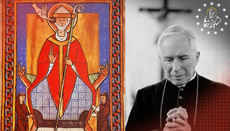
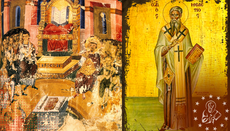
A prime example is found in the life of St. Meletios of Antioch, whose memory we keep on this day.
St. Meletios is best remembered for his role in the so-called “Meletian Schism.” This term is misleading, however, as St. Meletios didn’t cause the schism in any sense of the term. Indeed, both Orthodox and Catholics today venerate Meletios as a saint, acknowledging his orthodoxy and innocence.
The fault for the schism ultimately lay with Meletios’s rival, Paulinus of Antioch—and with Paulinus’s patron Pope St. Damasus I. Thus, it might more accurately be called the Papal Schism.
In any event, the schism stemmed from the Arian controversies that plagued the Church after the Council of Nicaea in 325. Antioch, a key patriarchal see, became a battleground. In 361, Meletios was elected bishop by an Semi-Arian faction; he quickly affirmed Nicene orthodoxy, however, confessing the Son as consubstantial with the Father.
To be clear: Accusations of Arianism or Semi-Arianism against him were unfounded. His initial statements may have been ambiguous to appease factions, but he proved staunchly anti-Arian. Exiled multiple times by Arian emperors like Constantius II and Valens, Meletios faced a rival claimant, Paulinus, ordained by Lucifer of Cagliari and supported by Western leaders.
Enter St. Basil the Great, bishop of Caesarea and a pillar of Nicene faith. In the 370s, Basil sought Western aid to heal Eastern divisions ravaged by Arianism. He appealed to Pope Damasus I, as primate of the whole Church, urging Rome to intervene and recognize Meletios as Antioch's legitimate bishop.
In the end, however, Damasus—wary of Meletios’s supposed Arian loyalties—sided with Paulinus. Basil refused to accept this judgment, however. In letter 214, he reaffirmed his loyalty to Meletios while dismissing the pope’s judgment as “a letter from men”:
I congratulate those who have received the letter from Rome. And, although it is a grand testimony in their favor, I only hope it is true and confirmed by facts. But I shall never be able to persuade myself on these grounds to ignore Meletius, or to forget the Church which is under him, or to treat as small, and of little importance to the true religion, the questions which originated the division. I shall never consent to give in, merely because somebody is very much elated at receiving a letter from men. Even if it had come down from heaven itself, but he does not agree with the sound doctrine of the faith, I cannot look upon him as in communion with the saints.
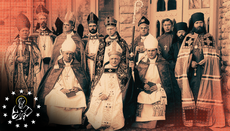
The schism's climax came at the Council of Constantinople in 381, convened by Emperor Theodosius I to affirm Nicene orthodoxy and combat Arianism and Macedonianism (a heresy denying the Holy Spirit’s divinity). Notably, the bishops elected Meletios as president, despite Rome’s having “deposed” him. Pope Damasus sent no legates and had minimal involvement, if any. The council proceeded with 150 Eastern bishops, with no Westerners present. Meletios died early in the sessions—still not in communion with Rome. This council expanded the Nicene Creed, adding phrases like “the Lord and Giver of life” in reference to the Holy Spirit.
Catholics often counter that Constantinople I was intended as a local synod, not ecumenical, only later elevated. This is debatable; Theodosius summoned it to unify the East, and its creed gained universal acceptance. More crucially, if the early Church mirrored Roman Catholicism—with an infallible pope wielding supreme authority—Eastern bishops would never have convened under a patriarch the pope opposed (and, effectively, tried to depose) by backing Paulinus. The council's actions prove otherwise. Bishops felt free to proceed without papal approval, and did not feel bound in any way to Rome’s error in judgment.
History vindicated Meletios. His successor, Flavian, eventually reconciled with Rome in the 390s. Eventually both Meletios and Pope Damasus were canonized in both the Orthodox and Catholic churches.
Again, Orthodox ecclesiology shines in this example. Like St. Basil, we both recognize and honor the weighty office of universal primate (historically occupied by Rome, now enjoyed by Constantinople). However, this example also shows that true primacy is fraternal, not monarchical. Basil and the Eastern fathers didn’t view the pope—or any one bishop!—as infallible. Instead, they formed councils to resolve their disputes, following the example of the Holy Apostles themselves.
In conclusion, it’s worth noting that Constantinople I inserted “One, Holy, Catholic, and Apostolic Church” into the creed. Clearly, to the Council Fathers, Catholic did not mean “obedient to an infallible supreme pope.” Rather, it meant universal in the truest sense: representing the whole Church, throughout all time and space. And that’s what we mean to this day.