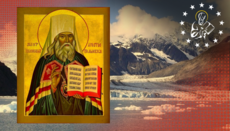




How St. Tikhon of Moscow Outlived the Communists
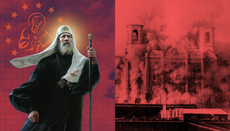
The unveiling of St. Tikhon's incorrupt relics was like a little Pascha. Orthodoxy's resurrection from Soviet death, triumphing over persecution like Christ trampling death. Those who came to the tomb looking for death and decay were disappointed. The Russian Orthodox Church has risen from the dead, trampling down death by the death of her martyrs.
On February 9, Orthodox Christians commemorate the unveiling of the relics of St. Tikhon of Moscow, a poignant reminder of faith's endurance amid persecution. This date invites reflection on how a saint's legacy transcends temporal powers, outlasting even the most formidable oppressors.
St. Tikhon, born Vasily Ivanovich Bellavin, was elected Patriarch of Moscow in November 1917—just days after the Bolsheviks finally seized power in the October Revolution.
As the first patriarch in over two centuries (the patriarchate having been displaced by the “Most Holy Governing Synod”), he faced immediate hostility from the communist regime, which viewed the Russian Orthodox Church as a threat to its atheistic ideology. Tikhon boldly excommunicated the Bolshevik leaders in January 1918 for their violent assaults on the Church, which included the murder of clergy. He urged the faithful to resist non-violently, even as churches were looted and desecrated.
Tikhon was finally arrested in 1922. He endured 15 months of imprisonment and house arrest, emerging physically weakened but spiritually resolute. He fought against the “Living Church”: a schismatic sect founded by the Communist authorities to replace the Russian Orthodox Church.
Tikhon died on April 7, 1925, at the age of sixty. Most historians believe he suffered a heart attack brought on by years of persecution at the Bolsheviks’ hands; some, however, believe he was poisoned. In his final days he prophesied that the communists’ rule was far from over: “The night will be very long and very dark.”
He was right.
The Bolsheviks' assault on Orthodoxy was ruthless. In the first five years of Soviet power, they executed 28 bishops and over 1,200 priests, with many more imprisoned or exiled. By 1923, estimates indicate 2,700 priests, 3,400 nuns, and 2,000 monks had been killed. Fr. Mikel Hill notes that “conservative estimates report over 12 million Orthodox Christians were killed for their faith under the Soviets, with 85,300 Orthodox clergy executed in 1937 alone.”
Yet, since the Soviet Union's collapse in 1991, Orthodoxy has remarkably rebounded. The share of Russians identifying as Orthodox Christians surged from 31% in 1991 to 72% by 2008, reflecting a cultural and spiritual revival. More recent data shows about 63% self-identifying as Orthodox.
Church infrastructure has exploded, too, from roughly 7,000 parishes in 1991 to over 38,000 by 2019. Patr. Kirill has noted that, on average, three new churches are built every day. The number of monasteries has grown as well, from 22 to 972.
Despite this resurgence, Russia has far to go in healing from communism's scars. High abortion rates persist, with 450,000 procedures in 2020 and 517,000 in 2021, yielding a ratio of 314 abortions per 1,000 live births. This is the legacy of Soviet-era policies, where abortion was normalized and even encouraged.
The Russian Orthodox Church fights bravely against abortion culture. Patr. Kirill himself has written pastoral letters urging pregnant women to choose life, established days of prayer dedicated to protecting the unborn, and supported various pieces of legislation aimed at reducing the number of abortions performed in Russia.
Nevertheless, the spirit of St. Tikhon has not only survived but flourished in Russia, as communism has been relegated to the dustbin of history.
St. Tikhon’s remains were hidden in 1925 to protect them from desecration by the Soviets. When they were uncovered on February 22, 1992, his relics were found to be incorrupt. In many ways, it was a kind of Pascha. Those who came to the tomb looking for death and decay were disappointed. The Russian Orthodox Church has risen from the dead, trampling down death by the death of her martyrs and passion-bearers—not least among them, St. Tikhon of Moscow.