



Orthodox Priest Cautions on Risks of Unity With Rome
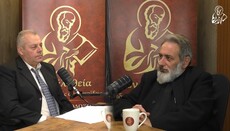
In an interview with UOJ-Greece, Fr. Georgios Katsaounis warns that unity without truth risks becoming a betrayal rather than a reconciliation.
ATHENS — In an exclusive interview with UOJ-Greece, Protopresbyter Georgios Katsaounis offered a measured yet firm critique of modern ecumenism, describing the lifting of anathemas in the 1960s as an act of “Christian nobility” while warning against doctrinal compromise. He argued that Roman Catholicism is marked by an unhealthy concentration of authority, calling the principle of one-person supremacy “a disease” and contrasting it with Orthodox conciliar governance. He further cautioned that contemporary dialogue with the Vatican risks diluting Orthodox dogma, especially as global pressures push for visible Christian unity.
“Our faith is a revelation of God, it was not formed by the people so that we could negotiate it,” he said, referencing disputes over papal primacy and the Filioque. He spoke about the widely differing ways that Orthodoxy and Rome maintain revelation and doctrine. "There is a great difference in the structure of church governance. The structure of the Orthodox Church is conciliar. The structure of the Roman Catholic Church is absolutist. There may be an appearance of conciliarity [in the Roman Church]: councils are held, but to what extent are the opinions of many taken into account?" the priest asked. He said that Western Christianity suffers from the principle of supremacy: “Whatever one person says goes. I consider this a disease.” “We must not sell the faith . . . we must preserve this truth,” he added.
He also recalled historical grievances such as the Fourth Crusade and coerced councils, emphasizing that true unity requires repentance. He highlighted the Orthodox tradition of conciliarity and linguistic inclusivity, contrasting it with centuries of Western restriction. He noted that while unity appears attractive amid modern challenges, meaningful reconciliation depends on acknowledging past doctrinal errors.
Previously, the UOJ reported on J.D. Vance’s comparison of the Ecumenical Patriarch to the Pope.