



An Orthodox Perspective on Anglican Holy Orders
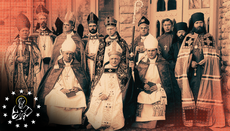
It's worth noting that Meletius III Metaxakis, the Ecumenical Patriarch who declared Anglican orders to be valid, was installed by the British government!
Twice in the last week I have seen our Anglican friends mention the 1922 statement by Patr. Meletios Metaxakis of Constantinople, in which he affirms the validity of Anglican orders. The first was on May 9, when Anglican bishop Chadler Holder Jones republished the text on his Substack. The statement was also referenced by Aidan Mattis (“Lore Lodge”) during a livestream with Ben Merritt (“Cleave to Antiquity”) and Fr. Peter Heers.
Cleave and Fr. Peter did a very good job answering Mattis’s arguments. However, I’d like to discuss this question at a bit more length.
An ‘Official’ Statement?
First, Bishop Jones presents the Metaxakis’s judgment as an “official Eastern Orthodox statement.” With all due respect, it is nothing of the sort.
Rather, the 1922 statement is a decision rendered by a local church: the Ecumenical Patriarchate of Constantinople. The decision was also adopted by five other local churches: the patriarchates of Alexandria and Jerusalem, as well as the church of Greece, Cyprus, and Romania.
This is impressive. However, there were eleven universally-recognized local churches in the Orthodox communion at that time. So, not even half of them accepted Metaxakis’s judgment.
Importantly, in 1902, a council of the Russian Orthodox Church declared that it would not recognize Anglican orders unilaterally—that such a decision had to be made by an Ecumenical Council. The council determined that, in the meantime, Anglican orders should be treated as invalid.
Moscow did not change its position to adopt Metaxakis’s statement; to this day, no Church in the Russian/Slavic tradition recognizes the validity of Anglican orders.
So, again: to refer to the 1922 statement as an “official” teaching of the Orthodox Church is inaccurate.
One Body, One Faith, One Baptism
Even if we accept that Metaxakis’s statement was not universally received, we must still ask: Was it correct? Unfortunately, the answer to that question is “No” as well
It should be noted that the Orthodox Church does not accept the Augustinian principle of ex opere operato (“by the work worked”). That is, we do not believe that a priest’s sacramental authority is innate in his person and efficacious given the presence of valid form and matter.
Rather, the Orthodox teach that valid Sacraments only exist within the Church. To quote Hilarion Alfeyev, in the second volume of his work Orthodox Christianity:
The Augustinian understanding of the “efficacy” of the sacraments was never fully accepted in the Orthodox Church. Such an understanding of the sacraments is unacceptable for Orthodox Tradition, for it is an understanding in which the grace inherent within them is considered autonomous, independent of the Church. The sacraments can be performed only within the Church, and it is the Church that bestows efficacy, reality, and salvation on them.
The question is whether Anglican orders could have survived not one but two schisms: the Great Schism of 1054, when the Roman Patriarchate separated from the Orthodox Church, and the English Reformation of the 16th century, when the English Church separated from the Latin Church.
In other words: Anglicanism is, in a sense, “twice removed” from the Orthodox Church.
It’s true that the Orthodox would be deeply sympathetic to many (if not all) of the first Anglicans’ complaints against the Latin Church. In many ways, the English Reformation brought the English Church closer to the Orthodox in terms of theology.
Yet this does not restore communion with the Orthodox Church. And again, according to Orthodox theology, that communion is necessary for valid orders.
One Body or Many Branches?
Of course, Anglicans would argue that Orthodox and Anglicans both belong to the “Apostolic Church.” Most would include Roman Catholics in this as well. Others might count the Oriental Orthodox and even the Nestorians. This is known as Branch Theory.
The Orthodox do not accept this view, however. Christ says that a house divided against itself will stand (see Matt. 12:25). Likewise, St. Paul said: “There is one body and one Spirit, just as you were called in one hope of your calling; one Lord, one faith, one baptism; one God and Father of all, who is above all, and through all, and in you all.”
Note that the Apostle doesn’t say, there should only be one body. He says there is only one body. It's not that we shouldn't divide the Body of Christ: it's that we can't. Heretics and schismatics don't get to take a piece of the Church with them, when they break communion with those who keep the Orthodox Catholic Faith.
The Orthodox Church is, for us, the “one body,” recognizable for having one faith: the faith “which was once for all delivered to the saints” (Jude 4). So, this is where we find the one baptism—and, by extension, all valid sacraments.
Metaxakis and the British
Undoubtedly, Patr. Meletios’s decision to recognize Anglican orders was driven by his own Anglican theology. Our understanding of the 1922 ruling is complete, however, if we don’t also mention his relationship with the British.
He rose to power by riding the coattails of his fellow Freemason, the anticlericalist Eleftherios Venizelos. It is rumored that the British government also had a hand in his election.
From the time he assumed the Throne of St. Andrew in 1921, he promoted the view that the Ecumenical Patriarch was a strong, central authority within the Orthodox Church, comparable to the Roman Pope in the Catholic Church. Two years later, however, he was ousted as Ecumenical Patriarch by the Turkish government. It’s likely he would have been assassinated, had he not been extracted by his friends in the British government.
Then, in 1926, he was elected Patriarch of Alexandria. Fr. Kyrill Johnson, who knew Meletios personally, wrote in 1945 that “British influence had translated [Metaxakis] to the Throne of Alexandria.” Unsurprisingly, the ambitious Metaxakis decided that Alexandria—not Constantinople—should be the First Throne of Orthodoxy.
Then, in 1930, Metaxakis ran for Patriarch of Jerusalem. Matthew Namee, the Orthodox historian, offers this analysis: “Meletios was the favorite of the Anglicans, who would, it was said, contribute large sums to the Patriarchate if only Meletios were elected—and if the Patriarchate would grant the Anglicans major concessions regarding the use of the holy places in Palestine.”
Metaxakis died before he could secure his own election.
So, it’s no coincidence that Meletios worked so hard to validate the British state church. The British government was a lifelong patron of his ecclesiastical career.
From 1922 to 2026
We also can’t fail to take into account more recent developments in the Anglican Church.
For instance, the Anglican Communion began ordaining women to the priesthood in 1944. The first female bishop was consecrated in 1990. Today, only three provinces of the Anglican Communion do not ordain women: Melanesia, Papua New Guinea, and South East Asia. This shows a radical divergence between Anglican and Orthodox sacramentologies.
Of course, many Anglicans today do not belong to the Anglican Communion. They are no longer in communion with their “Mother Church”: the See of Canterbury. But again, this simply means that—from the Orthodox perspective—they are now three times removed from the Orthodox Church. They are a schism from a schism from a schism.
Once again, they may be closer to us theologically than the sect from which they broke. Their theology may be closer to ours. But as we said, communion with the One, True Church is not simply a matter of professing the correct views. If that were the case, there would be no need for baptism at all! This is a Protestant view, rather than an Orthodox or even a Catholic one.
Michael W. Davis is the General Editor of UOJ-USA. Follow him on Twitter and Substack.