



Educating at the Icon Corner: The Rise of Orthodox Homeschooling
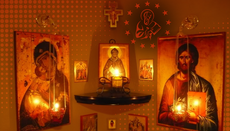
Amid surging conversions transforming American Orthodoxy from an immigrant faith to one of evangelization, a parallel wave rises: Orthodox families increasingly embracing homeschooling to weave liturgy, traditional values, and faith-centered learning into daily life.
The well documented growth of Orthodoxy in America is leading to an enormous wave of conversion of young families joining the faith. In November of 2025, His Eminence Metropolitan Saba said, “We are transitioning from an ‘immigrant church’ to a Church of evangelization.”
And while we all pray this wave of conversion is only just the beginning, there is another wave forming alongside it. A quiet movement formed in homes as mothers wake early, make a cup of coffee, cook breakfast for their children, and sit at a table together—not only to pray, or learn about Orthodoxy as a family, but to educate. A shift that involves curriculum choices, daily rhythms, endless books, and teaching our children to be both apologetics for the Orthodox faith and independent thinkers with a love of learning. This movement is the wave of homeschooling that is quickly rising among Orthodox Christian families.
The official number of homeschooling families, while unknown, is growing rapidly. Homeschoolplanet.com has stated that “according to the U.S. Census Bureau, in 2021, nearly eleven percent of households reported homeschooling their children, up from three percent before the pandemic.” And it’s estimated that Orthodox homeschooling families make up about five percent of the overall homeschooling community in America. In two Orthodox homeschool Facebook groups alone, there are almost 8,000 people combined, one having over 6,000 and the other over 2,000.
Why are Orthodox parents choosing to homeschool? It arises from a desire to integrate the faith, liturgy, and traditional values into everyday education, often as a response to the secularism of public school and to better support special needs and military families who travel often. Also, Orthodox homeschooling doesn’t only allow us to have more control over the education of our children: it allows us to more seamlessly merge our lives into the yearly liturgical calendar of the church without the restrictions of a public school schedule, truly becoming a “way of life”.
There are also many companies and resources that have formed to support the growing community of Orthodox homeschooling families. Organizations like Saint Emmelia Ministries and Saint Kosmas Orthodox Christian Education Association provide resources and host conferences for homeschool families. The Antiochian Orthodox Christian Archdiocese of North America has established departments to support homeschooling families. My own company, MBM Press, provides educational resources with the liturgical life in mind for family learning. And many various Orthodox co-ops have been formed across the country.
Not every homeschool family homeschools the same way. While a Classical style education is most common amongst Orthodox homeschool families, there’s also Charlotte Mason, Box Curriculum, Montessori, Waldorf, Unschool, or mixed/eclectic. But the key reasons for homeschooling among Orthodox families are very similarly rooted: a desire to avoid negative classroom pressures and build a more secure, nurturing environment while shielding children from “functional atheism” and secular societal values while aiming to raise them with a strong social and spiritual development centered on the Lord and the Orthodox faith.
With any conversation about homeschooling, even in Orthodoxy, common myths continue to rise as well questioning the results of homeschooling. Are homeschooled children properly “socialized”? Do homeschooled children become successful in life? Is homeschooling expensive?
Any true research into homeschool will debunk the myths and provide the truths of the overwhelming benefits that come with homeschooling. Every day life provides socialization. It is almost impossible for homeschooled children not to be socialized unless the parents are purposely not socializing them. Numerous studies continue to show that colleges seek homeschooled students because of their critical thinking skills. Many homeschooled students go on to become successful entrepreneurs, hard workers, and leaders in society.
As for the expense, every homeschool family will tell you that they do what needs to be done to make it work, and truly it comes down to how expensive you want it to be. Between public libraries and numerous free online resources, homeschooling can be very inexpensive if you are intentional about it.
In short, as the numbers of those converting into the Orthodox faith continues to rise, the number of Orthodox families turning to homeschool is also rising in an effort to lead a life of liturgy and church traditions and protect children from secular societal values. With the growth, more companies and organizations continue to be formed to support the increase of Orthodox homeschooling families. What a blessing it is to watch an entire generation of children be educated and formed within the parish churches and their home churches, fully centered around Christ and the Orthodox faith.
Jillian (Mary) Hughes is the founder of The Myrrh Bearing Mother. Those with questions about Orthodox homeschooling are invited to contact her at [email protected].
This article has been edited for accuracy.