News
Conference in Belgrade Examines Modern Ecumenism and Orthodox Identity
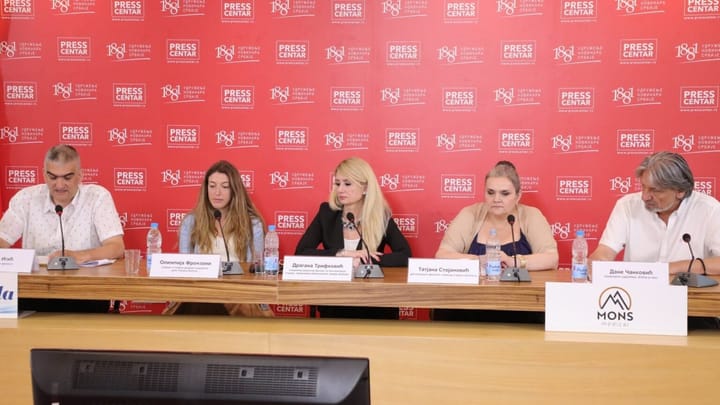
Orthodox scholars and analysts from four countries gathered in Belgrade to debate the theological and geopolitical dimensions of modern ecumenism.
BELGRADE — An international conference examining contemporary ecumenical processes from theological, canonical, and geopolitical perspectives was held June 30, 2026, at the Press Center of the Journalists’ Association of Serbia. The event, titled “Ecumenism between Dialogue and Political Instrumentalization – Theological and Analytical Reflections on Contemporary Ecumenical Processes,” was organized by the International Council for the Protection of the Orthodox Canonical Order at the Center for Geostrategic Studies in cooperation with the Italian Orthodox theological publishing house Theosis Editrice.
The gathering brought together theologians, professors, researchers, and public figures from Serbia, Russia, Greece, and Italy to discuss the relationship between Orthodox tradition, inter-Christian dialogue, and contemporary political developments. Speakers addressed questions concerning ecclesiology, the meaning of primacy, the role of religious institutions in international affairs, and challenges facing Orthodox unity.
Archimandrite Dionysios Shlenov of the Moscow Theological Academy opened the conference with a presentation on “The Mother Church and the Distortion of Conciliar Ecclesiology.” He argued that, within Patristic tradition, the term “Mother Church” refers primarily to the one, holy, catholic, and apostolic Church rather than to a single local church possessing authority over others. He concluded that “primacy is not worldly power, motherhood is not domination, and the unity of the Church rests on Christ as its only head.”
Center for Geostrategic Studies Director Dragana Trifković examined ecumenism’s intersection with geopolitics, arguing that religious dialogue can become entangled with political interests. She highlighted the Ukrainian church crisis as an example of how canonical disputes, political considerations, and international dynamics can overlap.
Representatives from Greece and Italy also presented critiques of contemporary ecumenical developments. Olimpia Fronzoni of Theosis Editrice spoke on the importance of preserving Patristic authority in Orthodox dogmatic tradition, while theologian Georgios Tramboulis discussed concerns regarding interpretations of primacy and ecclesiastical authority associated with the Ecumenical Patriarchate of Constantinople.
Other speakers addressed topics including the historical roots of ecumenism, the Ukrainian church situation, the relationship between religious tolerance and theological agreement, and the perceived influence of political objectives on church affairs. Monk Paisios Kareotis of the Holy Archangels cell at Karyes, Mt. Athos, emphasized that Orthodox dialogue must remain grounded in fidelity to Patristic tradition and the confession of faith.
The conference concluded with participants emphasizing that contemporary ecumenism involves not only theological questions but also historical, canonical, and geopolitical considerations. Organizers called for continued academic discussion regarding the challenges facing Orthodox Christianity in the modern world.
Previously, the UOJ reported that the Catholic-Orthodox Dialogue Committee met in Hungary.
Read also