News
Patr. Daniel Says Romanians Have a Vocation for Hesychasm
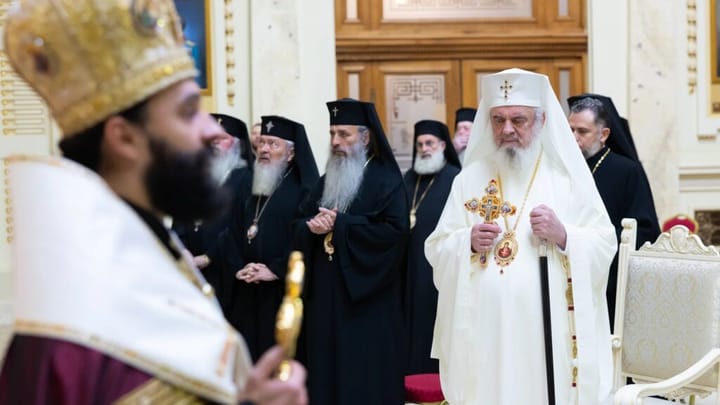
Patr. Daniel traced Romania’s hesychastic heritage from medieval saints to the monastic and theological movements that helped preserve Orthodox spirituality.
BUCHAREST, ROMANIA — Patr. Daniel of Romania said the Romanian people have a longstanding spiritual vocation for hesychasm, tracing the tradition from medieval Wallachia through the monastic revival of the 18th century and the modern theological work of St. Dumitru Stăniloae.
Speaking on October 28 at the inaugural meeting of the Romanian Orthodox Church’s National Church Assembly, the Patriarch recalled the influence of St. Hyacinth of Vicina, who established the Metropolis of Wallachia during the 14th-century hesychast movement. He also pointed to St. Theophano Basarab, born into the family of Wallachian ruler Basarab I, who devoted herself to prayer and later became a nun.
“This shows us that the Romanian people have a vocation for hesychasm, which would manifest itself to varying degrees throughout history, in different periods, up to the 18th century, when Neamț Monastery had more than 1,000 monks from several countries, most of them predominantly Orthodox,” Patr. Daniel said.
The Patriarch also highlighted Romanian monks’ contribution to the Paisian movement and the spread of the Slavonic translation of the Philokalia, a collection of Orthodox spiritual writings. He cited St. Dumitru Stăniloae’s work interpreting the Philokalia for modern readers, emphasizing Romania’s role in preserving and transmitting the spiritual heritage of worldwide Orthodoxy.
Previously, the UOJ reported that thousands processed in Romania with the relics of St. Paraskeva and St. Paisius.
Read also