Defense of The Faith
A Beautiful Church Is Not an Apology Owed
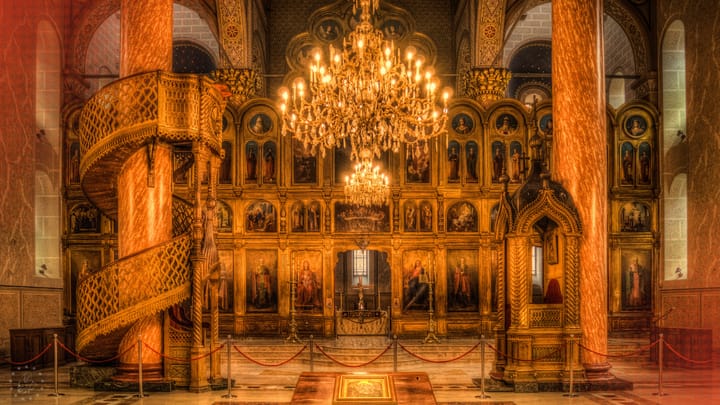
The Gospel’s account of costly myrrh challenges the assumption that beauty offered to God must come at the expense of the poor.
On the evening of Holy Tuesday, when parishes serve the Bridegroom Matins of Holy Wednesday, chanters reach a hymn many of them have practiced for weeks. The Hymn of Kassiani, named for the ninth-century nun of Constantinople who wrote it, unfolds in one of the slowest and most ornate melodies in the Byzantine repertoire, and congregations that shift their weight through a long litany often go still to hear it. It tells of a sinful woman who came to Christ before His Passion with costly myrrh.
At the Presanctified Liturgy the next day, the Gospel records how the disciples reacted when a woman at Bethany poured oil on His head: “Why this waste? For this fragrant oil might have been sold for much and given to the poor” (Matthew 26:8-9). Year after year, the Church answers by lavishing some of her most demanding music on an offering like the one they called wasteful.