Defense of The Faith
“This Is My Body”: What If Christ Meant Exactly What He Said?
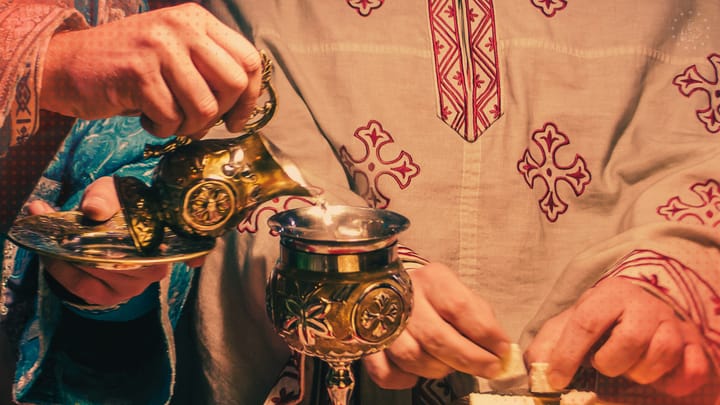
The Eucharist is not merely a symbol of Christ’s presence but His true Body and Blood, given to us in Holy Communion.
Christians of the true faith always take the Lord at His word. We trust what He says, and we believe that He means what He says. As St. Irenaeus notes in his On the Apostolic Preaching, our “God is verbal” (1:5). Thus, when God speaks, He speaks realities. What He says comes to be. There is an ontological reality to the words of the Lord, as He – the Word made flesh – has a voice and speaks.
In Genesis, when the Lord said, “Let there be light,” there was ineffable light. Our entire cosmic reality was linguistically created, as it were. There was no gap between word and reality. And this can be seen all over the Scriptures, indicating the very manner in which God works.
- “‘Lazarus, come forth!’ And he who had died came out (John 11:43b-44a).
- “And He said, ‘Young man, I say to you, arise.’ So he who was dead sat up and began to speak” (Luke 7:14b-15a).
- “Then He arose and rebuked the wind, and said to the sea, ‘Peace, be still!’ And the wind ceased and there was a great calm” (Mark 4:3).
If believed in these instances, why would one not believe the same here?
- “Jesus took bread, blessed and broke it, and gave it to the disciples and said, ‘Take, eat; this is My body.’ Then He took the cup, and gave thanks, and gave it to them, saying, ‘Drink from it, all of you. For this is My blood of the new covenant, which is shed for many for the remission of sins” (Matthew 26:26-28).
Or, as St. Cyril of Jerusalem asked: “He once turned water into wine, in Cana of Galilee, at His own will, and is it incredible that He should have turned wine into blood? (Mystagogical Catechesis IV:2)