

Why Do We Fast?
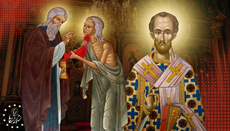
Orthodox fasting isn’t about checking boxes or avoiding punishment. It helps us to tame the passions, grow in prayer, and "appreciate the full glory and beauty of what God has given to us."
Back in December, Ben Bollinger—a convert from Orthodoxy to Catholicism—published an article on his Substack called “11 Catholic Disciplines That Should Not Push You Towards Eastern Orthodoxy”. Number eleven on his list was fasting. This came as a surprise to me, as I’m sure it did even to many Catholics.
Bollinger’s arguments are worth considering, however, because they show how difficult it is for “Western Christians” (i.e., Catholics and Protestants) to understand the Orthodox ethos. Honestly, I can’t help wondering if he ever really understood the Orthodox teachings before rejecting them.
First, Bollinger admits that Catholics are “rather lax” when it comes to asceticism: “Since Catholics aren’t obliged under pain of mortal sin to observe the traditional fasts, nobody does it.” Yet he goes on to say that “Eastern Orthodoxy has its own problems with respect to fasting”:
Since the Orthodox have no updated or even codified code of canon law, no coherent understanding of ecclesiastical authority, and no unified belief about how ancient canons actually apply to 21st century laymen, there’s a lot of confusion about what Orthodox laity are obligated to do under pain of sin.
Essentially, Bollinger is begging the question. He’s judging Orthodoxy by Catholic standards—but, in so doing, he simply assumes that the Catholic standard is correct. That is, he assumes a sort of legalistic, one-to-one relationship between fasting and mortal sin.
In essence, Bollinger is saying: “The Roman Church conforms to the Roman paradigm better than the Orthodox Church.” Which is true, so far as it goes! But it doesn’t tell us much about Orthodoxy.
Fasting and Feasting
Those who wish to learn about the Orthodox attitude towards fasting should begin at the very end: the Paschal Homily of St. John Chrysostom. This brief, powerful sermon is read every Easter by just about every Orthodox priest and bishop everywhere in the world. In it, the Golden-Mouthed urges everyone to approach the Supper of the Lamb:
He shows mercy upon the last, and cares for the first; and to the one He gives, and upon the other He bestows gifts. And He both accepts the deeds, and welcomes the intention, and honors the acts and praises the offering. Wherefore, enter you all into the joy of your Lord; and receive your reward, both the first, and likewise the second. You rich and poor together, hold high festival. You sober and you heedless, honor the day. Rejoice today, both you who have fasted and you who have disregarded the fast. The table is full-laden; feast ye all sumptuously. The calf is fatted; let no one go hungry away.
What’s interesting is that, despite being so hugely important to Orthodoxy, it is impermissible from a Catholic perspective.
As Bollinger points out, Catholics are “obliged” to fast “under pain of sin”—indeed, mortal sin. And or those who don’t know, Rome teaches that anyone who has committed a mortal sin may not receive communion until he has gone to confession and been absolved.
So, if (A) failing to fast during Lent is a mortal sin, (B) it is wrong to receive Holy Communion while in a state of mortal sin, and (C) Chrysostom invites non-fasters to receive communion—then the Saint’s homily is pastorally reckless, if not downright heretical.
We need too beyond this legalistic view of fasting, then. Let’s hear more from the Orthodox sources themselves.
Fasting as Askesis
Orthodoxy takes a more literal understanding of asceticism as askesis, or athletic training. St. Paul says, “I have fought the good fight, I have finished the race, I have kept the faith” (2 Tim. 4:7). Likewise, the Orthodox see fasting as a kind of strength training.
A boxer doesn’t wait until the big fight to break in his gloves. No: he trains every day—day after day—so he has every advantage when he steps into the ring. Likewise, fasting helps us build strength and stamina in our battle against the passions. There’s a hymn we sing on the first day of Great Lent:
Let us observe a fast acceptable and pleasing to the Lord.
True fasting is to put away all evil,
To control the tongue, to forbear from anger,
To abstain from lust, slander, falsehood and perjury.
If we renounce these things, then is our fasting true and acceptable.
The point, then, is not to avoid certain foods merely for its own sake. The Orthodox vision is more holistic. In fact, food is the least important aspect of fasting! As Kallistos Ware writes in When You Fast:
When we fast, this is not because we regard the act of eating as shameful, but in order to make our eating spiritual, sacramental and eucharistic—no longer a concession to greed but a means of communion with God the giver. So far from making us look on food as a defilement, fasting has exactly the opposite effect. Only those who have learnt to control their appetites through abstinence can appreciate the full glory and beauty of what God has given to us. To one who has eaten nothing for twenty-four hours, an olive can seem full of nourishment. A slice of plain cheese or a hardboiled egg never taste so good as on Easter morning, after seven weeks of fasting.
Put it another way. God showers us with blessings every moment of every day—and yet our relationship with those blessings is distorted by our sinful passions. Food stops being a source of fuel or even a simple pleasure; instead, it becomes an addiction. We may begin to lust after food the way other men lust after women. This carnality becomes both physically and spiritually deadening.
Ware goes into this exact theme in When You Fast. “Lust excludes love,” he writes:
So long as we lust after other persons or other things, we cannot truly love them. By delivering us from lust, the fast renders us capable of genuine love. No longer ruled by the selfish desire to grasp and to exploit, we begin to see the world with the eyes of Adam in Paradise. Our self-denial is the path that leads to our self-affirmation; it is our means of entry into the cosmic liturgy whereby all things visible and invisible ascribe glory to their Creator.
Checking Boxes or Becoming Perfect?
Let’s turn back to Bollinger. He says the Catholic Church has an advantage over the Orthodox Church because Rome at least gives a bare minimum that one must do in order to avoid mortal sin.
Yet within the Roman system, lots of people are excused from even these mild fasting requirements: the sick, the elderly, nursing mothers, etc. So, even this minimum isn’t really the minimum. Just given the fact that most American Catholics are over fifty years old, I’d be willing to bet the majority of Bollinger’s coreligionists are totally exempt from fasting.
This, by the way, is why Orthodoxy doesn’t deal in bare minimums. We recognize that asceticism, like askesis, is deeply personal. There’s no one-size-fits-all fasting plan, just like there’s no one-size-fits-all exercise routine. And there’s no real point in setting an arbitrary “minimum,” especially half of your flock isn’t required to meet it anyway.
From the Orthodox perspective, those minimums turn fasting into a chore. It becomes all about checking boxes. Instead of setting a minimum, Orthodoxy encourages us to keep our eyes fixed on the maximum. Why? Because Christ commands us to “be perfect, just as your Father in heaven is perfect” (Matt. 5:48). So, we have one standard: total abstinence from all animal products, plus wine and olive oil.
Of course, most Orthodox Christians can’t do that without a good deal of practice. That’s why we have four fasting seasons instead of one; it’s also why we’re called to fast strictly on all Wednesdays and Fridays. And it’s why we always fast in consultation with our pastor or spiritual father. The priest is like our personal trainer. He helps us build up our strength, slowly but surely, over the course of years.
And here’s the thing. If you talk to folks who convert from Catholicism to Orthodoxy, they’ll tell you: it’s way easier to fast as an Orthodox Christian than a Roman Catholic. Why? Because your priest isn’t threatening you: he’s challenging you. He’s not telling you to tick a box. He’s offering to help you achieve true physical and metaphysical excellence—to become perfect, as our Father in Heaven is perfect.
I’ll wrap it up there, because, as I said, my goal isn’t to dunk Catholic fasting practices, but to defend (or at least explain) our Orthodox customs.
To our friend Ben Bollinger and all readers of the UOJ: good strength as we come to the end of Great Lent, and a joyous Pascha.