News
Archaeologists Identify Early Church Near Venice Dating to Fourth Century
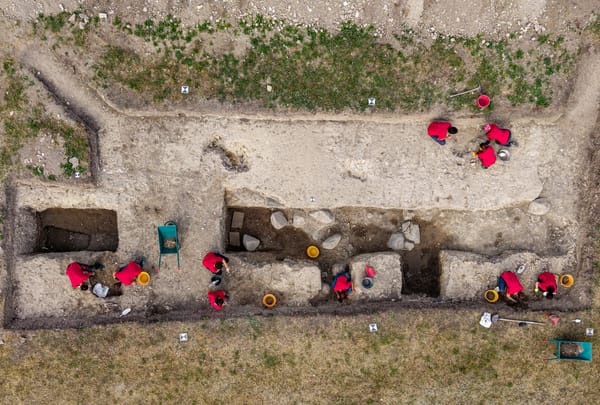
Discovery in Altino provides physical evidence of an ancient episcopal seat and the early development of Venice.
ALTINO, ITALY — Archaeologists associated with Ca' Foscari University of Venice have uncovered the remains of an early church in Altino, near Venice, dating to the late fourth or fifth century.
The discovery provides the first clear archaeological evidence of the church, being referenced in historical sources dating to the fourth century but never found. Researchers believe the building served as the episcopal church of Altino, an important Roman settlement in the Venetian region.
The church measured approximately 100 feet by 66 feet and was built as a rectangular hall. Archaeologists also identified a nearby complex of buildings that may have served as the bishop's residence.
The discovery matches with historical accounts of the early Christian community in Altino. St. Jerome mentioned the church in a letter written in A.D. 396. The letter referred to Helidorus, the city's first bishop, and his nephew Nepotian, a priest associated with the church.
Researchers have said the findings give new evidence of the Church's growth in the region during late antiquity. The church's buildings used paving stones taken from Roman roads, implying that building materials from the city's infrastructure were used for the construction of the church.
In the seventh century, the episcopal seat was transferred from Altino to the nearby Torcello, due to demographic and environmental changes. The church was eventually dismantled, and its materials used in other structures, explaining why the church was not discovered for so many years.
The archaeologists plan to continue investigating the area, analyzing human remains, radiocarbon dating, and conducting geophysical surveys of the site.
Previously, the UOJ reported that archaeologists uncovered the remains of a Christian basilica in Oderzo, Italy.
Read also