History and Culture
The Athos Diet: An Interview with Dr. Peter Patitsas
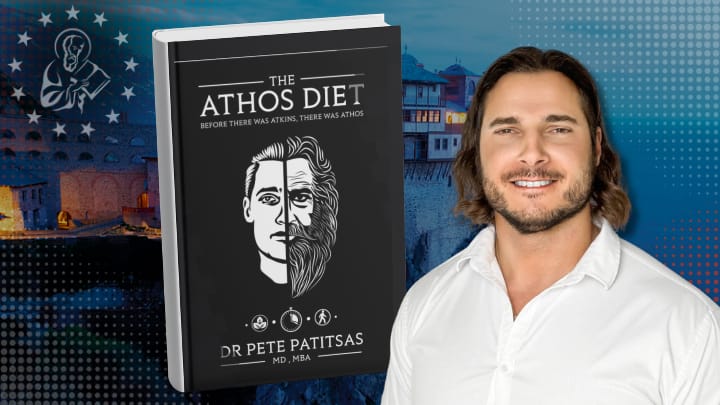
Dr. Pete, what first inspired you—an emergency medicine physician and Orthodox Christian—to travel to Mount Athos? How did you become convinced of the Athonite way of life, which inspired your book? All birds fly eventually. Mom does, dad does, and I guess, I should too. I was raised in a Greek
Dr. Pete, what first inspired you—an emergency medicine physician and Orthodox Christian—to travel to Mount Athos? How did you become convinced of the Athonite way of life, which inspired your book?
All birds fly eventually. Mom does, dad does, and I guess, I should too.
I was raised in a Greek Orthodox family. I started fasting at the age of seven. That meant for half the year or more, I was essentially a vegan or pescatarian. However, while I followed the generic parameters, I was able to consume as much “fast-friendly” candy, white bread, and processed foods as I wanted. I was a pretty husky kid. Sure, there was a spiritual benefit in that practice, in even that restriction. But I was missing out on further spiritual development and most certainly the health benefit.
Fasting among secular friends required a lot of explanation, and I had to explain this tradition to a lot of people. I became somewhat self-aware of why we fasted but I still remained in the shadows of understanding.
I went to church throughout my childhood and would visit monasteries regularly. One summer, I made my way to Mount Athos with my grandfather, uncle, and twin brother. It felt ancient. It felt deep. It felt mystical. I didn't learn more about fasting there at that time, but it became a reference point for the rest of my life to reach back to. While there, I did notice that these monks fast till communion. During Lent, they often fast until the Ninth Hour with Christ, when He died on the Cross.
When I eventually went to medical school and had to complete an independent study, I chose fasting practices, as it seemed like an interesting intersection between medicine and something I was connected to through my church and life's experiences. It was during this period of research, that I began to see fasting for the first time as both a spiritual practice and physical exercise that could result in more virtue and more health. In fact, fasting is the bridge between the physical and the spiritual.
For those who haven’t yet read The Athos Diet, can you give us the elevator-pitch version? What exactly is the “Athos Diet,” and how is it different from other popular diets we hear about today?
The Athos Diet is a three pillared approach to Christian fasting so that a person not only progresses spiritually throughout the year but also saves his body along the way. Yes, there is benefit in any form of restraint, to any struggle. But there could be methods that result in a bit more virtue, value, and insight given the mentors that surround us.
The Athos Diet takes the best of all fasting practices in the Orthodox Church, specifically concentrated in places like Mount Athos, and shares them with the world for healing of soul and body. The Athos Diet starts out with a recognition that feasting and fasting is both beneficial and essential to life.
The maiden voyage for most followers of the Athos Diet is a 48-day period that mimics the Great Lent for Orthodox Christians. The diet requires participants to abstain from all food for 16-20 hours a day, depending on goals; to only consume plant-based protein. plus select sea food like shrimp; and to simply walk at least 30 minutes a day.
Believe it or not, these three pillars result in fasters losing 10% of their body weight in 48 days, reverse disease, and support life's transformation. If you can deny yourself food, restrain yourself from gratification, and limit your intake over this time, you will change for the better. Fasting is the bridge between the physical and the spiritual because fasting acts at your core. There is a lot of anatomy to back that claim up.
One of the most fascinating claims in the book is that the monks of Mount Athos enjoy remarkable longevity and almost no heart disease or cancer. What were the biggest eye-openers for you when you saw their daily routines and meals firsthand?
Like I said before, monks do not eat before communion. Many monks also don’t eat before the Ninth Hour during Great Lent. This practice could also be called intermittent fasting. Any mammal that intermittently fasts,—as in they only consume calories during a confined period of the day, an eating window—will live 40% longer. There is no drug in the world that will do that.
Throw into that fresh, unprocessed foods, with plant-based protein, and you will sidestep many of life's tragedies.
You can struggle in order to be healthy or you can struggle being ill. There is no third way.
Fasting is a tool that the Church has given us to learn the lessons we need to master so that we can bring good to the world around us. There will always be tragedy, but let's eliminate what we can by living a Christian life. Fundamentally, that begins with fasting.
Can you walk us through a typical day of eating on the Athos Diet?
You are waking up and enjoying coffee, tea, and water to your heart's delight. No sugar, no oils, no fake sugars can go into those drinks. Take a carbonated water with you. Add some lemon if you like a little flavor.
If you are not too aggressive, start eating your plant-based meals starting at 10:00 AM. If you want to be really aggressive, wait till 2:00 PM.
Get at least 100 grams of protein daily. There is no limit on this macro, during this eating window. Consider pea protein, hemp protein, shrimp, avocados, peanut butter, lentils,and Spirulina.
No matter what, your last calorie is consumed before 6:00 PM. In other words, you have a four-hour or eight-hour eating window. After the eating window closes, we go back to your calorie free drinks till you go to sleep.
A lot of people worry that eating mostly plants, fasting regularly, and cutting out meat for long stretches will leave them hungry or low-energy. How do the monks stay so vigorous and clear-minded on this way of eating, and how can the rest of us do the same?
This is the game changer. Remember just how strong you are. Remember you are God's apex creation. We have abilities that we have forgotten.
Americans are about 60 pounds overweight on average. That means we could literally go about 60 to 90 days without food. In fact, there was a Scotsman who went an entire year with nothing but electrolytes and water!
We are engineered for greatness. The reality is, once you break through all the sugar stores in your body, you will run on ketones that come from the breakdown of fat in your body. Ketones are high energy. When fasted, your body actually naturally upregulates dopamine, serotonin, and adrenaline release. This means you will have more energy, more creativity, and more vitality.
Eating all day long is a marketing ploy that companies promote to get you to eat more and buy more.
Let’s be clear: the Athos Diet is not anti-meat or anti-dairy. We just recognize there is a time for feast and fasting. You will cycle through periods of fasting and feasting throughout the year. There are seasons of sunlight and darkness, seasons of wet and dry, seasons of hot and dry. Our diets should be dynamic as well.
You weave together cutting-edge nutrition science with two thousand years of Orthodox Christian spiritual tradition. Was there ever a moment when writing the book that the science and the ancient wisdom lined up in a way that absolutely blew your mind?
Fasting rings the Christian message: the meek will inherit the earth. This tool is so simple, so accessible, and so implementable, that every human being on earth can do it. It is God’s salve for suffering. It is the anecdote to most tragedy.
The commandment to fast is mentioned over seventy times in the Bible. God gave us a medicine that outperforms any blockbuster drug on earth. It is a method to bring peace to our lives, our souls, and our bodies.
If you want a way to align every cell of your body with God, fasting is that way. Not only do we need to align our lives with the highest Good—which is God—but we need to go as deep as possible, at a cellular level, to achieve a comprehensive alignment with the cosmic.
There are so many ways we can benefit physically from the Athos Diet. How does it help with our spiritual lives and our mental health?
The digestive tract is lined with something called the enteric nervous system. That nervous system is bigger, by one metric or another, than the brain itself. There are 100 million neurons that line the gut. There are 100 trillion bacteria in our gut that help create cofactors, enzymes, and neurotransmitters, that regulate most aspects of our bodies. Digestion uses ten to twenty percent of our metabolism. Our lives revolve around what we eat, when we eat, and how much we eat.
In other words, digestion, really is core to who we are.
Stop learning about virtue; instead, feel on a visceral level what delayed gratification, extended time horizons, patience, restraint, limiting your impulses, and preparing for the future really mean. If you can do that with food so deeply, on a deep basis, you can transpose those virtues to every aspect of your life. What person with these virtues mastered will not excel in their job, career, marriage…?
To fast is to master the virtues in a low-risk environment. From that mastery you will have dominion over your life. The world around you will be better for it.
If there's one message you hope every reader takes away from The Athos Diet—whether they're trying to lose weight, reverse heart disease, or simply live with more peace and purpose—what would that be?
There are many ways to learn the virtues but there are few ways to feel them on such a deep level. Struggle getting healthy or struggle being ill. You need to take fasting seriously. You can extend your life by forty percent and sidestep ninety percent of disease. You can master the virtues, so that you can overcome life’s inevitable challenges and tragedies.
Get every cell in your body to sing the frequency of God’s formula of fasting. Outlive your enemies and have dominion over yourself so that the world transforms into a Christian landscape around you through intentionally struggling well when this fallen world begs you to stay broken.
Dr. Peter Patitsas is a Greek Orthodox Christian and Doctor of Emergency Medicine. His book The Athos Diet is available on Amazon. Visit him online at www.theathosdiet.com.