History and Culture
Was Rasputin a Saint?
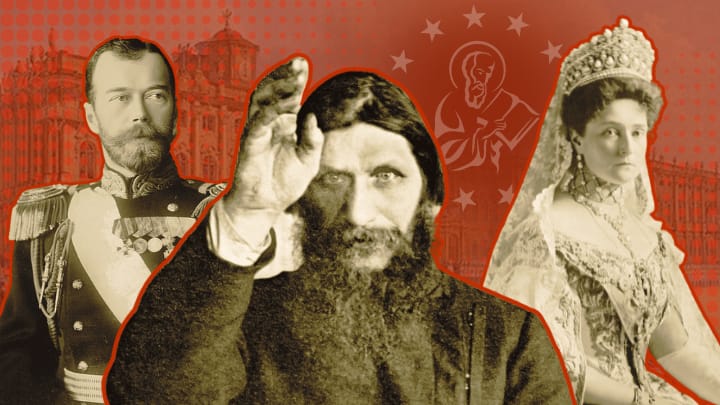
Most of the “black myths” surrounding Gregory Rasputin are utter lies. He was not a sorcerer; he was not a Khlyst; he did not have an affair with the Tsaritsa. However, credible evidence from Orthodox bishops and contemporaries reveals him as a drunken womanizer, an influence-peddler who deceived
Recently, some Orthodox “influencers” (including friends of the UOJ) have become vocal apologists for Gregory Rasputin. A few are even calling for his canonization as a saint!
The Rasputinists claim that Rasputin was slandered by jealous courtiers and Bolshevik agitators. He was not the cause of the Russian Revolution. On the contrary: he was the only man who could have saved the Autocracy. Instead, he became a sort of protomartyr, his death foreshadowing those of St. Nicholas, St. Alexandra, and their children.
But are they right? Let's look at the facts.
The Rasputin Affair
First, we must first consider the nature of Rasputin’s supposed crimes.
Historians have ruled out the more heinous allegations that have been leveled against him over the years. Rasputin did not practice black magic. He was not a Khlyst. He did not hold orgies with young nuns. He certainly did not have an affair with the Tsaritsa. Rasputin’s apologists are correct to dismiss these charges as Bolshevik propaganda.
However, there are four credible accusations that may be leveled against Rasputin:
1. Drunkenness. Rasputin was said to be overly fond of vodka.
2. Womanizing. He was widely accused of taking sexual advantage of his followers.
3. Peddling influence. Some contemporaries accuse Rasputin of profiting from his access to the Romanovs. Specifically, he’s said to have secured posts for his “friends,” both in the Church and the State, in exchange for money and/or sexual favors.
4. Political meddling. Rasputin was widely blamed for some of St. Nicholas’s most disastrous policy decisions.
5. Religious charlatanism. Rasputin may not have been the great holy man that he claimed to be.
Now, to be clear: I’m not saying that Rasputin is guilty of these crimes. (Not at this stage, anyway.) I’m saying that these accusations will prove more difficult for Rasputin’s apologists to dismiss, as they are leveled by more credible sources and supported by more hard evidence.
So, how do we decide whether or not such allegations are true? Let’s consider the credibility of our witnesses.
Rasputin’s critics and defenders face a certain difficulty in this regard. The following points are all true:
• Rasputin was loved by a number of holy men and women, including the Royal Martyrs.
• Rasputin was hated by a number of holy men and women, including St. Elizabeth the New Martyr, St. Benjamin of Petrograd, and St. Mardarije Uskokovic.
• Rasputin was adored by disturbed and evil people like Olga Lokhtina.
• Rasputin was despised by disturbed and evil people like Sergei Trufanov.
So, for every quote about Rasputin’s great sanctity, there’s an equally weighty quote about his depravity. For every madman who said he was God, there’s one who said he was the Devil.
At the same time, we may note one consistent pattern.
The early-20th century Russian elite had a spiritually adventurous streak. Many were involved in spiritualism, theosophy, and other such un-Christian practices. For many others, a sincere Orthodoxy was mixed with a weakness for pseudo-mysticism and other forms of quackery. Unfortunately, the Tsaritsa was an example of the latter, as evidenced by her early friendship with the French occultist Nizier Anthelme Philippe.
Rasputin’s supporters tended to be drawn from the ranks of these “adventurers.” Meanwhile, the more traditionally Orthodox elements of society tended overwhelmingly to oppose him. Indeed, as we shall see, the political fallout regarding Rasputin was by far the worst in conservative circles.
Having said that, let’s consider the evidence from Rasputin’s life.
Some of his contemporaries claimed that the young Rasputin was a drunk, a womanizer, and a thief. Subsequent historians have taken this more or less for granted. Many have even bought into the idea that his surname was actually a nickname: a play on the Russian rasputni, meaning “degenerate.”
None of this is true, however. Rasputin’s family acquired their name when they moved to Siberia, and there’s no evidence that it reflected on their low moral character. Moreover, the young Gregory had no major run-ins with the authorities. Nor (again) is there any evidence that he joined any fringe religious sects, such as the Khlysts (, though he probably had contact with that sect and was influenced by its practices).
All credible sources suggest that Rasputin began his life as an ordinary peasant, marrying and having children at a young age. Then, quite suddenly, he embraced the life of a “wanderer,” like the narrator of Way of the Pilgrim. He gained a reputation for his magnetic personality, his earthy preaching, and his piercing insight into the human condition.
Still, there were early signs that Rasputin might wander off the difficult path:
1. He effectively abandoned his family to become a “pilgrim.”
2. He never submitted to the authority of a spiritual father. Indeed, he was constantly at odds with several bishops of the Orthodox Church.
3. He had a habit of stroking and kissing his female acolytes.
So, knowing what we know about Rasputin’s early life, he definitely would seem vulnerable to the sins of which he is accused: pride, lust, etc.
Rasputin and the Romanovs
Russia in the 20th century was awash with wanderers and startsy like Rasputin. What set him apart? What brought him to the Romanovs’ attention?
Many say that Rasputin healed Tsarevich Alexei’s hemophilia. That’s entirely wrong, however. St. Alexei was never healed of his hemophilia. At most, Rasputin was able to curb his worst “bleeding spells.” That in itself is noteworthy: when saints heal a disease, they actually heal it. They take the illness away. I’m not aware of any who merely offered temporary relief for symptoms. Indeed, shortly after he met the Romanovs, Rasputin "prophesied" that Alexei would be cured of his hemophilia when he was thirteen years old. Of course, it was in his thirteenth year that St. Alexei was martyred by the Bolsheviks.
In any event, it does appear that Rasputin was able to stop Alexei’s bleeding spells. However, this could easily be explained by the fact that he prevented the Tsarevich from receiving aspirin. In the early 20th century, Bayer marketed their new drug as a “cure-all.” The Romanovs’ doctors tried using it to treat Alexei’s hemophilia; what they didn’t know is that aspirin is a blood thinner. Rasputin told the Tsarina not to let physicians “bother” Alexei; in this sense, he stopped them from administering an anticoagulant to a hemophiliac. That would explain why the boy’s condition seemed to improve when Rasputin entered their life.
Stress severely exacerbates hemophilia as well. Rasputin was known to have a calming effect on Alexei—indeed, on all children. However, there is no reason to attribute this healing power to supernatural causes. Even more “scientific“ theories (e.g., that Rasputin studied hypnotism) are unnecessary. When a little boy is sick, he naturally turns to his mother for comfort. St. Alexei’s bleeding spells made St. Alexandra extremely distraught, however, and St. Nicholas found it difficult to console either of them. Rasputin may have been the one calm, reassuring presence in Alexei’s little world.
So, there’s no reason to attribute any supernatural origin to Rasputin’s “healing powers.“
It’s worth noting that St. Nicholas apparently admitted to having doubts about Rasputin and yet allowed his influence over the Tsaritsa to grow unchecked.
Consider the following anecdote by Maria Bok, the daughter of Pyotr Arkadievich Stolypin, who served as prime minister from 1906 until his assassination in 1911. Stolypin was deeply suspicious of Rasputin and urged the Tsar to banish him from the Palace. “I agree with you, Pyotr Arkadievich,” St. Nicholas replied, “but better ten Rasputins than one of the empress’s hysterical fits.”
On another occasion, Stolypin is said to have presented the Tsar with a dossier chronicling Rasputin’s many moral infractions. Nicholas essentially told the Prime Minister to mind his own business: “I know, Pyotr Arkadievich, that you are sincerely devoted to me. Perhaps everything you say is true. But I ask that you never again speak to me about Rasputin. In any event, there is nothing I can do.”
Many have looked at this evidence and concluded that Nicholas was simply weak-willed. That’s not true, however. Rather, it seems the Tsar had a difficult time making up his mind about Rasputin. At one point, he supposedly told a courtier that Rasputin “is just a good, religious, simple-minded Russian. When I am in trouble, I like to have a talk with him and invariably feel at peace with myself afterwards.”
The trouble is that Rasputin came to be seen as the power behind the Romanovs’ throne. It was known that Alexandra urged her husband to follow Rasputin’s advice on an absurd range of subjects, from food and transportation policy to land reform to military strategy.
Whether Nicholas ever took this advice is debatable. What’s more important is that he was widely seen as being under Rasputin’s spell, and the Tsar did nothing to dispel those rumors. On the contrary, he often forbade officials to criticize the man in his presence. On several occasions, St. Nicholas even removed Rasputin’s detractors from important posts. For instance, Alexander Samarin was dismissed from the post as Procurator of the Holy Synod after just three months in office, for the crime of criticizing Rasputin (more on this in a moment).
So, it’s not true that St. Nicholas tolerated Rasputin because he was afraid to stand up to his wife. It seems the Tsar himself was at least partly convinced of Rasputin’s holiness. In any event, he was entirely convinced that any damage Rasputin might do to his reputation was worth the comfort it brought to his wife and son—a tragic miscalculation.
Rasputin and the Church
Now we’ll ask whether the attacks on Rasputin’s character are credible.
First, however, we should consider what the burden of proof would look like. Put it this way: Men who abuse positions of religious authority generally don’t abuse all of their followers. That’s an easy way to get caught. Rather, they target a handful of especially devoted and/or vulnerable acolytes.
So, it’s not enough for the Rasputinists to prove that their man had a wholesome relationship with Prince X or Countess Y. Any significant evidence that Rasputin abused his followers would be sufficient to prove that he was a fraud. And, to be sure, the evidence against him is fairly overwhelming.
The most damning testimony comes from the many Orthodox clerics who initially allied themselves to Rasputin but then turned against him, in particular Bp. Theophan (Bystrov) of Poltava and Bp. Hermogen (Dolganyov) of Tobolsk.
It should be noted that, like many Orthodox clerics, Theophan and Hermogen were predisposed to like Rasputin. The clergy had become alarmed by the popularity of Western occultists among the Russian elite, the Romanovs’ own “Master Philippe” being a prime example. These bishops saw Rasputin as an authentically Russian, genuinely Orthodox alternative. They hoped to find a true staretz to guide the the Tsar and Tsaritsa back to traditional Orthodox spirituality. They placed all of their hopes in Rasputin—a decision that both men would regret for the rest of their lives.
Theophan was one of Rasputin’s very first supporters. The two even lived together for a time in St. Petersburg. Theophan offered Rasputin entrée among the pious Russian elites. Rasputin, meanwhile, secured Theophan a position as the Romanovs’ private confessor.
Before long, however, Theophan began to worry about Rasputin’s odd behavior. He was especially disturbed by the Siberian staretz's his habit of kissing and caressing his female followers, and of accompanying them to bath houses. In 1905, Theophan made a pilgrimage to the monastery in Sarov. He spent a whole night praying in the cell of St. Seraphim, praying for his friend. When he emerged the next morning, Theophan said to the monks: “Rasputin is on the false path.”
When he returned to St. Petersburg, he confronted Rasputin about his inappropriate behavior. According to Theophan’s testimony, Rasputin promised to stop. Theophan forgave him and moved on, assuming that Rasputin was simply an ignorant peasant, unaware of the scandal his behavior would cause.
But Rasputin didn’t stop. So, Theophan and another bishop, Met. Benjamin (Fedchenkov) of Saratov, confronted him a second time, accusing him of “spiritual delusion” and threatening to publicly denounce him if he did not repent. Reportedly, Rasputin broke down in tears and vowed once again to change his ways.
He didn’t. And so, at last, Theophan requested an audience with the Sovereign. He and his colleagues in the Holy Synod prepared a comprehensive dossier on Rasputin’s offenses, which he intended to present to St. Nicholas. When he arrived at the Palace, however, he was met by St. Alexandra and her friend Anna Vyrubova, a fellow disciple of Rasputin. Rasputin had outmaneuvered him.
Theophan next appealed to Met. Anthony (Vadkovsky) of St. Petersburg. Theophan and Anthony passed their dossier to Sergei Lukyanov, then-Procurator of the Holy Synod. Lukyanov, in turn, passed the dossier to Prime Minister Solypin; Solypin then made his brave yet fruitless intervention with the Tsar.
Shortly after their failed coup, Theophan was dismissed as the Romanovs’ confessor and banished to Ashtrakan. (As an aside: Lukyvanov was also dismissed as Procurator. Remember that his successor, Alexander Samarin, was also fired for daring to criticize Rasputin.) After the Revolution, Theophan was nearly driven mad by guilt. He was convinced that, by introducing Rasputin to the Royal Family, he was directly responsible for the Russian Revolution.
Next we have Bp. Hermogen. Like Theophan, he befriended Rasputin shortly after the latter’s arrival in Petersburg. However, they had a falling out in 1911. Hermogen presented Rasputin with a catalogue of his misdeeds and demanded his repentance. Rasputin told the Tsar, who likewise ordered that Hermogen be banished to a monastery in Siberia.
Unfortunately, one of Hermogen’s allies—a corrupt monk named Ilyador—responded by leaking a letter that the Tsaritsa had written to Rasputin, expressing her desire to kiss his hands, etc. It was all perfectly innocent; again, no mainstream historian really believes that Rasputin and the Tsaritsa had an affair. Nevertheless, it was taken out of context by scandal-mongers and anti-royalists. As a result, St. Nicholas barred the press from publishing any material that was critical of Rasputin.
The testimonies of Bp. Theophan and Bp. Hermogen (now St. Hermogen the Newmartyr) is important for three reasons.
1. As we said, both men were initially friendly with Rasputin. They were not mere clericalists who resented being upstaged by a layman. On the contrary: they admired his simple, rustic spirituality. Also, Rasputin helped to advance their careers; they had nothing to gain from turning on him—at least, not in worldly terms. Theophan and Hermogen were at least sincere in their belief that Rasputin was a deviant and acted selflessly.
2. Theophan and Hermogen—along with Benjamin, Anthony, and other members of the Holy Synod—provided actual lists of Rasputin’s (supposed) crimes, both of which included drunkenness and adultery. Moreover, these lists were prepared by men who would conceivably have access to such information. They were not the vodka-fueled ramblings of bored aristocrats.
3. It shows that, quite early in Rasputin’s career, the Tsar placed a de facto ban on any criticism of his wife’s favorite. Church leaders simply were not allowed to voice their concerns about the Siberian staretz. Even if they were brave enough to speak out, how could they spread their warning without help from the press? How many people could they tell by word of mouth before the Okhrana came knocking?
This is the irony of the anti-Rasputin case. Most of the accusations that Rasputin’s contemporaries hurled at him was sensationalist nonsense. Yet this doesn’t prove that Rasputin was an angel. The truth about Rasputin never came out because the relevant authorities—i.e., the bishops of the Russian Orthodox Church—were prevented from speaking out by St. Nicholas himself.
Conservatives for Rasputin?
This is why, as many historians have pointed out, the major poilitical fallout of the Rasputin affair occurred mainly on the political Right. For instance, in 1910, the Moscow Gazette—an ultraconservative newspaper—called for the Holy Synod and its Chief Procurator to investigate this wandering peasant. “The personality of Gregory Rasputin must be brought to light,” it declared, “and this seduction must be stopped.”
Of course, the Synod tried to investigate Rasputin but was prevented by order of the Tsar. Not one but two Procurators tried to have him censored; however, they were removed by order of the Tsar. And the Gazette couldn’t publish a follow-up, also by order of the Tsar.
Five years later, Lev Tikhomirov—the Gazette’s editor—wrote in his diary:
People say that the Emperor has been warned to his face that Rasputin is destroying the Dynasty. He replies: “Oh, that’s silly nonsense; his importance is greatly exaggerated.” An utterly incomprehensible point of view. For this is in fact where the destruction comes from, the wild exaggerations. What really matters is not what sort of influence Grishka has on the Emperor, but what sort of influence the people think he has. This is precisely what is undermining the authority of the Tsar and the Dynasty.
Similar feelings of bewilderment swept through the Church, the army, the court, and other royalist bastions. Again, we can’t emphasize this point enough: It was the most conservative elements of Russian society who feared that Rasputin would bring down the monarchy. And, tragically, they were proven right.
Why, then, are so many Orthodox eager to defend him?
The truth is that Rasputin’s apologists tend to be young men who converted to Orthodoxy in the last couple of years. No doubt they're perfectly sincere. They might simply assume that the accusations against Rasputin were fabricated by the Bolsheviks. And, as we said, some of them were!
Yet if we lay aside the polemics—communist and royalist, Leftist and Rightist—we can’t avoid the conclusion that Rasputin was a fraud and a deviant.
It may be hard to believe that two holy people like Sts. Nicholas and Alexandra would be taken in by this huckster. Then again, the Devil is a master of lies and deceit. Christ Himself warned that Antichrists will come with “great signs and wonders; insomuch that, if it were possible, they shall deceive the very elect.”
Even then, if these young men want to base their whole understanding of history on vibes, they should know that the Orthodox conservatives of the early 20th century were on the anti-Rasputin side, with a few notable (and tragic) exceptions.
In closing, I will point out that, in 2001, Patriarch Alexei II (of blessed memory) was asked about the possibility of canonizing Rasputin. “This is madness!” he replied. “What believer would want to stay in a Church that equally venerates murderers and martyrs, lechers and saints?”
Nevertheless, in 2004, the Holy Synod of the Russian Orthodox Church charged Met. Juvenaly (Poyarkov) of Krutitsy with leading a commission to investigate Rasputin’s cause for canonization. Met. Juvenaly correctly advised the Synod against moving forward with his cause, citing the overwhelming evidence of Rasputin’s degeneracy.
Let this be the final word on the matter. And let’s all find a better hill to die on.
Read also