News
Critics Warn Planned National Pantheon at Kyiv-Pechersk Lavra Threatens Orthodox Shrine
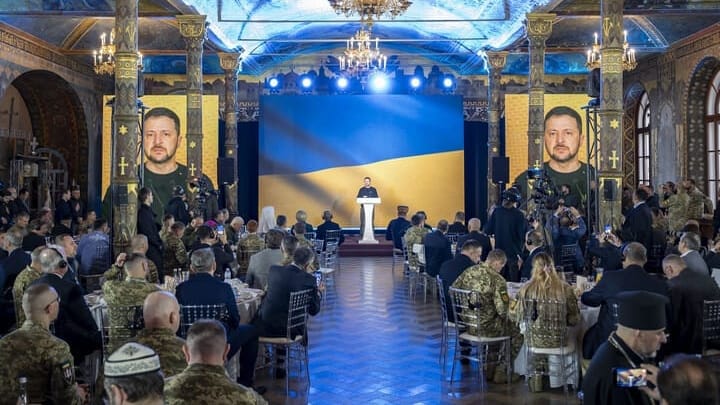
Former lawmaker and political analyst oppose government proposal, while OCU representative praises project as a tribute to Ukraine's national heroes.
KYIV — Plans to establish Ukraine's National Pantheon on the grounds of the Kyiv-Pechersk Lavra have drawn sharply divided reactions, with critics warning the project could damage one of Orthodoxy's holiest sites while supporters describe it as a fitting memorial to the nation's heroes.
Former Ukrainian Member of Parliament Ihor Mosiychuk argued that constructing the memorial complex within the Lavra would endanger the UNESCO-protected monastery and its historic cave system. He maintained that no new construction should take place on the site because of its archaeological, historical, and spiritual significance.
Mosiychuk also questioned the appropriateness of creating a national burial site within an active Orthodox monastery, arguing that monastic tradition reserves burials on monastery grounds for exceptional servants of the Church with the blessing of the monastic brotherhood. He further claimed the project could deepen religious divisions if individuals from other Christian confessions or non-Orthodox backgrounds were interred there.
Political analyst Kost Bondarenko likewise criticized the proposal, telling UOJ-Ukraine that he sees no state necessity for locating the National Pantheon within the Lavra. He argued that European countries generally construct national pantheons as separate memorial sites rather than within major religious sanctuaries, citing the French Panthéon in Paris as an example.
Bondarenko characterized the initiative as another step against the Ukrainian Orthodox Church (UOC), following other controversial actions affecting the monastery. He also questioned whether the project would ultimately be completed, suggesting it could instead become a source of government spending while serving as a symbolic challenge to the Church:
“Zelensky is a deeply atheistic man who does not belong to any confession. He acts solely out of his own cynicism, trying to strike Ukrainian Orthodoxy as painfully as possible... The first is to absorb budget funds; the second is what he sees as a slap in the face to the Church. Money will be allocated and then dispersed into private pockets – exactly as happened with the university Zelensky was planning to build.”
Speaking further to UOJ-Ukraine, Bondarenko argued that the initiative would go further than the policies of the Soviet authorities toward the historic Orthodox monastery.
Noting that although the Bolsheviks confiscated the Lavra and converted its churches into a Museum of Atheism, they never proposed burying Soviet leaders or national figures within the monastery.
"Even the Bolsheviks did not bury their heroes and leaders on the territory of the Lavra. They never thought of that. As for Zelensky and his team, they decided to go further."
Support for the initiative came from Avraamiy Lotysh, the Orthodox Church of Ukraine's (OCU) appointed head of the Lavra. In an interview with TSN, Lotysh described the creation of the National Pantheon as a landmark development that would honor those who secured Ukraine's independence and sovereignty.
Lotysh also praised President Volodymyr Zelensky's support for the project, saying the president's initiative had elevated plans for the memorial complex and related historical commemorations, including the installation of a bust of Hetman Ivan Mazepa at the monastery.
Mazepa was anathematized by the Russian Orthodox Church in 1708. The decision was not and has not been recognized by the Ecumenical Patriarchate of Constantinople, which believes that the anathema was issued as a matter of politics rather than on theological or canonical grounds.
Previously, the UOJ reported that a cleric of the UOC said the Lavra has been "spiritually destroyed."
Read also