History and Culture
Churches That Survived Empires: What Central Europe’s Orthodox Buildings Remember
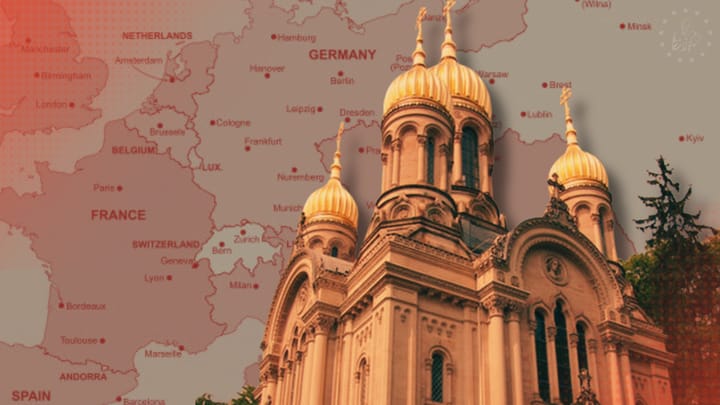
From shifting borders to political upheaval, Central Europe’s Orthodox churches bear witness to centuries of changing rulers, enduring faith, and the communities that preserved them.
Orthodox churches throughout Central Europe have seen the rise and fall of empires, from the 19th century, to the interwar period and through World War II. Some historic churches share unique stories.
One German duke spent his young wife’s dowry on a church with five gilded domes. In Prague, a small congregation took over an empty Baroque church and seven years later the crypt of that church became the last refuge of seven men being hunted down by the Waffen SS in World War II. In a third instance, in Warsaw, a church built for a Russian garrison was spared while the city demolished its largest Orthodox cathedral with explosives, and it went on to become the mother church of a new national Orthodox church.
All three churches are still flourishing in their communities to this day. St Elizabeth’s in Wiesbaden, St. Mary Magdalene in Warsaw, and Saints Cyril and Methodius in Prague.Their stories tell us a lot about what it takes for an Orthodox church to survive history in Central Europe.