




Rare Carolingian Artifact Depicts St. John the Baptist
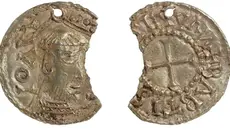
A rare Carolingian-era pendant of St. John the Baptist puzzles historians with its unusual design and origin.
NORFOLK, UK — A ninth-century gold pendant depicting St. John the Baptist has been discovered near Dunton in eastern England, in a find experts describe as highly unusual and difficult to interpret, according to BBC reporting on the ongoing archaeological assessment.
The object, made from a perforated gold coin, was uncovered by a metal detectorist and features the inscription “IOAN” alongside a bearded portrait on one side. The reverse bears fragmented Latin text believed to reference “John, Baptist and Evangelist.” Numismatist Simon Coupland noted that the style suggests a Carolingian origin from the late ninth century, likely the 860s or 870s, but stressed that its imagery does not align with known coinage of the period.
Depictions of saints on Western European coins from this era are extremely rare, with royal portraiture being the norm. Experts also noted stylistic parallels with Scandinavian minting techniques, adding further complexity to the object’s origins. The coin is now under review under UK treasure legislation, after which a coroner will determine its status, and Norwich Castle Museum has expressed interest in acquiring it.
Previously, the UOJ reported that archaeologists discovered Jesus’ tomb right where it had always been.