Man and Church
With the Spoils of Egypt
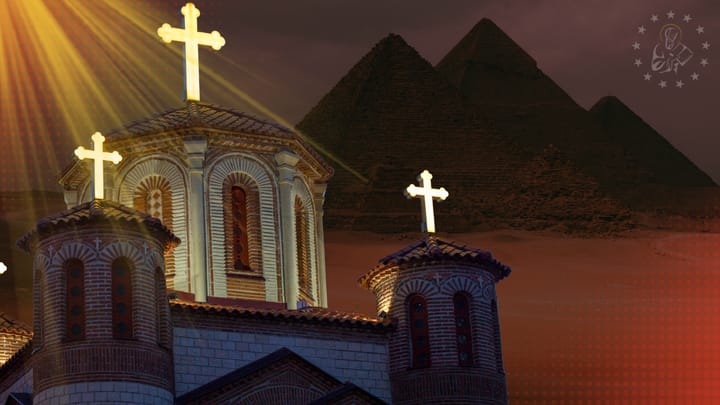
On becoming Orthodox without contempt for the faith we left behind
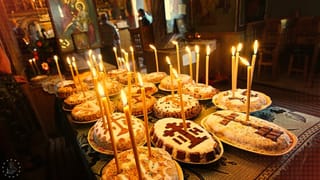
In a small church on a hill in Puerto Rico, a filled-to-the-brim community gathers in the Caribbean heat to celebrate Divine Liturgy. The priest here is Albanian, having moved here some 20 years ago. He is presiding over liturgy, along with a hieromonk who is establishing the island’s first Orthodox monastery. At times, he joins the choir in loud hymns, at times he moves through the crowd, making sure to greet everyone.
When I enter with my family, he seems to have expected us. He finds us and makes us welcome. Just before communion, he attends to each and every parishioner to hear confession and pray for absolution, covering their heads with his stole. I met with the priest at coffee hour, not knowing that I was to gain some insight into a problem I’d been dealing with for a while— how to relate to my formation in a radical protestant tradition.
Many inquirers and converts in the Orthodox Church today struggle with their previous church experiences. As one inquirer at my parish told me, he wasn’t ready to believe that the independent Catholic denomination he grew up with was entirely in the wrong. Others may find it quite easy to reject the brand of Christianity that formed them, willing to challenge every teaching that they used to accept as true.
I myself was caught up. I did not see my Baptist-Calvinist roots as anything worth struggling for. When I found the Orthodox Faith, it was as a relief that my many struggles with doctrine and sense-making of the Christian story had come to an end. It was only later into my conversion that I began to catch myself being a good southern Baptist here and there. What had I uprooted, and what still had its grip on me?
Read also