News
OCA Synod Issues Statement on Assisted Suicide and Euthanasia
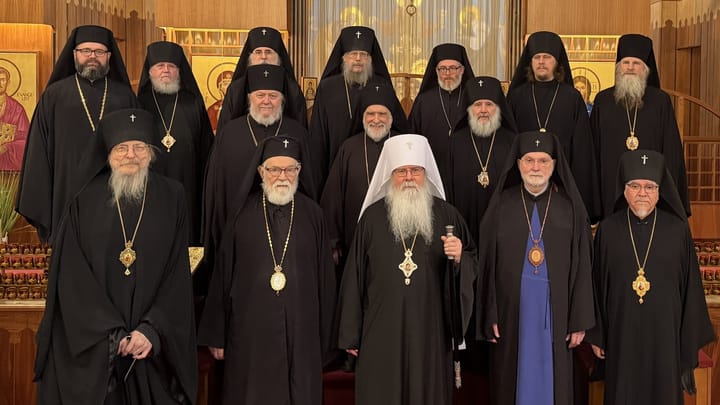
The OCA Holy Synod’s pastoral letter rejects assisted suicide while urging Orthodox communities to accompany and care for the sick and dying.
CRESTWOOD, NY — The Holy Synod of Bishops of the Orthodox Church in America approved a pastoral statement on assisted suicide, euthanasia, and end-of-life care during its Fall 2026 session at St. Vladimir’s Orthodox Theological Seminary. Entitled “A Christian Ending to Our Life,” the statement, issued under the presidency of Metr. Tikhon, addresses clergy, monastics, and faithful throughout the Church.
The bishops reaffirm that every human life possesses sacred dignity because each person is made in the image of God, regardless of age, health, or independence. “The dignity of a human person does not rest on strength, independence, or usefulness,” the statement declares. “It rests on the image of God, which is no less present in one who lies dying than in one who is in the fullness of health.”
Acknowledging the anguish experienced by the sick and their families, the hierarchs write from their own pastoral experience: “Each of us has stood beside hospital beds and open graves. We have buried the elderly after long illness, and children whose lives had scarcely begun. We have stood with families whose grief seemed too heavy for any heart to carry.” They emphasize that suffering is not good in itself, and that seeking relief from pain is not a failure of faith.
The statement makes clear that the Church cannot bless assisted suicide or euthanasia, in which death is deliberately brought about as a response to suffering. At the same time, it distinguishes these acts from pain medication, hospice and palliative care, and decisions to withhold or withdraw treatments that no longer offer reasonable benefit or impose disproportionate burdens. The bishops stress that although a treatment may end, care for the patient must continue.
Addressing those who are sick or approaching death, the Synod offers particular reassurance: “You are not a burden to the Body of Christ.” The bishops encourage the faithful to speak openly with physicians and priests about their fears, seek relief from pain, and receive the Holy Mysteries often. They also urge family members and caregivers to remain present, pray with those who suffer, and seek pastoral and medical assistance rather than abandoning those who ask for an assisted death.
The statement includes an appendix containing the advance directive of the ever-memorable Archimandrite Roman (Braga), offering an example of how an Orthodox Christian may prepare for serious illness and death. In describing the care he wished to receive, Fr. Roman wrote: “Please keep my mouth and lips moist, please touch and comfort me and please read my favorite prayers and passages from the Bible to me.” The Synod also encourages adults to prepare advance directives and calls on parishes, monasteries, and Church institutions to strengthen ministries to the sick, the dying, and their caregivers.
The bishops conclude with a call for compassionate care until the end of life: “Let us relieve every pain we can relieve, and sit beside every pain we cannot.” They also express gratitude to the special commission chaired by Bp. Gerasim, whose members included scholars and physicians with expertise in the issues addressed by the statement. The full pastoral letter, including Fr. Roman’s advance directive, can be found here.
Previously, the UOJ reported that Orthodox hierarchs in Britain opposed the assisted suicide bill.
Read also