News
Orthodox Theologian Fr. John Breck Shares Story of Conversion to Faith
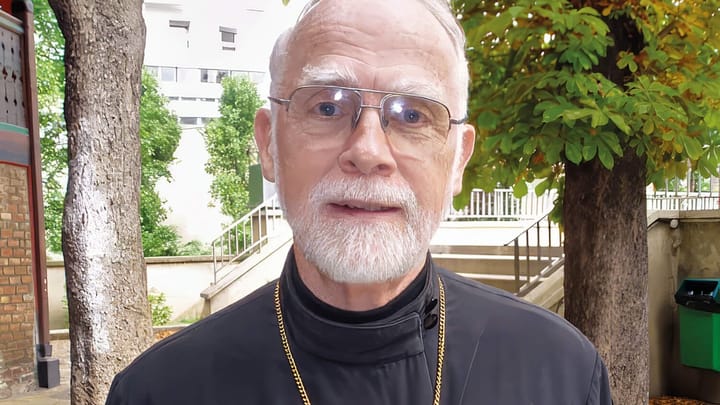
The much-published author and priest reflected on his Orthodox conversion, the importance of prayer, and the need for Christians to rediscover the mystery of God in modern life.
PUTNA, ROMANIA — Fr. John Breck, one of the most prominent contemporary Orthodox theologians in the Western world, has reflected on his journey from an American Protestant background to the Orthodox Church, the role of prayer in spiritual renewal, and the challenges facing Christianity in modern society. In a wide-ranging interview published on the website of Romania's Putna Monastery, he discussed the experiences that shaped his faith, including his discovery of Orthodoxy alongside his wife, Lyn Breck, in the 1960s and their reception into the Church in 1973.
Born in 1939, Fr. John described how his early questions about human existence developed during his studies at Brown University and Yale Divinity School, where he became interested in theology, eschatology, and the meaning of life. His academic path eventually led him to Germany for doctoral studies and then to France, where he and his family became increasingly connected with Orthodox Christianity through the guidance of Fr. Boris Bobrinskoy.
Fr. John recalled that his first encounter with Orthodox worship came in 1966 at St. Sergius Institute in Paris. Entering the church for the first time, he said he experienced a profound sense of having “arrived home” after years of searching. He and Lyn were later received into the Orthodox Church in November 1973, supported by Orthodox Christians in France who helped guide them through the transition.
Discussing the mission of Christians today, Fr. John emphasized that love, humility, and prayer must guide Orthodox witness toward the wider world. He said Christians should share the truth of the faith while recognizing the limits of human understanding before the mystery of God.
Fr. John also expressed concern about what he sees as a decline of spiritual awareness in modern Western culture, particularly a loss of reverence, silence, and openness to divine mystery. He argued that renewal must begin not through social programs alone but through deeper prayer and commitment to Christ.
Without a serious interest in the created order and a genuine concern for the good of others, it is very difficult to see God's hand in the things around us and to perceive a transcendent meaning in the world of our daily experience. This deficiency, characteristic of America but less pronounced in Europe, has led to a corresponding decline in the sense of wonder and awe in the experience of the average American. Whether they are Roman Catholic, Orthodox, Jewish, or belong to any other religious tradition, American religious culture appears, to some extent, to remain deeply influenced and shaped by Protestantism. The positive side of this is that in Protestant traditions, there are often numerous initiatives to address social issues such as poverty, the lack of an adequate health care system, prejudice in all its forms, and the like. This concern also led to the development of similar efforts among Roman Catholics and American Orthodox. The overall impact, however, has been to deprive most Americans—regardless of denomination—of a serious concern for the inner life, for a deep and sustained worship of God, and for an appreciation of the divine beauty that is revealed in every human person and in all creation as a whole.
Reflecting on spiritual growth, Fr. John said faith does not necessarily develop according to biological stages of life but through encounters with people who lead others toward Christ. He credited figures such as his grandparents and Fr. Boris Bobrinskoy with playing decisive roles in his own spiritual journey.
Previously, the UOJ reported that the first Scottish Orthodox bishop since the Great Schism was consecrated in Paris.
Read also