Defense of The Faith
Before You Plan a Mission Trip to Orthodox Lands, Consider a Pilgrimage

Rather than attempting to teach Christianity in lands whose Orthodox Churches trace their faith to the apostles, Western visitors might first consider what those Churches can teach them.
Picture an American team of Protestant missionaries arriving in Greece, Georgia, Serbia, or Romania with Bible lessons and a plan to “bring Christianity” to the residents. The problem is that others beat them to it, in some cases nearly two thousand years ago.
In Greece, the Apostle Paul preached in Philippi, Thessalonica, Athens, and Corinth around AD 50. In Georgia, tradition credits St. Nina, a woman from Cappadocia, with converting the royal court of Iberia in the early fourth century. In Romania, tradition holds that the Apostle Andrew preached in Scythia Minor (today’s Dobrogea), and Christian communities among the Latin-speaking population there are well attested by the third and fourth centuries. In Serbia, Christians lived in Roman cities such as Sirmium and Naissus from early on, and the Serbs themselves were baptized in the ninth century through Byzantine missionaries and the legacy of Saints Cyril and Methodius. St. Sava established the autocephalous Serbian Church in 1219.
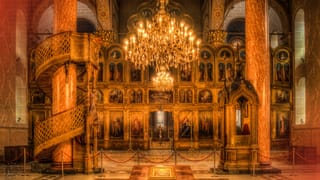
Unaware of this history, or unimpressed by it, the missionaries set up shop, ready to spread a message they consider themselves to have fully understood. Nearby stands a church whose prayers, saints, and liturgical life predate the visitors’ own denomination by at least a millennium. The question is not whether everyone there practices the faith, but whether the visitors know whom they are addressing and what the original Christian message entailed.