News
Patr. Bartholomew Calls Essex Monastery a Witness to Orthodox Faith
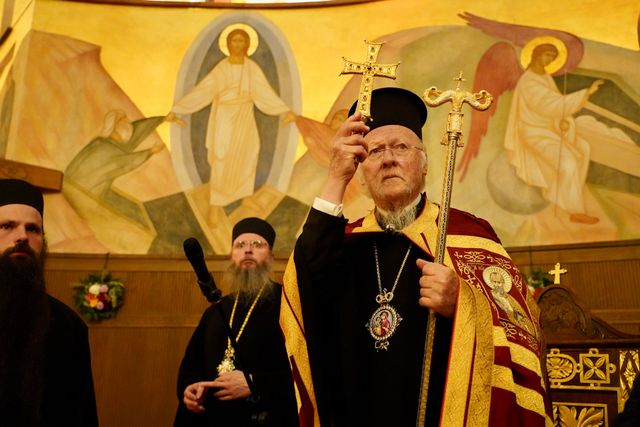
Patr. Bartholomew praised the Essex monastery as a living witness to Orthodox spirituality and emphasized the Cross as central to Christian life.
ESSEX, UK — Ecumenical Patriarch Bartholomew celebrated the Divine Liturgy on September 20 at the Church of St. Sophrony the Athonite at the Holy Patriarchal and Stavropegic Monastery of St. John the Baptist in Essex. He was accompanied by several hierarchs, clergy and representatives of the Orthodox community in Britain, as well as numerous faithful and friends of the monastery.
During his address, the Patriarch spoke with particular emotion about returning to the monastery founded by St. Sophrony the Athonite. He expressed gratitude for the opportunity to pray at the saint’s tomb and praised the monastery as a continuation of Britain’s ancient Christian heritage. “Feelings of holy love and paternal affection flood our hearts,” he said, speaking of his meeting with the monks and nuns.
Patr. Bartholomew also reflected extensively on the centrality of the Cross in Christian and monastic life, following the recent feast of the Exaltation of the Holy Cross. “A Christian life without the Cross is completely unthinkable!” he declared, emphasizing that Christians are called not merely to stand beside the Cross but to participate in its mystery.
He further described the Essex monastery as a spiritual witness to Orthodox Christianity in Western Europe and encouraged its community in its monastic vocation. “Your Monastery is a ‘city set on mountains’ and a ‘lamp upon a lampstand’ of Western Europe,” he said.
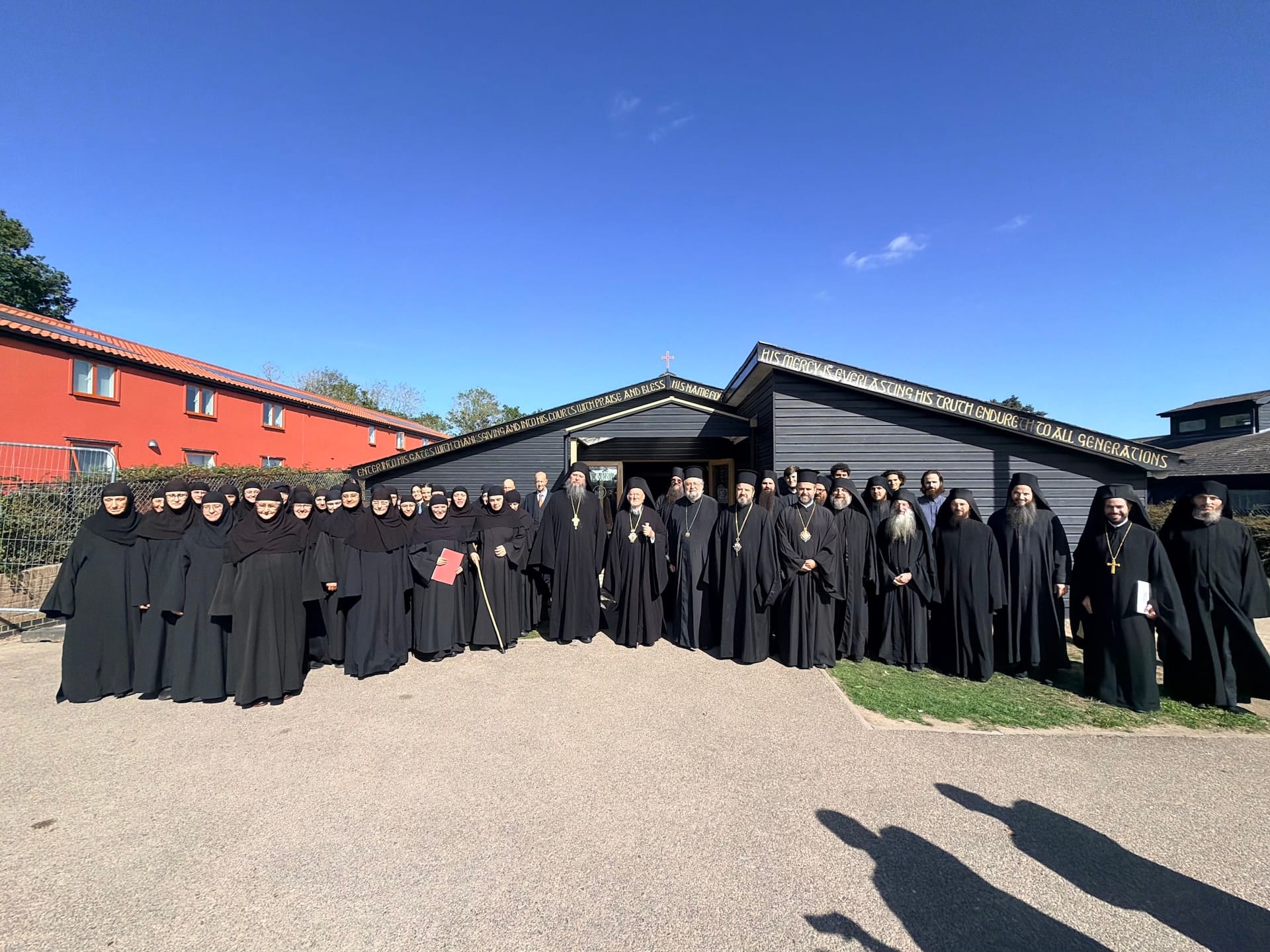
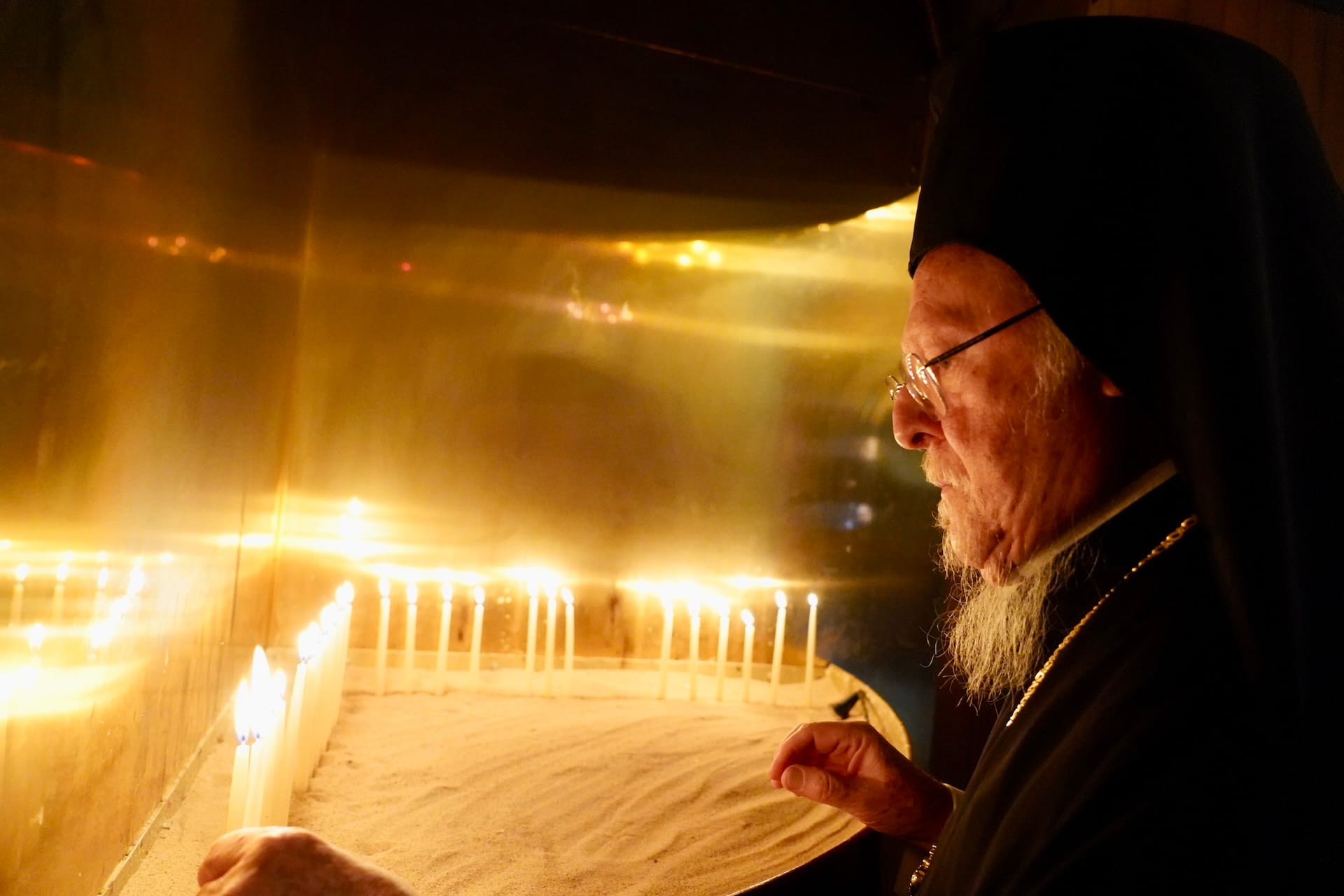
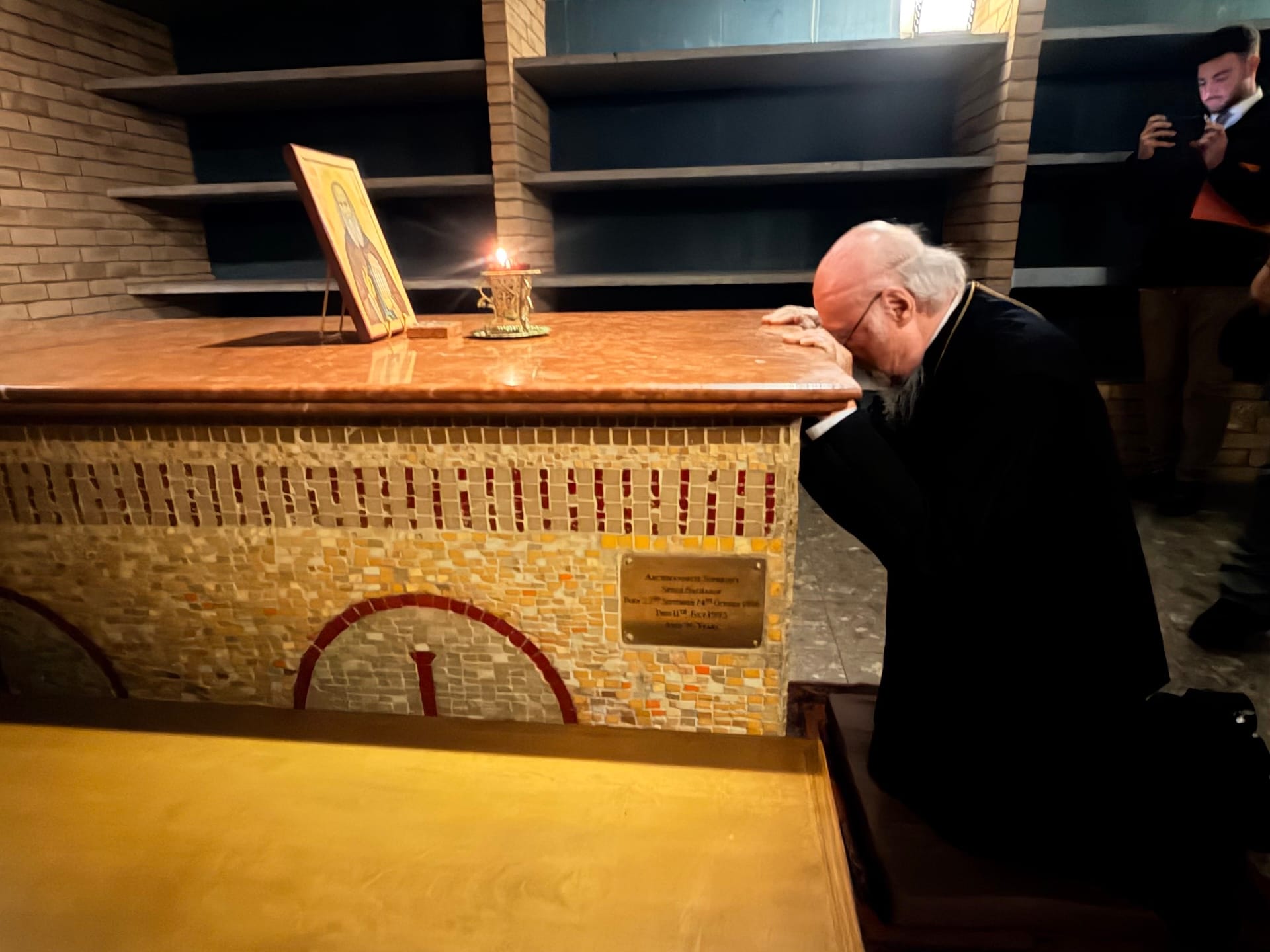
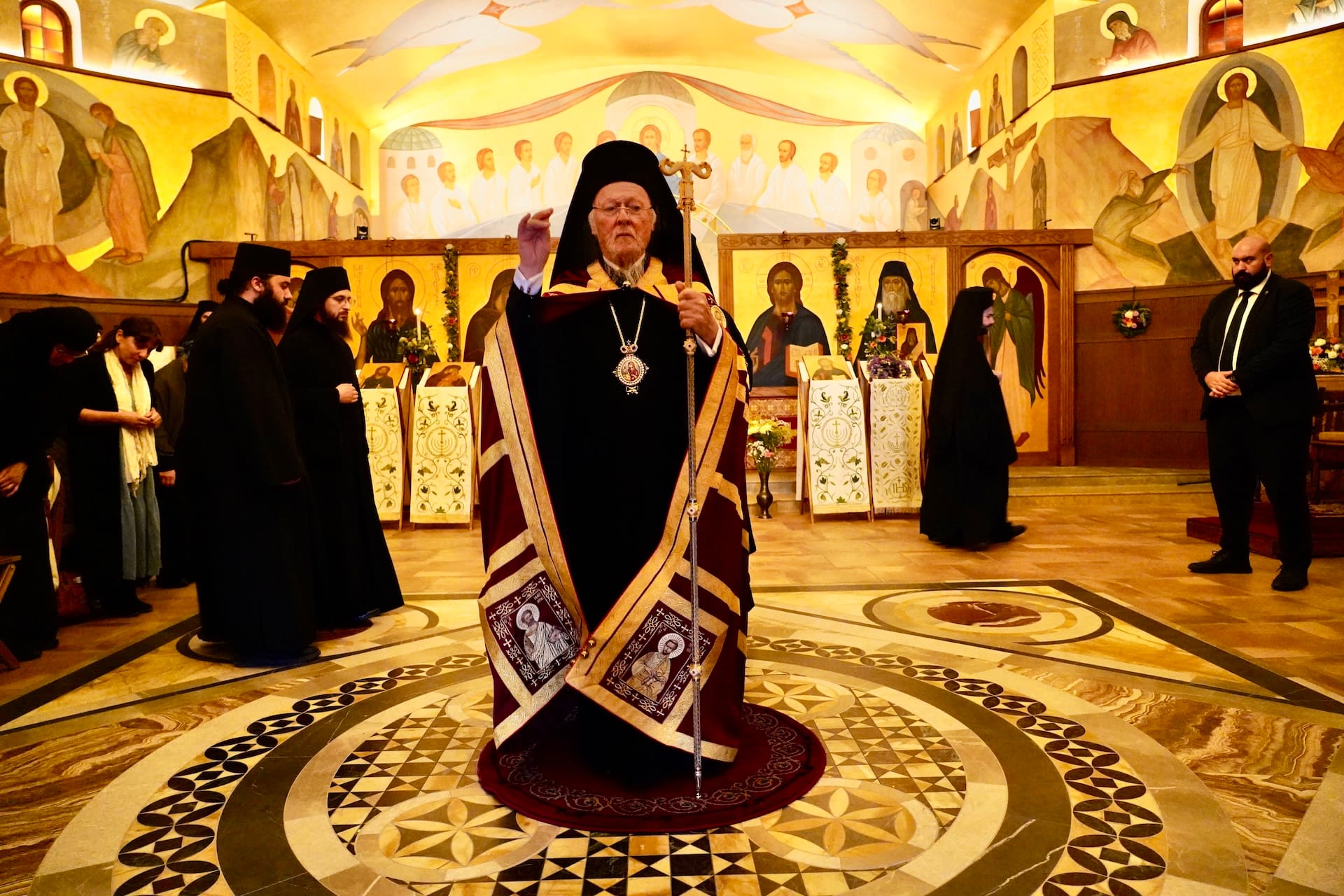
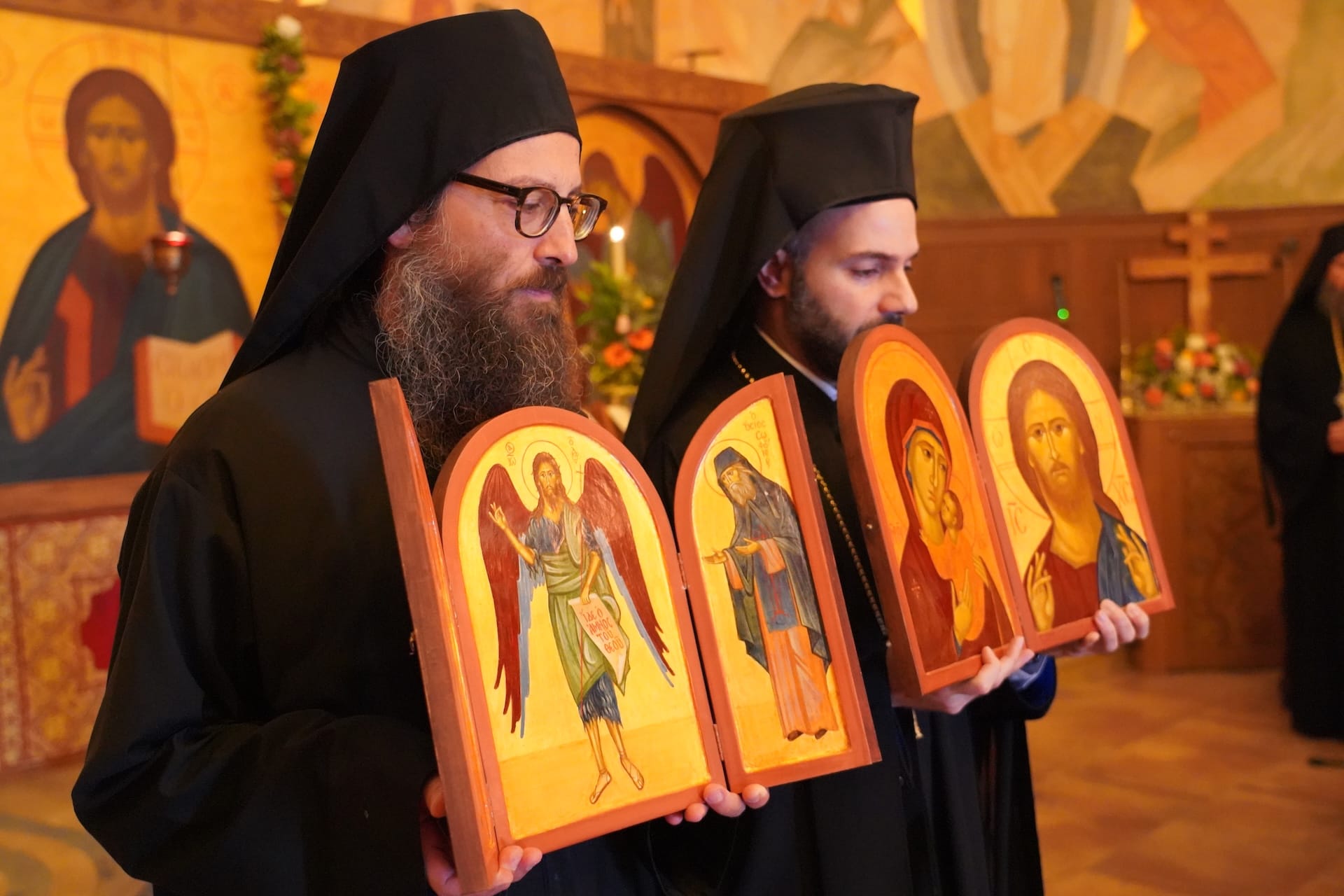
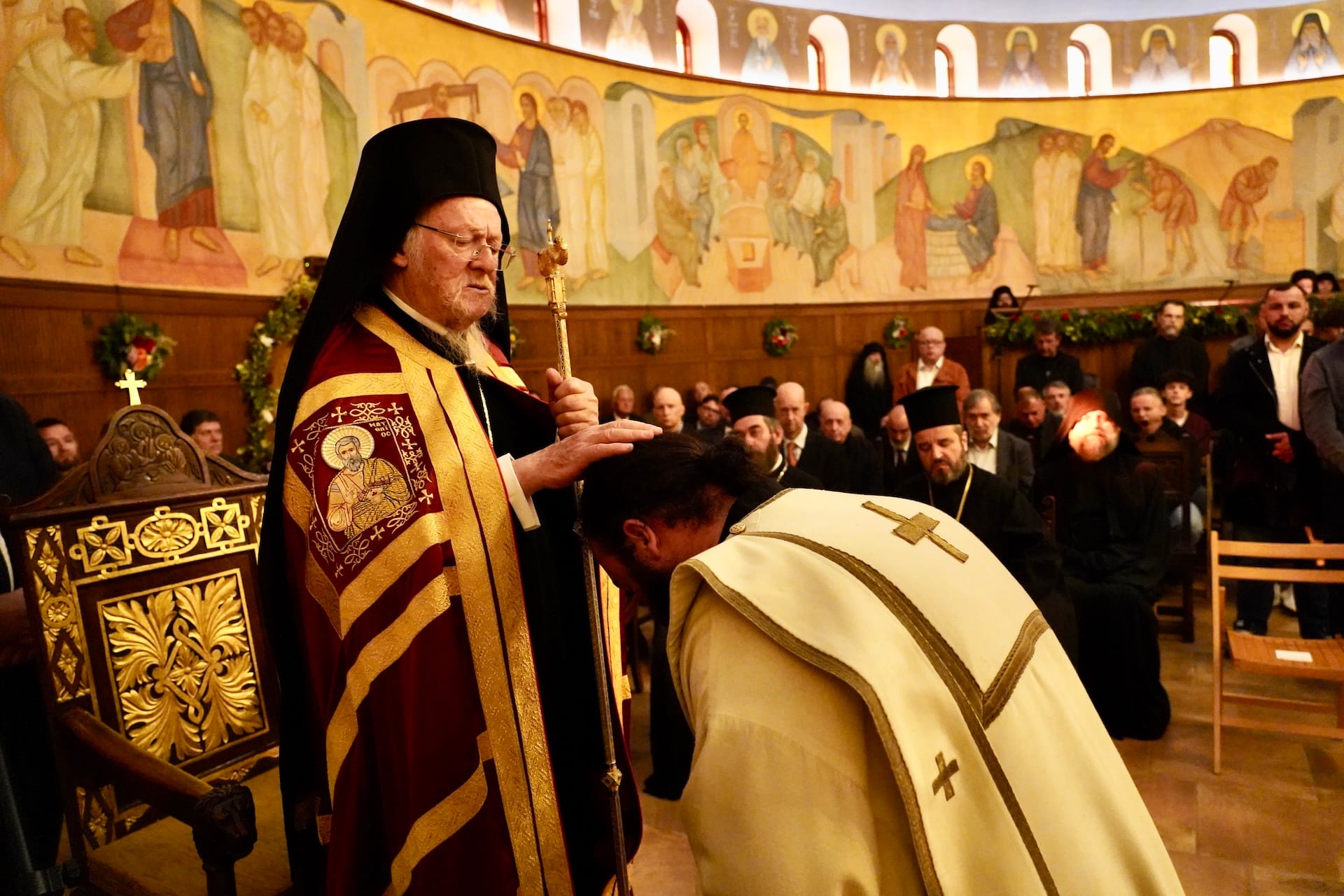
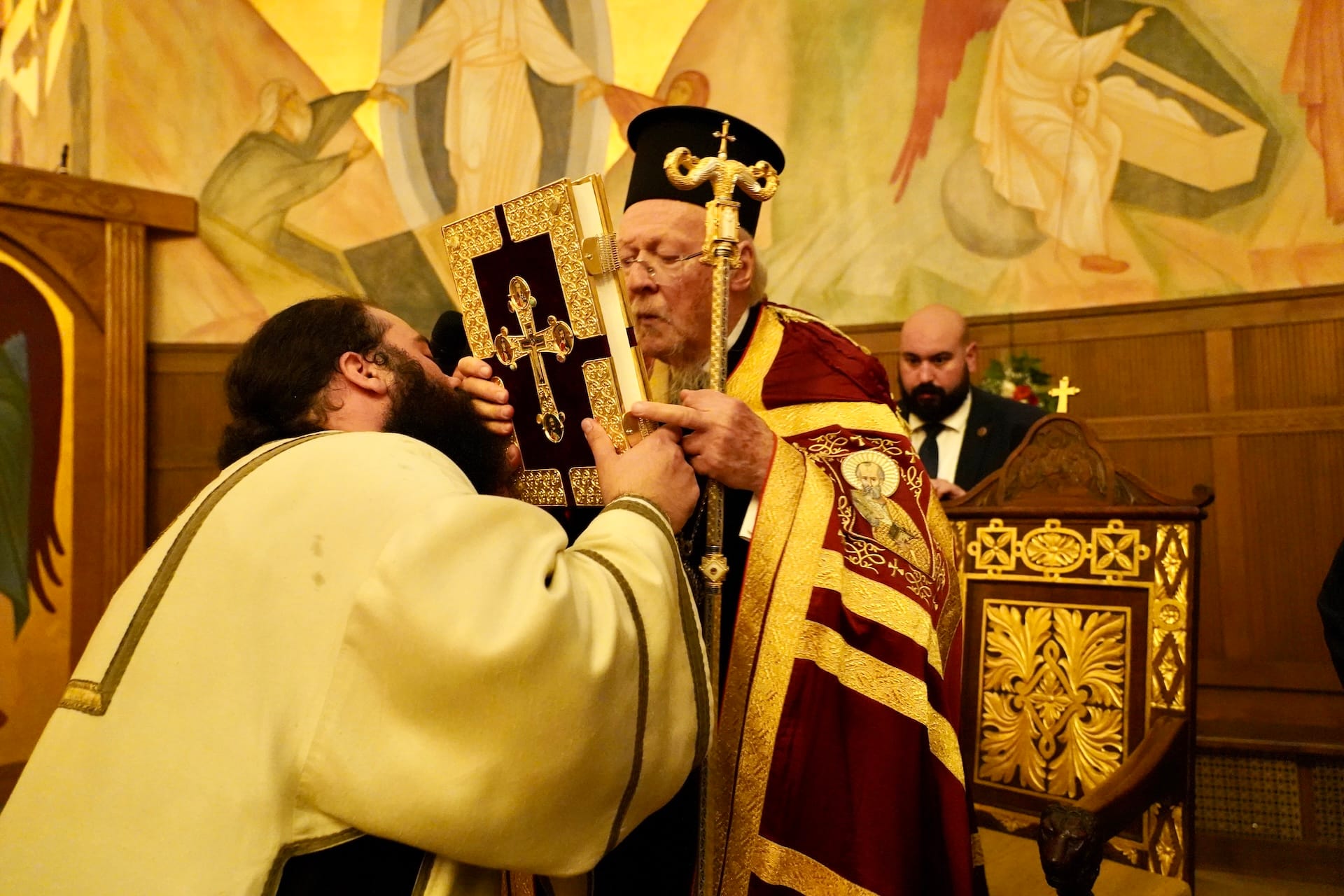
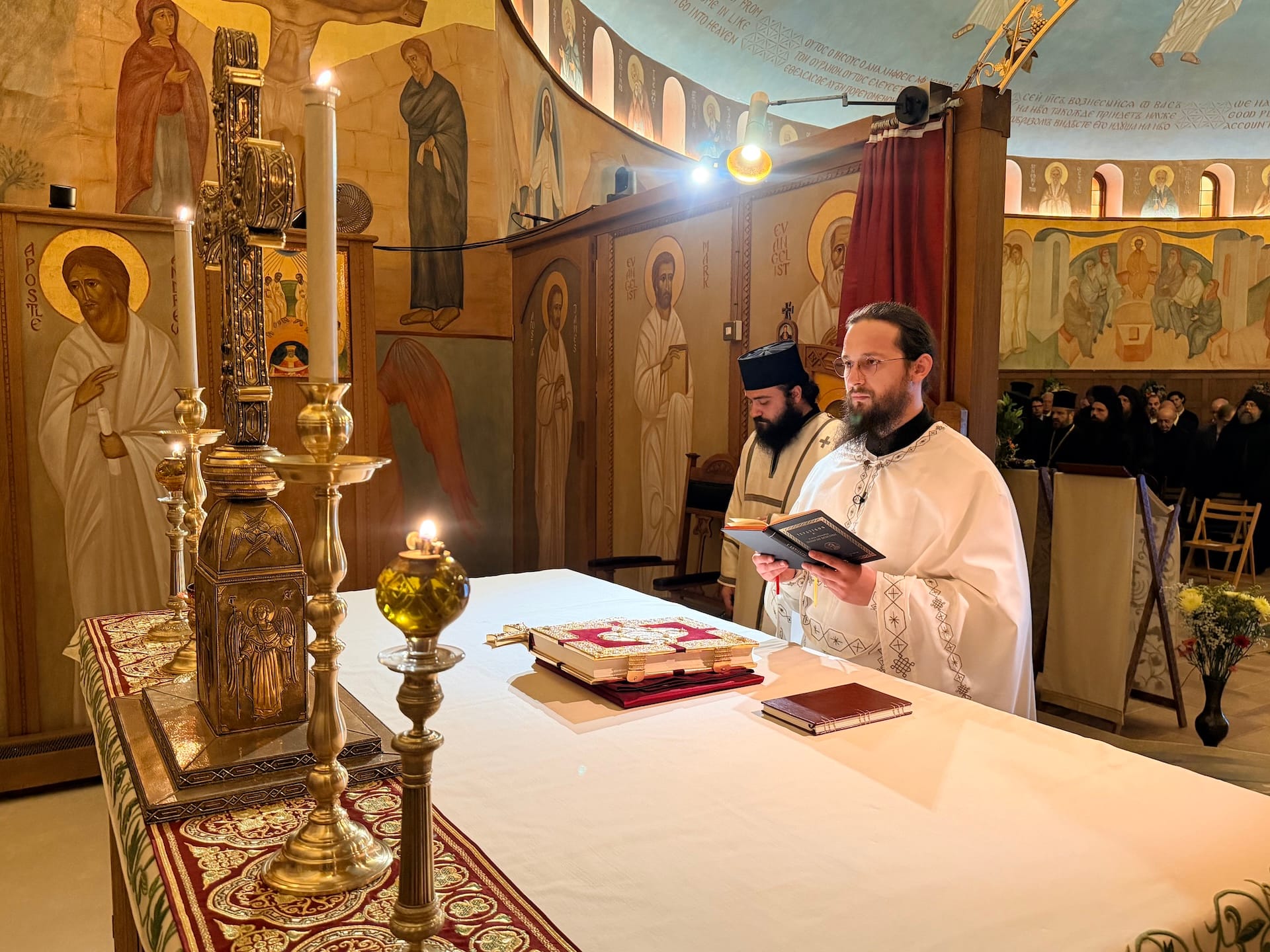
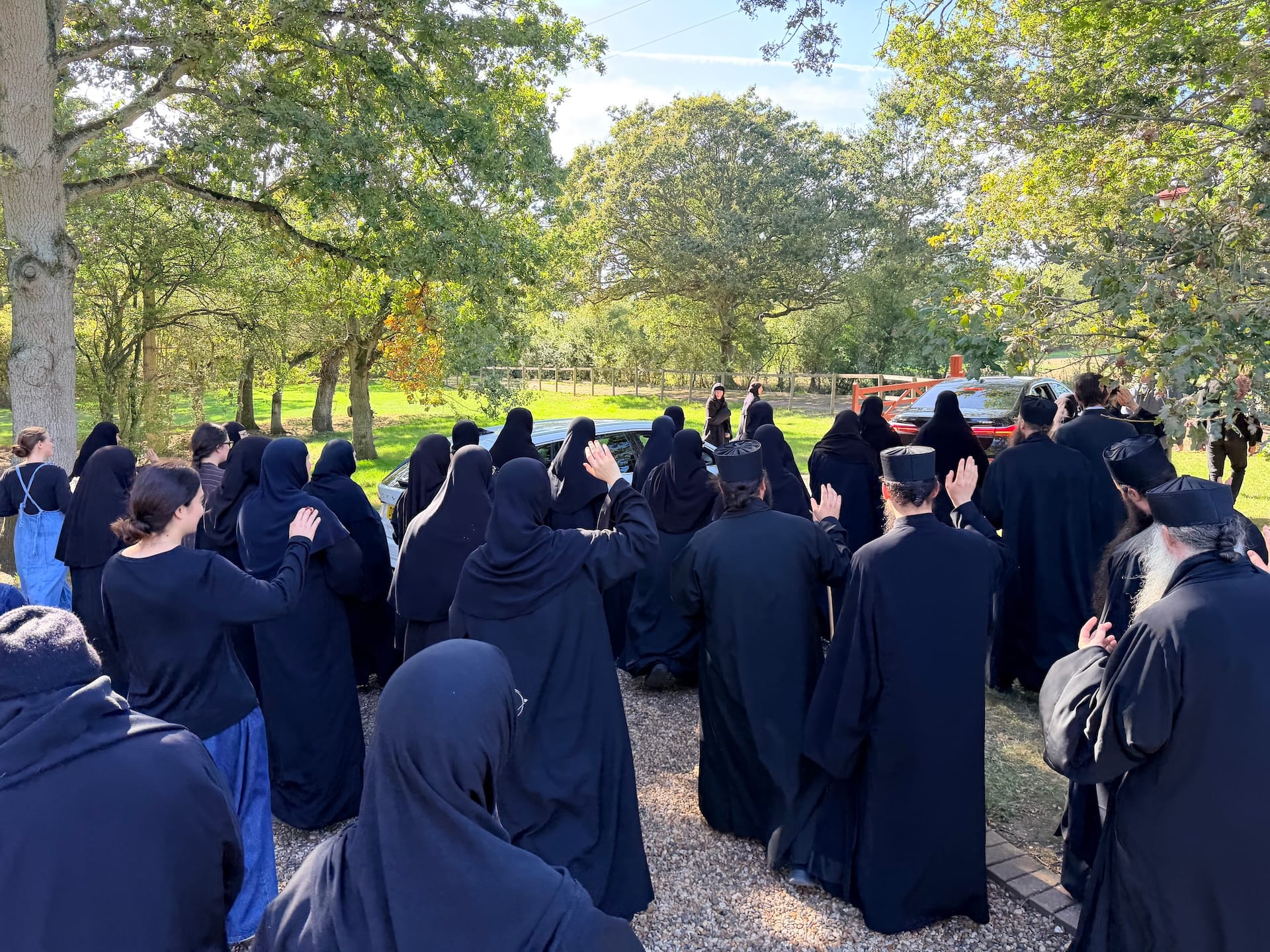
Photo: ec-patr.org
"The divine wisdom of your venerable Elder and Founder, Saint Sophrony, and his holy zeal led him to establish this Monastery on British soil, as a continuation and new flowering of the ancient monastic tradition of the British Isles. This tradition could readily be compared with that of the ancient Palestinian, Syrian and Egyptian deserts, or of Asia Minor, both in the strictness of ascetic practice and way of life, holy stillness, and progress in prayer and love, as well as in the emergence of many eminent Saints. Yet the passage of time, together with the centuries-long gradual departure of the peoples of the British Isles from Orthodoxy, led to this tradition being almost completely forgotten, to the point that many Saints of these lands are unfortunately not commemorated today in the Synaxaria and Menaia used by the Church, with only a few exceptions! Saint Ninian, the founder of monasticism in the British Isles; the many Saints Columba, Cuthbert and Brendan; Gildas the Wise; as well as Cainnech, Finnian, Cadoc, Teilo, Beate, Æthelwold and Winwaloe; that great Patrick; and many others, as well as women such as Brigid the merciful and wonderworking, Ita, Monenna, Melangell, Dwynwen, and so many others—to limit ourselves to monks, cenobites, hermits, ascetics, and founders of important monastic institutions. For alongside them there is certainly a corresponding number of hierarchs, missionaries, martyrs and confessors, foremost among them Saint Alban the Martyr.”
On Saturday, the Patriarch venerated St. Sophrony’s tomb and attended Great Vespers. Following the Divine Liturgy on Sunday, he departed for Scotland, where he was scheduled to meet privately with King Charles III at Balmoral Castle.
Previously, the UOJ reported that Patr. Bartholomew received an honorary doctorate from the University of Chichester.
Read also