Man and Church
Who are You, Mother?
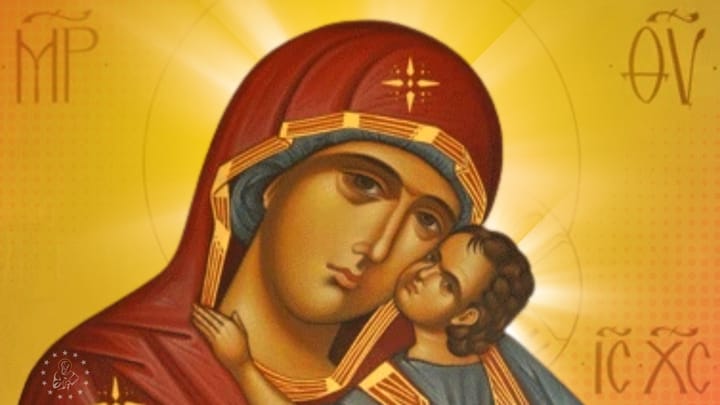
What the Most Holy Theotokos teaches us about motherhood, love, and life.
In the life of the Most Holy Theotokos, motherhood is revealed as a love that receives, protects, endures and gives without possessing; her “yes” to God teaches us how to love and offer our lives freely for another’s good.
This vision stands in sharp contrast to the increasingly visible realities of our time, which often distort motherhood and life itself.
Matria Potestas versus Sacrificial Love in Christ
Modern narratives increasingly pit mothers against their children. Women are portrayed as victims of their own offspring, adversaries, or—most tragically—as their executioners. Maternal autonomy is now often framed as control—control over fertility, pregnancy and birth; over a child’s very existence; over the timing and circumstances of motherhood; and over the limits of maternal authority.
In ancient Rome, the pater familias exercised patria potestas—paternal authority—over his descendants and household. This authority was traditionally associated with ius vitae necisque, the supposed “right of life and death.” Scholars continue to debate how extensive this power was in law and how often it was exercised in practice.
Mothers today, however, are often encouraged to claim a counterpart to this concept: a matria potestas, if you will. Although no such principle existed in Roman law, something close to this idea may be emerging as a philosophical and legal reality in contemporary society.
Read also