History and Culture
From Russia with Love: Ivan Kireyevsky’s Gift to America
The story of how one Russian philosopher and the Elders of Optina helped bring the Holy Fathers and treasures of Holy Russia to America.
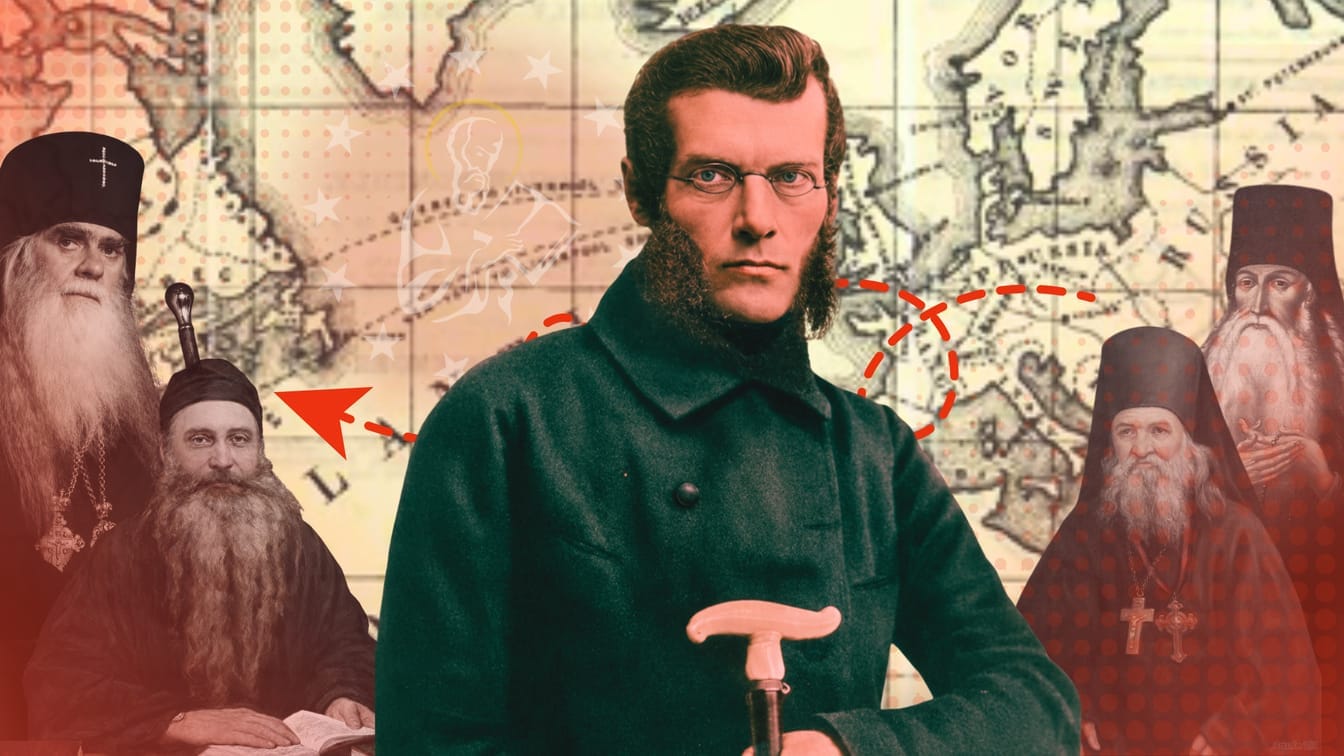
For many Orthodox Christians in America today, Ivan Kireyevsky isn’t a name that rings any sort of bell. For those who are familiar with him, words like Slavophile or Sobornost may come to mind. What is less likely to come to mind is the role this famed Russian philosopher played in the English translations of Patristic texts many of us now read. Yet Kireyevsky is one of the key links in a chain extending from Mount Athos, to Moldavia, to Russia, and finally to modern America.
Born in 1806 into an old noble family, Kireyevsky was raised in a world shaped by both aristocratic refinement and the spiritual inheritance of Holy Russia. Like many young men of his class, he received a modern European education. He read German philosophy, studied Western thought, and traveled abroad, where he encountered both the power and poverty of post-Enlightenment civilization. The deeper he entered the intellectual world of the West, the more he sensed its inner fracture: reason separated from faith, knowledge separated from holiness, culture separated from the living experience of the Church. This tension became the central question of his life.
In 1834, Kireyevsky married Natalia Petrovna Arbenina. Ivan, though a believer, was far from the Church—like much of the intelligentsia of his day. Natalia, on the other hand, was deeply pious. She was a spiritual daughter of the renowned Elder Philaret of Novospassky, who had assisted in the translation and publication of the Slavonic Philokalia. As a child, Natalia had traveled to Sarov and spoken to St. Seraphim face to face; his disciples referred to her lovingly as sister. Through marriage and his meeting with Elder Philaret, the spiritual course of Ivan’s life changed forever. Before his repose, Elder Philaret blessed Ivan and Natalia to become spiritual children of St. Macarius at Optina.
Natalia soon met and became devoted to St. Macarius, but Ivan did not meet him until March 1846, when he came to the elder for confession. In October of that same year, Ivan mailed St. Macarius a letter with various questions. Having dropped the letter in the mail, he returned home and told Natalia, “I have written the elder. I didn’t tell you in advance because I was concerned you would write him. I imagine it will be difficult for him to answer my questions.” Hardly had he finished speaking when two letters were dropped through the mail slot, both bearing the handwriting of St. Macarius—one for Natalia, one for Ivan. Bewildered, Ivan opened his letter. Natalia later wrote that “his face changed” as he read: “Amazing! Stunning! How can this be? In this letter are the answers to all my questions which I had only now sent.” Needless to say, Ivan became deeply attached to the elder.